
Executive Overview
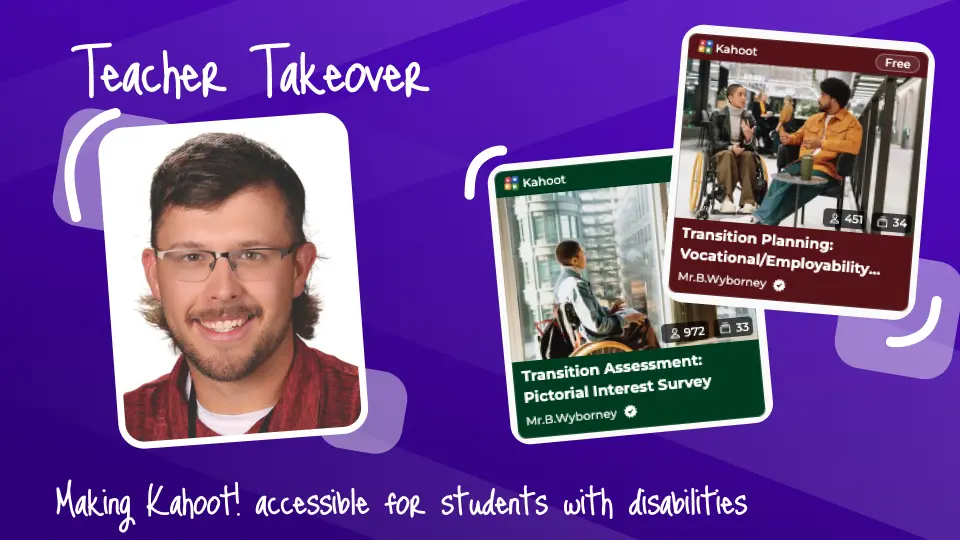
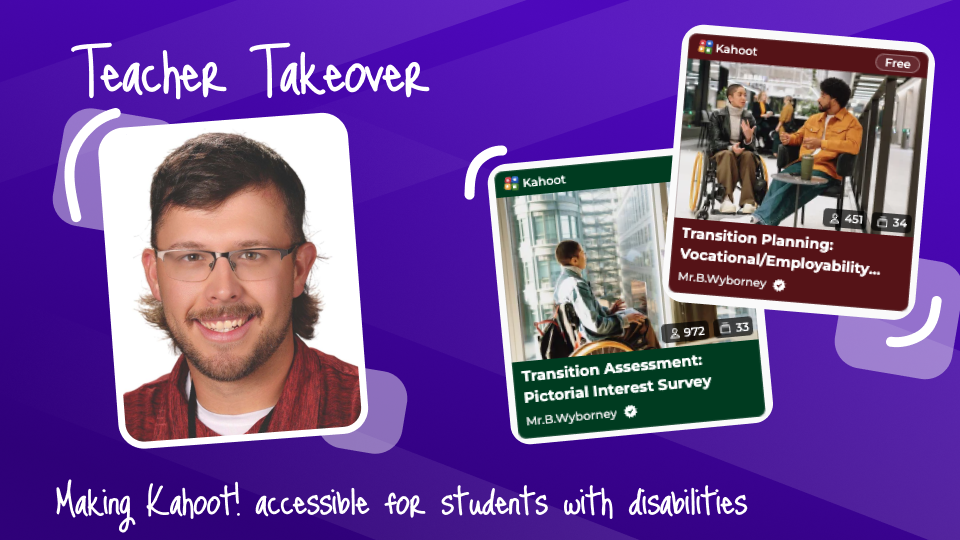
In the modern educational landscape, digital learning tools have become as ubiquitous as textbooks and chalkboards. However, the one-size-fits-all approach of many digital platforms often leaves out society’s most vulnerable learners—specifically, students with moderate to severe developmental, cognitive, and physical disabilities. Enter Brett Wyborney, an 8-year teaching veteran and Kahoot! Ambassador currently shaping the minds of students in Washington state (after starting his career in Alaska). Wyborney has spent his career traversing the spectrum of special and general education, from functional academics for students aged 14 to 22, to resource rooms, general education, and advanced gifted classes.
Through this diverse journey, Wyborney identified a glaring deficiency in the digital ecosystem: a distinct lack of age-appropriate, accessible curriculum materials for functional academics and transition planning. Rather than accepting this limitation, Wyborney pioneered a series of innovative adaptation frameworks utilizing the popular gamified learning platform, Kahoot!. By reimagining how interactive quizzes are structured—incorporating pictures instead of text, scaling down answer choices, utilizing multiple correct options, and leveraging touchscreen technologies—he has transformed a mainstream gaming tool into a powerful, equitable instrument for special education (SPED).
This in-depth feature explores Wyborney’s pedagogical strategies, analyzing how educators can dismantle accessibility barriers, automate data collection for Individualized Education Programs (IEPs), and foster true student autonomy in the special education classroom.
Detailed Chronology: The Evolution of an Inclusive Classroom
To understand the scope of Wyborney’s current framework, it is essential to trace how a traditional classroom tool evolved into an essential life-skills accommodation.
Phase 1: Identifying the Gap in Functional Academics
When Wyborney first transitioned into teaching functional academics for students with significant disabilities aged 14–21, he faced an immediate logistical hurdle. Typical classrooms of 6 to 8 students featured wildly diverse needs: most learners required 1:1 para-educator support, many were nonreaders or nonspeaking, some managed visual impairments, and others came from non-English speaking households.
When searching for age-appropriate digital resources, Wyborney encountered a systemic failure in the educational market. Materials designed for young adults with cognitive differences were either infantalizing (relying on elementary graphics meant for early childhood education) or entirely inaccessible due to heavy text loads. Recognizing that his students deserved material matching their chronological age while accommodating their cognitive profiles, Wyborney turned to Kahoot!. He recognized that the platform’s foundational structure—vibrant colors, competitive leaderboards, and interactive prompts—could be repurposed to serve unique learning profiles.
Phase 2: Pilot Testing Visual and Touchscreen Strategies
Initially, standard four-option text-heavy quizzes proved frustrating for students with fine motor challenges or processing delays. Wyborney systematically began experimenting with interface adjustments. By transitioning away from text and embracing imagery, paired with the introduction of touch-screen tablets, he noticed an immediate shift in student engagement. Learners who previously sat passively while para-educators answered on their behalf were now tapping screens independently.
Phase 3: Scaling into Transition Assessments and IEP Data Collection
Having mastered daily formative assessments, Wyborney expanded his methodology to address one of the most critical milestones in secondary special education: the transition plan for life after high school. Historically, transition assessments rely heavily on lengthy questionnaires, reading comprehension, and verbal interviews—barriers that inherently exclude nonreaders and nonspeaking students. By engineering specialized tools like the “Transition Assessment: Pictorial Interest Survey,” Wyborney automated and democratized transition data collection, capturing authentic student preferences without linguistic or motor interference.
Supporting Context & Metrics: Dismantling the Digital Divide
The necessity of Wyborney’s work is underscored by broader educational data regarding digital accessibility in special education.
The Diversity of the Functional Academics Classroom
In a typical functional academics setting, educators must navigate a staggering matrix of accommodations. Wyborney’s classrooms regularly balanced:
- Communication barriers: Nonreaders and nonspeaking students who rely on Picture Exchange Communication System (PECS) symbols or augmentative and alternative communication (AAC) devices.
- Motor skill impediments: Students who cannot operate a traditional computer mouse or trackpad due to cerebral palsy, muscular dystrophy, or dyspraxia.
- Sensory processing differences: Learners prone to cognitive overload when presented with excessive visual clutter or too many simultaneous choices.
Strategic Adaptations for Maximum Accessibility
Wyborney’s published methodologies offer a masterclass in Universal Design for Learning (UDL). Key metrics and framework adjustments include:
- Picture-Based Answer Options: Substituting text with photographs, icons, or PECS symbols removes literacy dependencies. A nonreader can identify a mammal, a preferred vocational task, or a coping mechanism by selecting a visual icon. Furthermore, pairing these with touchscreens eliminates fine-motor barriers.
- Reducing Answer Choices: While traditional quizzes feature four options, Wyborney often scales down to two choices (e.g., Dog vs. Fish). This simple adjustment minimizes visual distraction, enlarges the interactive target buttons on screen, and allows students with cognitive processing delays to clearly articulate what they know.
- Multi-Correct Formats for Inclusivity: By programming questions where all answers are marked as correct (e.g., "Which activities do you enjoy?" with options like Basketball, Art, Music, Reading), Wyborney transformed traditional diagnostic polls into psychological victories. Students can select their genuine preferences without encountering a "wrong" answer, earning points and landing on the leaderboard regardless of their choice.
- Automated Report Generation: Moving beyond analog data collection, Kahoot! Reports automatically log student interactions. This provides SPED teachers with verifiable, timestamped documentation of student preferences, which can be directly cited in IEP meetings and High School and Beyond Plans.
Official Statements and Expert Insights
Reflecting on his journey, Wyborney emphasizes that technology should elevate human insight, not replace it.
"I realized that Kahoot! could be the perfect platform for creating materials that were appropriate for my students’ unique needs." — Brett W., Washington, USA
Wyborney notes that the ultimate goal of these adaptations is not to water down the curriculum, but to eliminate artificial barriers that obscure a student’s true capabilities:
"The goal isn’t necessarily to make the questions easier, but to remove barriers that prevent students from demonstrating what they know."
Crucially, Wyborney highlights that gamified assessment tools are designed to augment, rather than substitute, the nuanced observations of special education professionals:
"Kahoot! wasn’t replacing professional judgment or other transition assessment methods. Instead, it became one additional tool for collecting meaningful student data in a way that was accessible to my students."
Future Outlook: The Next Frontier for Inclusive EdTech
As educational technology continues to evolve at a blistering pace, the blueprint established by educators like Brett Wyborney offers a vital roadmap for software developers and classroom practitioners alike.
Implications for EdTech Developers
The success of picture-based, touch-optimized Kahoot! integration in SPED classrooms sends a clear message to Silicon Valley and educational software developers: accessibility is not a niche feature; it is a baseline requirement. Future iterations of digital learning platforms must natively support:
- Built-in PECS and icon libraries alongside text options.
- Dynamic UI scaling that allows teachers to seamlessly drop from four answer choices down to two or three with a single click.
- Flexible scoring architectures that reward personal preference and self-advocacy without penalizing divergent thinking.
The Future of Transition Planning
For secondary students with significant disabilities, the transition from high school to adult life—encompassing employment, independent living, and community participation—relies heavily on self-determination. By utilizing pictorial interest surveys and accessible digital platforms, educators can ensure that disempowered students are genuinely driving their own IEP goals.
Wyborney’s ongoing work as a Kahoot! Ambassador proves that with creativity, empathy, and a willingness to subvert traditional platform norms, educators can transform mainstream tools into engines of profound inclusion. As more school districts embrace UDL principles, the strategies forged in Washington and Alaska will undoubtedly serve as an industry standard for making the digital classroom truly open to all.

