
Executive Overview
In an era defined by rapid ecological transformation and growing eco-anxiety among youth, educational innovators are searching for dynamic ways to translate complex environmental data into actionable knowledge. Enter a groundbreaking collaboration between WBUR, Boston’s premier award-winning NPR station, and Kahoot!, the global game-based learning platform. Together, they have launched an initiative that marries immersive audio storytelling with gamified assessment: a suite of free, ready-to-play learning games based on the hit interactive podcast The Midnight Rebellion.
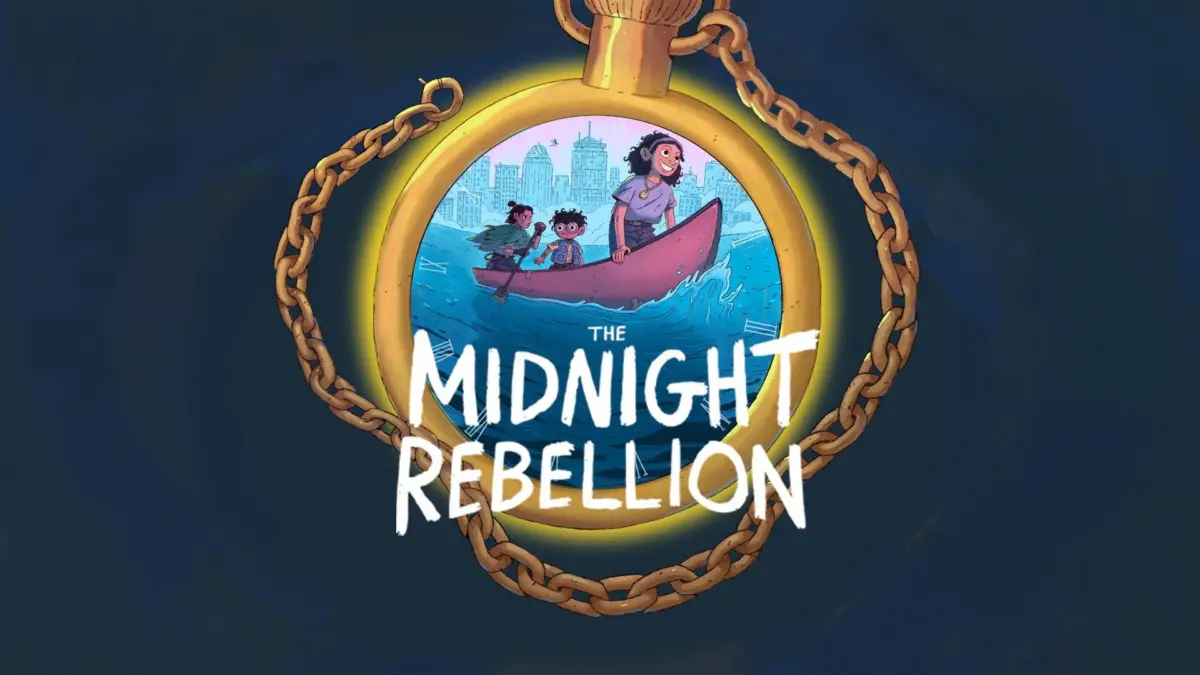
Designed to turn learning about climate change from a passive, often overwhelming lecture into an active adventure, this partnership bridges the gap between scientific reality and youth empowerment. The Midnight Rebellion places listeners in the shoes of Joule Watts-Green, a young protagonist swept into a flooded, dystopian future. As a "choose-your-own-path" audio experience backed by genuine climate models and environmental studies, the podcast allows students to witness the direct consequences of environmental choices. By coupling these episodes with Kahoot!’s interactive quizzes—exploring everything from fossil fuel dependency to sustainable diets—educators, parents, and students now have an engaging pedagogical toolkit to foster climate literacy without inducing despair.
Industry leaders, educators, and environmental icons have rallied behind the initiative. Figures such as WBUR Chief Content Officer Victor Hernandez and renowned environmentalist Bill McKibben have praised the project for offering young people a sense of agency rather than paralysis. This comprehensive report explores the genesis of The Midnight Rebellion, the mechanics of its integration with Kahoot!, the pedagogical philosophy underpinning the collaboration, and the broader implications for the future of environmental education.
Detailed Chronology: The Evolution of an Immersive Climate Narrative
The journey toward The Midnight Rebellion and its integration with modern EdTech did not happen overnight. It represents the culmination of years of experimentation in public radio, interactive media, and digital pedagogy.
Phase 1: Conceptualizing Climate Audio for Young Audiences
For decades, traditional media struggled to communicate the nuances of climate change to children and adolescents without relying on either apocalyptic doom-scrolling or overly simplistic metaphors. Recognizing this gap, creators at WBUR set out to design a format that respected the intelligence of young listeners while acknowledging the urgency of the planetary crisis.
The concept for The Midnight Rebellion was born out of a desire to merge high-stakes narrative fiction with real-world ecological data. Instead of lecturing students on carbon footprints and rising sea levels, the production team developed a sci-fi narrative framework firmly rooted in peer-reviewed climate models.
Phase 2: Launching The Midnight Rebellion Podcast
WBUR rolled out The Midnight Rebellion as an ambitious "choose your own audio adventure." The core narrative introduces listeners to Joule Watts-Green. When Joule interacts with her mother’s mysterious machine, she is transported to a startlingly altered future city governed by tides. In this world, streets are rivers, "tin-skins" crackle with lightning, and citizens subsist on gooey "Algae-Os."
To navigate this environment and ultimately find a way home, Joule must exhibit resourcefulness, bravery, and collaborative spirit. Crucially, the podcast is structured across 26 audio-rich episodes featuring a staggering 82 distinct narrative paths. At the end of each chapter, listeners are prompted to make a critical decision that dictates the trajectory of the story. This interactive mechanic directly mirrors real-world environmental stewardship: every decision carries consequences, and small actions compound into massive systemic outcomes.
Phase 3: Partnering with Kahoot! for Interactive Reinforcement
While listening to an immersive audio drama sparks imagination, true educational retention requires active processing and application. Recognizing this, WBUR partnered with Kahoot! to develop a series of companion learning games hosted on an official Kahoot! channel.
Released to coincide with the ongoing success of the podcast, these free, ready-to-play kahoots translate the thematic elements of Joule’s journey into structured trivia, critical-thinking prompts, and collaborative challenges. Whether played in a traditional classroom, in a living room, or on mobile devices on the go, these games allow students to unpack the science behind the fiction. They explore the underlying causes of climate change, analyze extreme weather events, and evaluate everyday sustainable habits—bridging the gap between a fictional flooded city and our current global trajectory.
Supporting Context & Metrics: The Science and Strategy of Gamified Learning
To understand why the WBUR-Kahoot! alliance is proving so effective, one must examine the intersection of climate psychology, interactive pedagogy, and modern digital engagement metrics.
Combating Eco-Anxiety Through Agency
Modern psychological research increasingly highlights a phenomenon known as "eco-anxiety"—a chronic fear of environmental doom experienced acutely by children and teenagers. When bombarded solely with apocalyptic statistics about melting ice caps and carbon thresholds, young minds often shut down or experience debilitating feelings of helplessness.
The Midnight Rebellion was intentionally crafted to counter this paralysis. By framing climate action as an ongoing adventure where the protagonist’s choices matter, the podcast instills a sense of efficacy. Educational frameworks show that when learners feel they possess "agency"—the capacity to act and influence outcomes—their engagement and retention skyrocket.
Leveraging Gamification for Deeper Retention
Kahoot! has long been a titan in the digital learning space, utilizing game mechanics (such as timed responses, friendly competition, and vibrant visual feedback) to transform mundane study sessions into high-energy learning events. By applying this methodology to climate science, the platform achieves several key educational objectives:
- Accessibility: Complex topics like greenhouse gas emissions and fossil fuel phase-outs are broken down into digestible, bite-sized questions.
- Inclusivity: The games can be deployed in diverse settings—from under-resourced public school classrooms to homeschooling environments—ensuring equitable access to high-quality climate education.
- Holistic Exploration: The kahoots cover a spectrum of solutions, moving past broad policy discussions down to tangible, everyday choices, such as dietary shifts toward climate-friendlier foods and energy conservation at home.
Narrative Architecture: By the Numbers
- 26 audio-rich episodes delivering a serialized, high-production-value narrative.
- 82 unique narrative paths, ensuring high replay value and demonstrating the complex, branching nature of environmental decision-making.
- 1 centralized, free official Kahoot! channel housing all ready-to-play companion games.
Official Statements: Perspectives from Media Pioneers and Environmental Leaders
The collaborative ethos behind The Midnight Rebellion kahoots has drawn high praise from prominent figures across journalism, public media, and environmental activism.
Victor Hernandez, Chief Content Officer at WBUR, emphasized the psychological imperative behind the project:
"Climate change is the story of our time, and young people seek agency, not anxiety. The Midnight Rebellion from WBUR is a pick-your-own-path podcast built on real science, and Kahoot! puts that experience directly in front of the students and educators who are ready to engage. This is why we’re thrilled to partner with Kahoot!"
Hernandez’s remarks underscore a vital shift in modern media production: the realization that informational integrity must be paired with emotional intelligence when addressing younger demographics.
Echoing this sentiment, legendary environmentalist, author of Here Comes the Sun, and founder of 350.org Bill McKibben lauded the creative risks taken by the production team:
"[The Midnight Rebellion podcast is] new, fresh, funny, engaging—and about what will be the most important challenge in the life of every young person. What’s not to like?!"
McKibben’s endorsement highlights the rare achievement of creating educational media that successfully bridges the gap between rigorous scientific accuracy and genuine entertainment value.
Future Outlook: The Next Wave of Environmental Education
As global temperatures continue to fluctuate and international climate summits struggle to achieve binding consensus, the burden of ecological stewardship increasingly falls upon the shoulders of the upcoming generation. Consequently, the tools used to educate these future leaders must evolve beyond static textbooks and sobering documentary films.
The partnership between WBUR and Kahoot! points toward a promising future for EdTech and transmedia storytelling. Several trends and projections define this emerging landscape:
1. The Rise of Transmedia Educational Campaigns
Future educational curricula will likely move away from single-medium lesson plans. By combining serialized narrative audio, interactive gaming, augmented reality (AR), and project-based learning, educators can cater to diverse learning styles. Projects like The Midnight Rebellion serve as a blueprint for how public media organizations can leverage digital platforms to extend the shelf-life and impact of their investigative reporting.
2. Expanding Accessibility and Global Reach
While The Midnight Rebellion is rooted in the narrative traditions of American public radio, the underlying themes of climate adaptation, resource management, and resilience are universally applicable. Future iterations of these gamified modules could see localization into multiple languages, enabling cross-cultural classroom collaborations where students from different continents compare how their local communities are adapting to environmental shifts.
3. Continuous Integration of Real-Time Climate Data
As climate science rapidly advances, educational platforms must remain agile. The framework established by WBUR and Kahoot! opens the door for dynamic content updates. As new climate models are published or policy milestones are reached, companion kahoots can be updated in real-time, ensuring that students are not merely learning historical science, but engaging with the cutting-edge realities of contemporary environmental policy and innovation.
Conclusion
In a crowded digital landscape often criticized for distracting youth, the integration of WBUR’s The Midnight Rebellion with Kahoot!’s interactive learning architecture represents a triumph of purposeful technology. By transforming a flooded, dystopian future into an interactive playground for critical thinking, this initiative equips young learners with the exact qualities they need most: curiosity, resilience, and the empowering realization that they hold the power to help cool the planet.
Educators, parents, and students eager to embark on this journey can access the complete collection of episodes via WBUR and test their knowledge today on the official WBUR Kahoot! channel.

