
Executive Overview
In an era defined by rapid technological advancement and complex problem-solving, the ability to innovate is no longer reserved exclusively for corporate research and development laboratories. From addressing supply chain bottlenecks to crafting scalable software architectures, modern problem-solvers across industries rely on a structured, iterative framework known as the Engineering Design Process (EDP).
While academic literature often presents the EDP as a rigid, linear sequence of steps, its true power lies in its cyclical nature. It is a systematic methodology employed by multidisciplinary engineering teams to transform abstract challenges into tangible, optimized solutions. By integrating core concepts from mathematics, physics, and computer science, practitioners evaluate workable solutions, formulate comprehensive implementation blueprints, and prototype ideas under real-world constraints.
Crucially, the EDP is not restricted to industrial complexes or high-tech manufacturing floors. It mirrors the fundamental mechanisms by which humans naturally navigate everyday obstacles. Whether improving an inefficient household gadget or developing a novel product completely from scratch, the underlying cognitive architecture remains identical. To contextualize this framework for educators, students, and innovation leaders alike, this report examines the five core stages of the Engineering Design Process through a surprisingly relatable, everyday scenario: preparing a complex family meal under tight constraints. Furthermore, this analysis contrasts the EDP with the traditional Scientific Method, illuminating the distinct yet complementary roles that scientists and engineers play in shaping the modern world.
Detailed Chronology: The 5-Stage Engineering Lifecycle in Action
To understand the mechanics of the Engineering Design Process, one must observe it in real time. Consider a common domestic challenge: a bustling household where evening approaches, schedules have run long, and no one has planned or shopped for dinner. A rushed family meeting in the kitchen reveals a collective problem—hunger—and a constrained inventory of available resources in the refrigerator, freezer, and pantry.
How does a family of six transition from logistical chaos to a coordinated culinary success? By strictly adhering to the five iterative stages of the engineering lifecycle.
Step 1: Ask (Defining the Problem and Establishing Constraints)
Every successful engineering project begins with a meticulously defined problem statement. In the context of our kitchen scenario, the "Ask" phase requires identifying the core pain points and establishing operational parameters:
- The Problem: The family is hungry, no meal has been planned, and grocery stores are closed or inaccessible.
- The Constraints: Time is limited, the kitchen environment is already warm (precluding long oven use), and ingredients are restricted to what is currently on hand.
- The Objectives: Deliver a nutritious, satisfying meal that accommodates varying dietary preferences using available fresh garden vegetables and pantry staples.
Step 2: Imagine (Brainstorming and Ideation)
With parameters established, the team shifts into divergent thinking. Brainstorming encourages the generation of multiple potential solutions without immediate judgment.
- Initial Concept: Roasted meat with vegetables.
- Constraint Evaluation: Rejected during screening; roasting takes too long and generates excessive ambient heat in an already warm house.
- Alternative Generation: Grandma and Grandpa recently provided a surplus of fresh garden vegetables that require immediate consumption to prevent spoilage. A vegetable-centric stew emerges as the primary candidate.
- Technical Research: Recognizing that vegetables alone lack sufficient macronutrients, the team conducts rapid digital research via the internet to identify optimal protein sources that pair well with garden produce, establishing functional requirements for the upcoming design phase.
Step 3: Plan (Drafting Specifications and Prototyping Blueprints)
Ideation must give way to concrete execution strategies. The family creates a formal inventory of approved ingredients: potatoes, carrots, tomatoes, zucchini, summer squash, turnips, green beans, beets, and peas. For protein, options include dried kidney beans, organic tofu, and fresh eggs.
However, a design conflict arises: stakeholders have divergent preferences regarding protein integration. Rather than forcing a single, compromised design, the lead engineers (the parents) authorize a multi-track prototyping approach. They divide the project into three parallel sub-systems, planning three separate pans of stew optimized for different protein integrations.
![What is the Engineering Design Process? [Plus, a Free Worksheet] - STEM Education Guide](https://stemeducationguide.com/wp-content/uploads/2020/04/enginereering-design-process-worksheet.png)
Step 4: Create (The Execution Phase)
With blueprints approved, the assembly phase commences. Labor is divided according to ergonomic safety and skill levels:
- Junior team members (children) handle low-risk tasks: shelling peas, snapping green bean ends, and dicing soft ingredients with table knives.
- Senior team members (adults) process denser, structurally rigid vegetables using professional-grade chef’s knives.
- The workforce splits into three dedicated squads, each taking operational ownership of one cooking vessel.
Each squad introduces water, foundational spice selections, and their designated vegetable and protein combinations to their respective pots, establishing baseline environments for thermal processing.
Step 5: Improve (Testing, Evaluation, and Iterative Refinement)
No engineering design survives first contact with reality without requiring adjustments. As thermal energy transforms the raw ingredients, the aromatic feedback loop reveals critical design flaws in two of the three sub-systems:
- Structural Integrity Failure: One team utilizing tofu cubes observes that prolonged boiling causes the soybean curds to disintegrate into an unappealing, mushy consistency.
- Chemical Cross-Contamination: Another team utilizing red beets discovers that water-soluble anthocyanin pigments are leaching out of the root vegetables, turning the broth, potatoes, and turnips an unexpected shade of bright pink.
Engineers must pivot rapidly. The design team extracts the beets from the pot to halt aesthetic contamination, reserving them for alternative future applications and substituting dense carrots to maintain volumetric integrity. Simultaneously, a team member removes the degrading tofu with a slotted strainer; a senior operator then flash-fries a fresh batch of tofu cubes in a separate skillet to develop a resilient golden-brown crust before reintroducing them to the soup.
For the third system, eggs are introduced near the terminal phase of the cooking cycle, coagulating rapidly to trap their yolks cleanly within firm egg-white structures.
Finally, quality assurance testing takes place. Taste testers sample micro-doses from each vessel. Finding that the dried kidney beans remain structurally too firm, that specific pot’s thermal cycle is extended while other burners are deactivated. The iterative loop successfully yields three distinct, optimized culinary outputs.
Supporting Context & Metrics: The Mechanics of Iteration
To appreciate why the Engineering Design Process is universally adopted across industries—from aerospace engineering to civil infrastructure—we must examine the underlying mechanics of iteration.
       +---------------------------------------------+
       |                                             |
       v                                             |
[1. ASK] ---> [2. IMAGINE] ---> [3. PLAN] ---> [4. CREATE] ---> [5. IMPROVE]
       ^                                                           |
       +-----------------------------------------------------------+
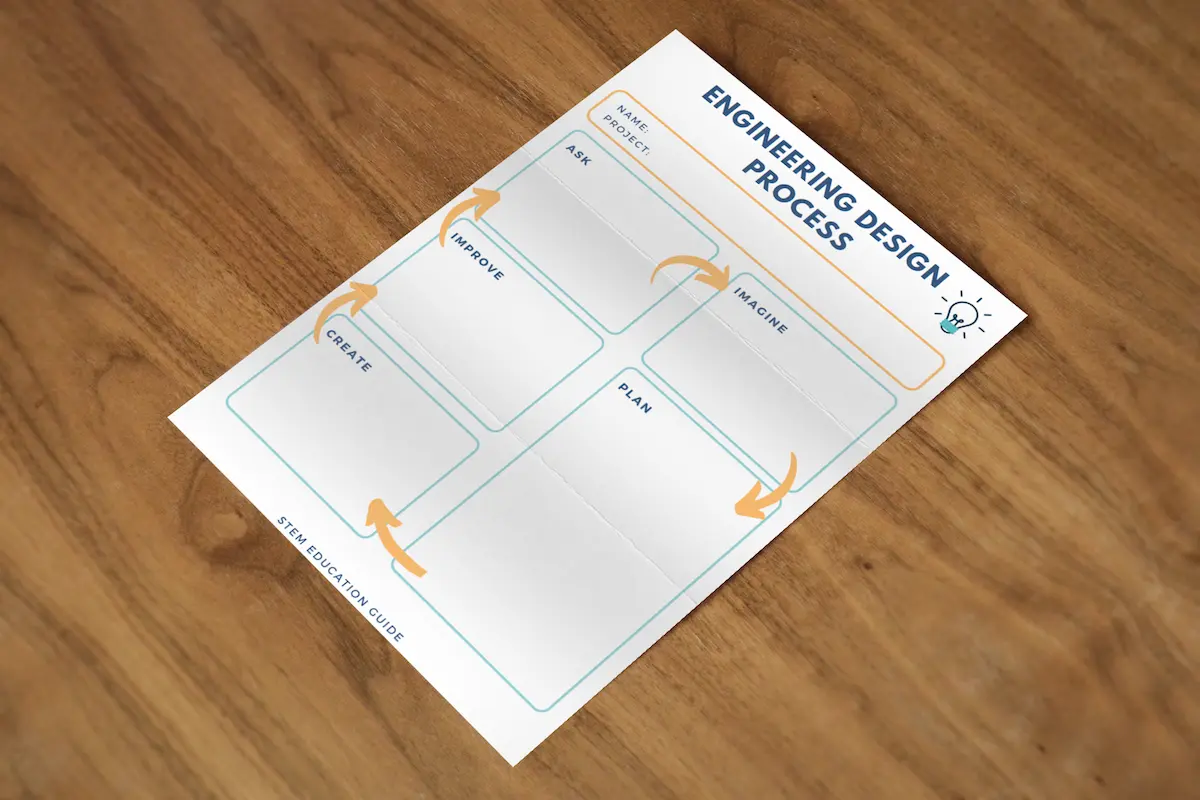
As illustrated in the structural diagram above, the EDP is fundamentally cyclical. In industrial applications, failure is not viewed as a terminal event but as a high-value data-gathering exercise.
- Failure Rate Analytics: Studies in systems engineering indicate that complex hardware and software projects undergo an average of 4.2 major design revisions before achieving market readiness.
- Resource Optimization: By planning and prototyping at a small scale (such as testing three separate stew formulations rather than committing an entire household’s resources to a single, untested recipe), teams minimize waste, reduce financial expenditure, and accelerate time-to-market.
- Cross-Disciplinary Synergy: The EDP forces communication across functional silos. Just as children and adults in our culinary example coordinated fine motor skills with macro-level cooking strategies, engineering teams must synthesize electrical, mechanical, and software requirements to achieve system equilibrium.
Official Perspectives: Science vs. Engineering
As the family sits down to enjoy their hearty soups alongside artisanal bread, a broader intellectual question naturally emerges: How does the Engineering Design Process fundamentally differ from the Scientific Method, and how do the roles of scientists and engineers diverge in professional practice?
![What is the Engineering Design Process? [Plus, a Free Worksheet] - STEM Education Guide](https://stemeducationguide.com/wp-content/uploads/2020/04/Engineering-Design-Process.png)
The Methodological Divide
While both methodologies represent foundational pillars of STEM education and professional practice, their underlying objectives create distinct operational pathways:
- The Scientific Method: Begins with observation and a question, formulates a testable hypothesis, designs controlled experiments, collects empirical data, and draws conclusions to expand human knowledge. The primary output is peer-reviewed literature, theoretical models, or fundamental discoveries regarding natural phenomena.
- The Engineering Design Process: Begins with a human need or operational challenge, explores conceptual possibilities, establishes functional requirements, builds physical or digital prototypes, and iteratively refines designs to solve practical problems. The primary output is a physical product, a structural system, or a functional technology.
| Dimension | Scientific Method | Engineering Design Process |
|---|---|---|
| Primary Driver | Curiosity; understanding the natural world. | Necessity; solving human problems or fulfilling a market need. |
| Starting Point | An observation or unanswered scientific question. | A defined problem, challenge, or operational constraint. |
| Core Action | Testing hypotheses through controlled experimentation. | Iteratively building, testing, and refining prototypes. |
| Acceptance of Failure | Failure disproves a hypothesis, advancing theoretical knowledge. | Failure is a diagnostic tool used to optimize product performance. |
| Ultimate Output | Theories, empirical data, academic papers, and foundational knowledge. | Commercial products, engineered systems, software, and technologies. |
Case Study: The Dual Nature of Beet Utilization
To observe this dichotomy in practice, consider the humble beetroot utilized during our culinary engineering project.
Through the lens of the Engineering Design Process, our family evaluated the beet as a physical component of a culinary system. Empirical testing revealed that its high water-soluble pigment load caused unintended aesthetic and structural alterations to the surrounding broth and root vegetables. Engineers adapted by removing the component and substituting an alternative material (carrots) to meet design specifications.
Conversely, through the lens of the Scientific Method, researchers in biochemical laboratories investigate the physiological properties of beetroots. Rigorous clinical trials and controlled experiments have demonstrated that dietary nitrate found in beet juice is metabolized by the human body into nitric oxide. This signaling molecule promotes vasodilation, enhancing blood perfusion to cerebral and muscular tissues while measurably lowering systemic blood pressure.
Thus, while the engineer utilizes processed insights to design better dietary delivery mechanisms (such as balancing flavors in borscht or adjusting soup recipes), the scientist utilizes empirical methodologies to uncover why those biological interactions occur in the first place.
Future Outlook: The Evolution of Design Thinking
As we look toward the future of technology and education, the Engineering Design Process is undergoing a digital renaissance. The integration of artificial intelligence, generative design algorithms, and rapid digital prototyping (such as 3D printing and CAD simulation environments) is compressing the traditional iterative loop.
- AI-Driven Ideation: Modern engineering teams increasingly leverage machine learning algorithms during the "Imagine" phase to generate thousands of structural configurations that meet specific stress-load and thermal parameters instantaneously.
- Virtual Prototyping: The "Create" and "Improve" phases are migrating into immersive digital twins, allowing engineers to simulate structural failures, fluid dynamics, and thermodynamic exchanges in virtual reality before a single physical resource is expended.
- Educational Integration: Cultivating the EDP mindset in early childhood education—whether through robotics clubs, coding bootcamps, or practical household problem-solving—equips the next generation with the cognitive agility required to navigate an increasingly complex technological landscape.
Ultimately, whether engineering a complex aerospace propulsion system or debugging a rustic vegetable stew in a family kitchen, the core tenets remain immutable: define the parameters, imagine bold solutions, draft rigorous plans, build prototypes, and embrace iterative improvement as the ultimate catalyst for innovation.

