
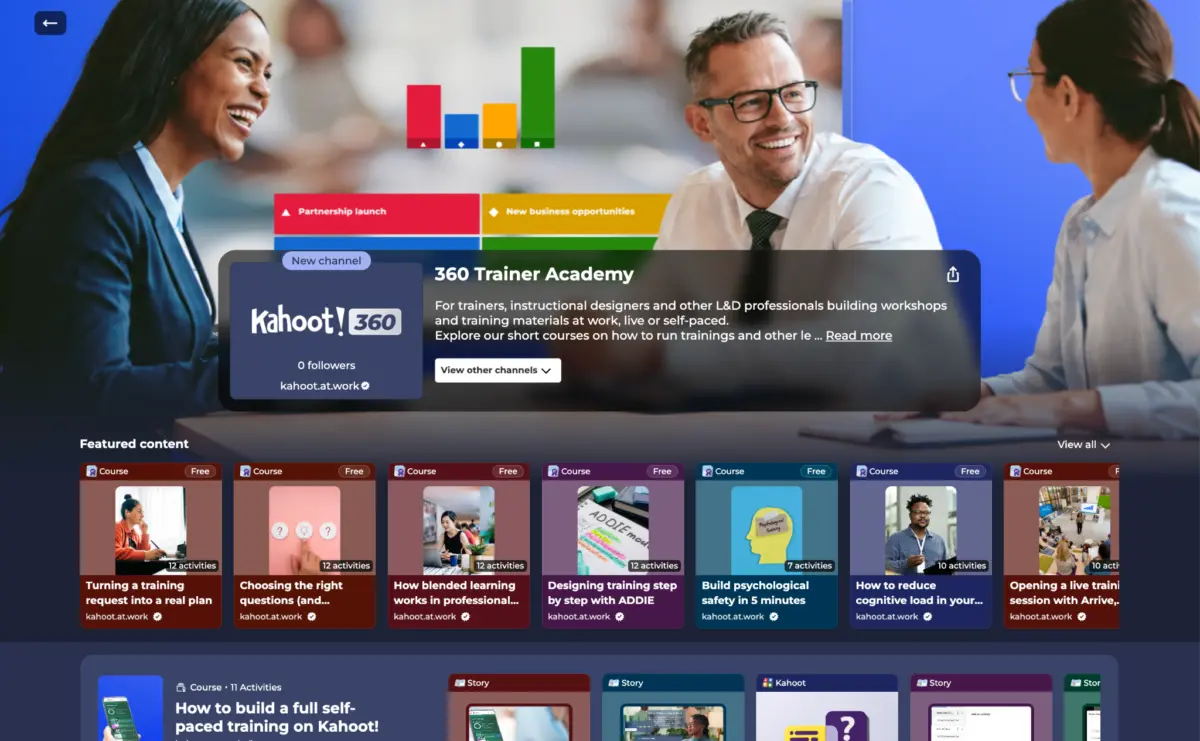
Executive Overview
The quality of workplace learning directly correlates with organizational performance. Whether onboarding a new employee, helping a team navigate complex enterprise software, or instructing a warehouse crew on critical safety procedures, workplace education is the foundational pillar of modern operational success. Yet, despite its high stakes, the individuals tasked with delivering this education—corporate trainers, human resources professionals, and subject-matter experts—often find themselves navigating a multifaceted role with limited formal preparation.
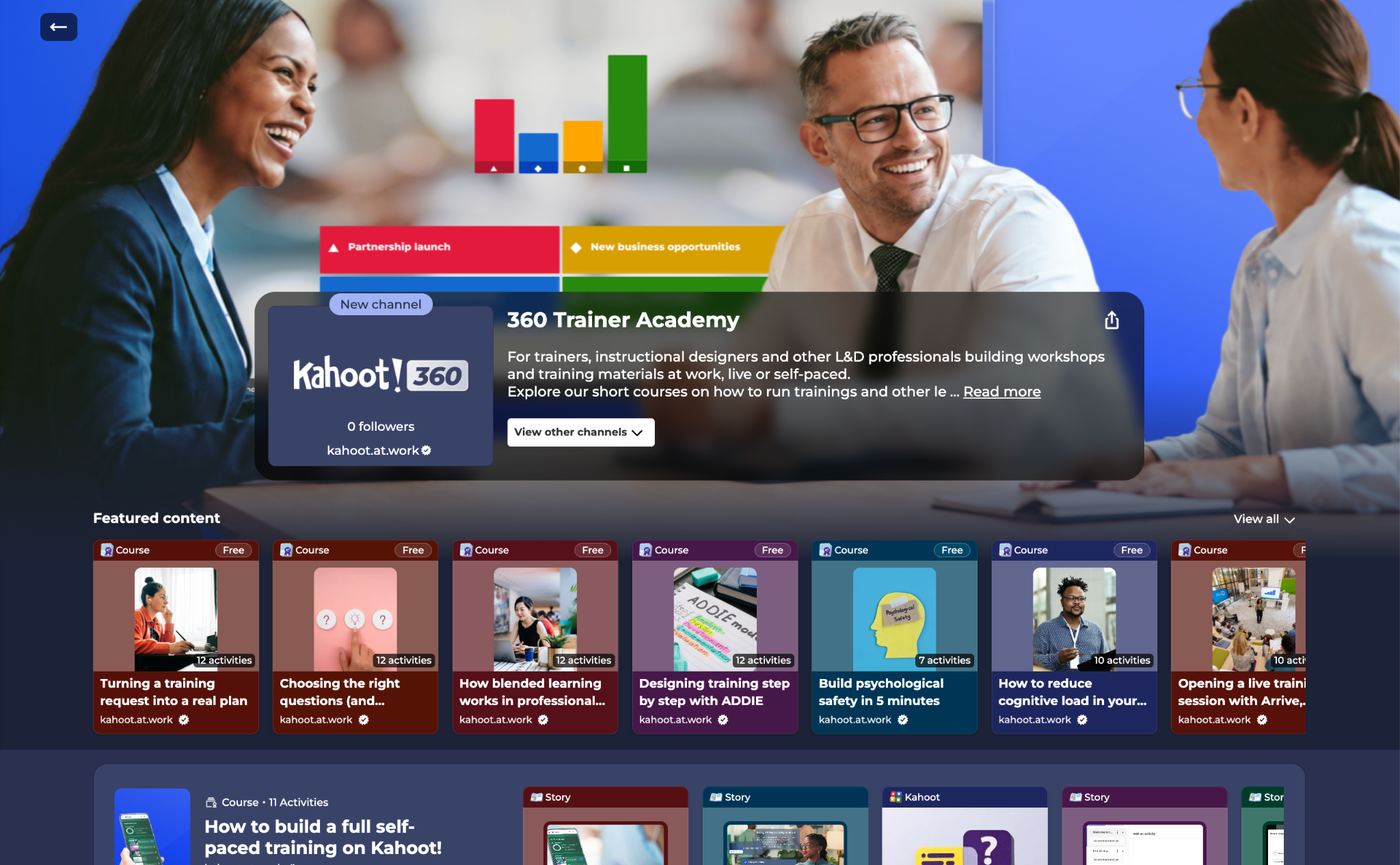
To bridge this critical capability gap, Kahoot! has officially launched the Kahoot! 360 Trainer Academy, a comprehensive, free professional development platform designed specifically for workplace educators. Built around digestible, 10-minute learning modules, the Academy addresses the everyday realities of corporate training: moving seamlessly from high-level strategic scoping down to granular slide design and participant engagement. By offering certified, bite-sized learning experiences, Kahoot! aims to democratize professional development for trainers, empowering them to sharpen existing competencies, master advanced pedagogical concepts, and directly apply immediate solutions to pressing workplace challenges.
Detailed Chronology and Evolution of Workplace Training
The Paradigm Shift in Employee Development
Historically, corporate training was dominated by rigid, compliance-driven classroom sessions or dense manuals that employees waded through in isolation. Over the past two decades, however, workplace learning has undergone a profound transformation. Modern organizations increasingly recognize that learning is continuous, dynamic, and deeply intertwined with daily operations.
The modern workplace ecosystem relies on a mix of formal and informal learning methodologies:
- Informal and Peer-to-Peer Learning: Much of the organization’s knowledge transfer happens organically—colleagues helping colleagues troubleshoot a bug, senior team members mentoring new hires, or cross-functional departments sharing workflow tips.
- Formal Structured Programs: Comprehensive onboarding sequences, compliance modules, and structured upskilling tracks managed by dedicated Learning and Development (L&D) teams.
- Hybrid and Blended Delivery Models: A combination of live, instructor-led facilitation (virtual or in-person) coupled with self-paced, asynchronous digital modules completed according to individual schedules.
The Accidental Trainer Dilemma
As workplace learning evolved, so too did the profile of the corporate trainer. Unlike traditional academic educators who follow a linear career path through education degrees and credentialing programs, workplace trainers arrive from diverse professional backgrounds.
Some are dedicated L&D professionals with formal backgrounds in instructional design. However, a vast majority are accidental trainers—subject-matter experts (SMEs) thrust into training roles because they possess deep technical knowledge of a specific system, product, or workflow. Others are operations managers, customer support leads, or HR generalists who gradually assumed training responsibilities over time until teaching became their primary mandate.
This diverse genesis means that while trainers are often masters of their subject matter, they frequently lack formal training in adult learning theory, cognitive load management, or audience engagement strategies. Recognizing this structural vulnerability, educational technology leaders have increasingly sought to build scalable, accessible interventions to support these vital organizational assets. The introduction of the Kahoot! 360 Trainer Academy represents a major milestone in this ongoing evolution, providing a structured yet flexible environment for trainers to master their craft.
Supporting Context, Methodology, and Core Curriculum
The curriculum of the Kahoot! 360 Trainer Academy is meticulously engineered to reflect the dual nature of a trainer’s reality: the constant oscillation between big-picture strategy and fine-detail execution. A trainer must be capable of diagnosing an organizational performance gap one moment, and designing an interactive, cognitive-load-balanced quiz question the next.
1. Strategic Scoping and Instructional Design Frameworks
Too often, training is deployed as a knee-jerk reaction to a vague corporate problem. A department head emails L&D and announces, "We need training on this product update," leaving the trainer to scramble.
- The ADDIE Framework: The Academy trains educators on how to systematically guide a training request through the five classic phases of instructional design (Analysis, Design, Development, Implementation, and Evaluation).
- Refining the Scope: Courses provide actionable strategies to unpack vague requests, establish clear learning objectives, and collaborate effectively with stakeholders and subject-matter experts before a single slide or course module is constructed.
2. The Science of Adult Learning and Cognitive Load
Effective training must be grounded in cognitive science. Adults learn differently than children; they require immediate relevance, autonomy, and an understanding of why information matters.
- Managing Cognitive Load: Trainers learn how working memory constraints impact information processing, ensuring they do not overwhelm learners with text-heavy slides or extraneous graphics.
- Spaced Practice and Retrieval: The curriculum dives deep into evidence-based retention strategies—such as spacing, interleaving, and retrieval practice—ensuring that learners retain core competencies weeks and months after a session concludes.
3. Live Facilitation and Psychological Safety
Facilitating a live session—whether in a boardroom or across a Zoom window—requires acute psychological awareness.
- The "Arrive, Activate, Aim" Structure: Trainers learn a reliable opening framework that immediately orientates participants, hooks their attention, and clearly articulates what will be accomplished.
- Reducing Evaluation Anxiety: One of the most significant barriers to corporate learning is the fear of looking foolish in front of peers. The Academy offers practical techniques to foster psychological safety, encouraging participants to ask questions, admit misunderstandings, and actively engage without fear of negative judgment.
4. Blended Learning Mastery
Recognizing that modern training rarely fits neatly into rigid "live" or "self-paced" silos, the Academy provides comprehensive guidance on blended learning models. Trainers learn a before/during/after instructional arc that successfully integrates asynchronous digital touchpoints with synchronous collaborative sessions.
Official Statements and Industry Insights
The philosophy underpinning the Trainer Academy is rooted in practical agility. Industry experts have long argued that professional development must mirror the fast-paced environments in which modern professionals operate.
"Becoming a better trainer doesn’t have to mean disappearing into a week-long certification program or pausing your career to study instructional design theory," notes the foundational philosophy of the Kahoot! 360 Trainer Academy. "Instead, it can mean learning to scope your next training request more efficiently, asking a better question in your next session, designing an activity that prompts active information retrieval, or simply making it a little safer for someone in the room to raise their hand and say, ‘I don’t understand.’"
By breaking down complex educational theory into actionable, 10-minute micro-learning experiences, Kahoot! has removed the traditional friction associated with professional upskilling. Trainers can immediately pivot from theory to execution, selecting a module that directly addresses the specific challenge on their desk that week—whether it is reducing cognitive load in a slide deck, structuring a live workshop opening, or configuring automated reporting within the Kahoot! platform itself.
Furthermore, the integration of verifiable digital certificates—shareable directly on professional networks like LinkedIn—provides tangible recognition for educators whose contributions to organizational culture and operational efficiency often go formally uncredited.
Future Outlook: The Next Generation of Workplace Educators
As remote, hybrid, and AI-augmented work environments continue to mature, the demand for high-impact, frictionless workplace learning will only accelerate. Organizations can no longer afford the lag time associated with poorly designed training programs or unengaging compliance modules.
The launch of initiatives like the Kahoot! 360 Trainer Academy signals a broader, much-needed shift toward empowering the front-line educators of the corporate world. By arming subject-matter experts, accidental trainers, and veteran L&D professionals with modern pedagogical tools, bite-sized learning pathways, and evidence-based engagement strategies, platforms like Kahoot! are redefining what it means to lead corporate education.
For trainers looking to elevate their professional impact without sacrificing their busy schedules, the path forward is clear: Learn it. Try it. Add the next skill.
Professionals can begin their continuous development journey today by exploring the comprehensive course catalog available on the official 360 Trainer Academy channel.

