
Executive Overview
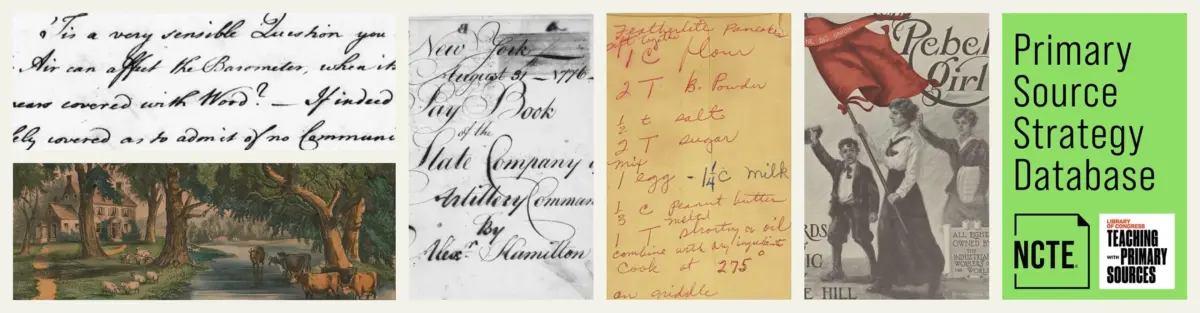
In an era defined by an abundance of digital information, the challenge for modern educators is no longer merely finding content, but teaching students how to critically evaluate, analyze, and contextualize it. Addressing this imperative, the National Council of Teachers of English (NCTE) has deepened its collaborative partnership with the Library of Congress as an active participant in the prestigious Teaching with Primary Sources (TPS) Consortium. This nationwide initiative is systematically transforming how English language arts (ELA) and literacy teachers integrate historical artifacts into their everyday pedagogy.
At the heart of this collaborative effort is a newly expanded, highly searchable digital database featuring instructional strategies for more than 150 specific items drawn directly from the Library of Congress’s vast digitized primary source collections. Designed and vetted by over two dozen veteran educators and ELA leaders, these resources bridge the gap between historical inquiry and rigorous literacy skill-building.
The database allows teachers to seamlessly navigate content using targeted tags such as picturebook, argument, vocabulary, media literacy, and collaboration. More importantly, every entry provides robust pedagogical frameworks—complete with curriculum alignments, thematic suggestions, state standards connections, and strategies for fostering historical empathy. By anchoring literacy instruction in authentic historical documents, the NCTE and the Library of Congress are empowering a new generation of students to question traditional narratives, evaluate evidence, and develop a more nuanced, inclusive understanding of the human experience.
Detailed Chronology: The Evolution of the NCTE-Library of Congress Partnership
The integration of primary sources into language arts classrooms is not an overnight phenomenon; it represents a strategic, decades-long evolution in educational philosophy that prioritizes historical inquiry alongside traditional literary analysis.
Phase 1: The Foundation of the TPS Consortium
The genesis of this instructional shift traces back to the establishment of the Library of Congress’s Teaching with Primary Sources program. Designed to build awareness of the Library’s digitized treasures among educators, the TPS partner network was created to provide professional development, funding, and pedagogical frameworks. For years, however, primary sources remained heavily siloed within social studies and history curricula, leaving English language arts teachers with few discipline-specific frameworks for utilizing rich historical texts, period journalism, and archival imagery.
Phase 2: Bridging Literacy and Historical Inquiry
Recognizing the untapped potential of historical documents to build reading comprehension, argumentative writing, and media literacy, the NCTE forged a formal alliance with the Library of Congress. By joining the TPS Consortium, the NCTE committed to mobilizing its nationwide network of ELA scholars and classroom practitioners. The objective was clear: develop pedagogical strategies specifically tailored to the teaching of reading, writing, listening, and speaking through the lens of primary source artifacts.
Phase 3: Scaling Up the Digital Database
Over successive development cycles, teams of expert educators convened to analyze more than 150 curated items from the Library of Congress archives. Rather than merely categorizing these items by date or subject matter, these educator-leaders drafted granular, classroom-ready instructional guides. They detailed the specific literacy merits of each artifact, mapped them to rigorous state and national standards, and anticipated potential classroom challenges.
Phase 4: Modern Expansion and Tag-Based Discovery
Today, the initiative has matured into a sophisticated, searchable digital repository hosted via the NCTE and Library of Congress channels. With intuitive tagging systems (argument, picturebook, collaborative inquiry), educators can instantly retrieve targeted resources that align with their exact curricular needs, ensuring that archival research is no longer an elite academic pursuit, but a foundational pillar of modern K-12 literacy education.
Supporting Context & Metrics: Uncovering the Marginalized Voices of History
To understand the transformative power of this initiative, one need only examine the specific types of primary sources highlighted within the database and the profound pedagogical impact they yield in contemporary classrooms.
Case Study in Archival Recovery: Women Who Defied Social Norms
Among the prominent instructional modules featured in the NCTE database is a deep dive into historical newspaper reporting concerning women who lived portions of their lives as men. Specifically, instructional guides analyze an archival article from The Salt Lake Tribune—featuring a "Special Cable to The Tribune" filed from London by correspondent Rupert Neville. The report chronicles the remarkable lives of figures such as Marie LeRoy, Madame Velasquez, Hannah Snell, Mary Ann Talbot, Catherine Coome, and Marion Edwards.
Historical Context
During the periods in which these women lived—spanning military service in the 18th century to frontier life in the 19th—strict patriarchal structures and severe legal limitations denied women basic physical autonomy, economic independence, and military or political participation. Adopting male identities was often an act of survival, a quest for adventure, or a desperate necessity to secure stable employment and self-determination. Yet, historical reporting on these individuals was frequently sensationalized, moralistic, or prone to complete historical erasure.
Pedagogical Value and Critical Thinking
The inclusion of such primary sources in ELA curricula serves multiple educational objectives:
- Deconstructing Societal Expectations: By analyzing how these women defied rigid historical gender norms, students are prompted to critically examine the constructed nature of gender roles and evaluate how societal expectations impact individual agency across different eras.
- Rescuing Marginalized Histories: Many of these historical actors were deliberately written out of traditional textbooks. Encountering them via primary sources teaches students about archival bias, historical omission, and the ongoing process of historical reconstruction.
- Fostering Historical Empathy: Investigating the immense personal risks these individuals undertook encourages students to develop deep empathy for those who challenge systemic oppression and fight for fundamental human rights.
Alignment with Rigorous Academic Standards
The instructional strategies accompanying these primary sources are meticulously aligned with prominent educational benchmarks, such as the New Mexico Content Standards and the overarching Common Core State Standards (CCSS).
- Reading Informational Text (RI.9-10.1): Students are guided to cite strong and thorough textual evidence to support comprehensive textual analysis, drawing explicit inferences from archival journalism.
- Evaluating Arguments and Claims (RI.9-10.8): Learners delineate and evaluate the specific claims and rhetorical strategies deployed in historical reporting, assessing whether reasoning is valid and identifying potential editorial bias or sensationalism.
- Literacy in History/Social Studies (RH.11-12.2): Upper-level students determine central ideas, summarize complex primary source texts, and clearly delineate relationships among key historical details and overarching thematic ideas.
Official Statements and Pedagogical Philosophy
The collaboration between the NCTE and the Library of Congress is underpinned by a shared philosophy: that literacy is deeply intertwined with historical consciousness, civic engagement, and critical thinking.
Educational leaders involved in the TPS Consortium emphasize that primary sources offer an unmatched texture to language arts instruction. Unlike sanitized secondary textbook summaries, original documents—ranging from handwritten letters and period broadsides to historic photographs and investigative journalism—confront students with the raw, unfiltered ambiguities of the past.
"When students interact directly with primary sources, they stop acting as passive consumers of historical narrative and begin operating as active historians and critical readers. They learn to interrogate the text: Who wrote this? For what audience? What is omitted, and why? These are foundational media literacy skills that extend far beyond the history classroom and directly into daily life in the 21st century."
— Excerpts from NCTE-TPS Curriculum Frameworks
Furthermore, literacy experts stress that utilizing diverse and occasionally controversial primary sources encourages inclusive classroom environments. By bringing hidden figures—such as women who subverted 18th- and 19th-century gender constraints—into the ELA curriculum, educators validate diverse human experiences and provide all students with mirrors and windows into history.
Future Outlook: The Next Frontier in Digital Literacy Education
As educational technology continues to evolve, the NCTE and the Library of Congress are looking toward the future, planning systemic expansions of the Teaching with Primary Sources initiative.
1. Enhanced Digital Integration and Accessibility
Future phases of the project will focus on expanding the searchable database beyond 150 items, incorporating deeper multimedia integration, and optimizing user interfaces for interactive digital whiteboards and student-facing tablets. By streamlining the search process using refined tags like vocabulary, reading fluency, listening, and writing process, teachers will be able to instantly curate custom text sets for diverse learning needs.
2. Professional Development and Educator Communities
Recognizing that access to tools must be paired with comprehensive professional training, the consortium is scaling nationwide virtual workshops, webinars, and professional learning communities. These programs train ELA teachers on how to scaffold complex archival texts for struggling readers, English language learners, and advanced scholars alike.
3. Cultivating Civic Readiness and Media Literacy
In an era dominated by digital misinformation, deepfakes, and polarized media landscapes, the foundational skills practiced through primary source analysis—source evaluation, corroboration, contextualization, and close reading—are more critical than ever. The ongoing partnership between the NCTE and the Library of Congress ensures that classrooms remain incubators for thoughtful, analytical citizens equipped to navigate, question, and shape the world around them.

