
Executive Overview
As the global labor market accelerates its digital transformation, a quiet crisis is unfolding across corporate boardrooms. According to landmark data from the World Economic Forum, the most sought-after core skills in the modern workplace are not anchored to specific coding languages or operational software. Instead, they are human-centric capabilities: resilience, flexibility, and agility. These attributes are the fundamental hallmarks of the lifelong learner—an individual equipped with the psychological safety and confidence to continuously experiment, expand their knowledge base, and drive innovation.
Yet, a glaring disconnect exists between what the modern economy demands and how prepared the workforce actually is. As artificial intelligence and emerging technologies reshape job descriptions overnight, forward-thinking enterprise leaders recognize that technical stacks will inevitably shift. To remain competitive, organizations must prioritize the foundational human skills that enable workers to pivot seamlessly.
Unfortunately, the pipeline is severely constrained. Barely 18% of United States company leaders believe that entry-level workers are fully prepared for their professional roles, with the vast majority pointing directly to a widening soft skills deficit. This apprehension is mirrored by the employees themselves. Only 39% of Generation Z workers report feeling fully prepared for their job responsibilities—a dramatic 20-point drop from the previous year.
Driven by feelings of inadequacy and a lack of institutional scaffolding, over two-thirds of Gen Z employees now admit to feeling completely out of their depth at work. In an attempt to bridge this capability gap, many are turning to generative tools as a digital crutch: nearly 59% confess to using AI to complete everyday work tasks simply because they feel undertrained.
The paradox of this trend is dangerous. While AI can draft memos, analyze spreadsheets, and summarize text, it cannot replicate or automate soft skills—the nuanced competencies of mindset, emotional intelligence, and interpersonal interaction. To prevent a systemic failure in talent development, workforce leaders must fundamentally redesign their learning and development (L&D) strategies. By leaning into innovative ecosystems like Kahoot! 360—a premier workforce engagement platform—companies can build a dynamic, continuous learning architecture designed to cultivate resilient professionals capable of thriving in an AI-integrated economy.
Detailed Chronology: The Evolution of the Workplace Readiness Gap
The Pre-Pandemic Shift and the Rise of Agility
Long before generative AI became a household term, the rapid digitization of enterprise workflows began dismantling traditional career paths. For decades, a linear trajectory defined professional development: graduate with a specific technical degree, secure an entry-level position, and climb a predictable corporate ladder.
However, by the late 2010s, the acceleration of cloud computing, big data, and automation shattered this model. Employers began realizing that specific hard skills had an increasingly short shelf-life. A programming language or data analytics tool mastered in 2018 could easily become obsolete by 2023. Consequently, research institutions and global economic bodies began sounding the alarm. They highlighted that adaptability—the capacity to unlearn old methods and master new paradigms—was the ultimate currency of the future.
The Remote Work Disruption and Gen Z’s Entry
The onset of the global pandemic in 2020 injected steroids into this digital evolution while simultaneously altering how young professionals entered the workforce. Millions of university students and recent graduates transitioned to remote learning, missing out on crucial developmental milestones. They lost the organic, incidental learning that occurs in physical offices: overhearing senior colleagues negotiate contracts, participating in spontaneous hallway brainstorms, and navigating complex corporate politics face-to-face.
When these cohorts eventually graduated into remote and hybrid work environments, they did so with an acute deficit in professional socialization. Organizations, preoccupied with the survival and stabilization of distributed teams, often overlooked the systematic onboarding of junior personnel. Mentorship became transactional, communication became hyper-structured via Slack or Microsoft Teams, and the organic osmosis of professional etiquette ground to a halt.
The AI Boom and the Illusion of Competence
The launch of advanced generative AI models in late 2022 and 2023 dramatically accelerated the technical baseline required of entry-level workers. Suddenly, tasks that previously required hours of junior analysis—such as compiling initial research reports, drafting basic correspondence, or formatting data—could be generated in seconds.
For under-supported Gen Z workers, this technology offered an immediate psychological sanctuary. When faced with ambiguous instructions or complex corporate problems without adequate training, leaning on AI felt like a pragmatic survival strategy. However, this convenience masked a deeper structural failure. Rather than using AI to augment deep learning, young workers began using it as a substitute for critical thinking. This created an illusion of competence that quickly fractured under the weight of real-world responsibilities, culminating in the widespread feelings of imposter syndrome and under-preparedness documented in recent labor statistics.
Supporting Context & Metrics: Analyzing the Skills Chasm
The scope of the workforce readiness crisis is underscored by a convergence of recent empirical studies from leading labor market researchers, talent agencies, and employee engagement firms.
The Leadership Perspective vs. Employee Reality
According to data compiled by General Assembly, a staggering 82% of US company leaders view entry-level candidates as inadequately prepared for the modern workplace. This sentiment is not merely corporate elitism; it is validated from the bottom up. TriNet’s 2025 Gen Z Turnover Trends report reveals that only 39% of Gen Z professionals feel fully equipped to handle their job roles—a steep 20-point year-over-year decline.
This drop highlights a widening chasm between what organizations expect and what young employees experience. As responsibilities scale in complexity, early-career professionals find themselves marooned without a clear map for navigating workplace norms. Data from proprietary research by Kahoot! indicates that over two-thirds of Gen Z employees routinely feel out of their depth on the job.
The AI Reliance Loop
This pervasive lack of confidence has directly catalyzed a dangerous reliance on automated tools. With 59% of Gen Z workers utilizing AI to execute core work tasks due to inadequate training, organizations face a hidden risk of skill atrophy.
A prominent study published by Microsoft Research in early 2025 shed light on this phenomenon, demonstrating that offloading analytical and creative thinking tasks wholesale to large language models significantly diminishes human critical thinking and problem-solving capabilities. When artificial intelligence does the heavy lifting of cognitive processing, the human brain misses the opportunity to build the very neural pathways required for long-term resilience and innovation.
The Interpersonal Anxiety Deficit
Compounding the technical and cognitive challenges is a severe deficit in interpersonal confidence. A study published by Fortune highlighted that 55% of Gen Z employees feel constrained by a lack of sufficient interpersonal training, leading to an overwhelming fear of asking "dumb questions" in the workplace.
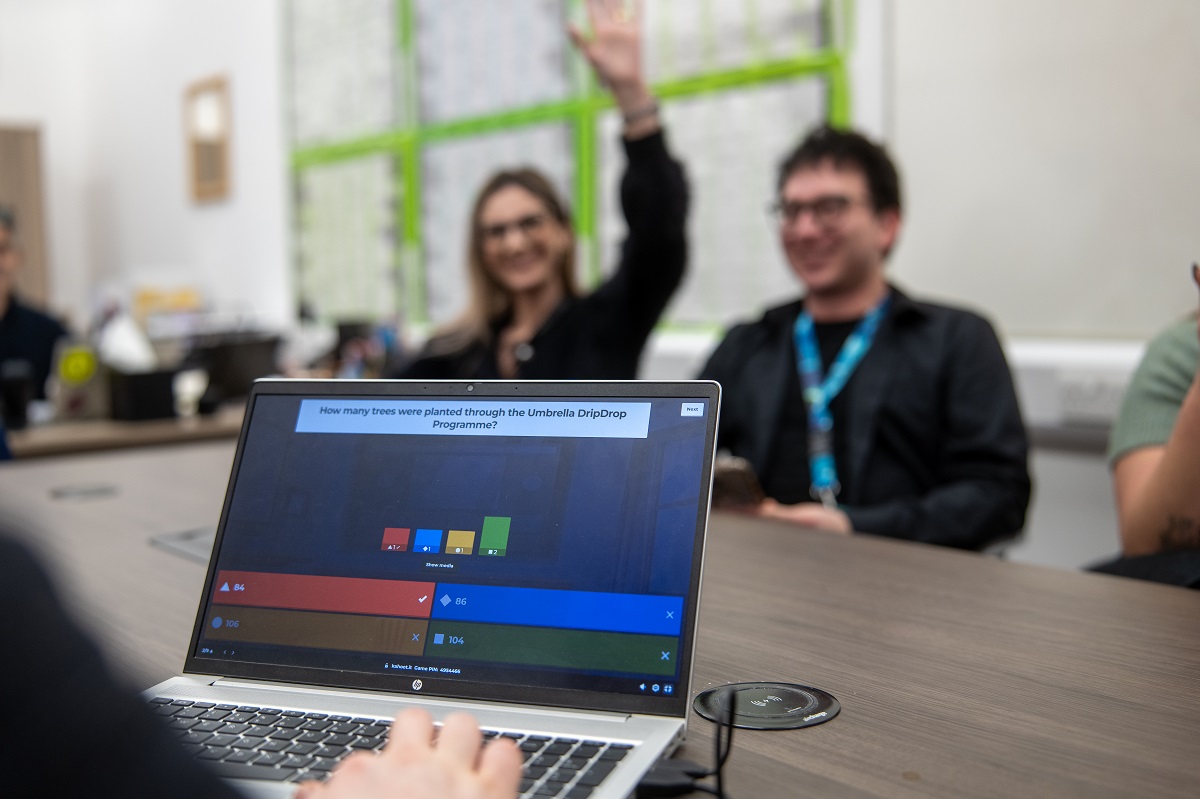
In a traditional office setting, junior staff might gauge the mood of a room or build the courage to ask a supervisor for clarification through subtle social cues. In fast-paced, hybrid environments, this anxiety manifests as operational paralysis. Young workers hesitate to seek guidance, increasing the likelihood of costly miscommunications, project delays, and strategic errors. Furthermore, this dynamic stunts their ability to build professional networks, advocate for their ideas, and develop the executive presence necessary for leadership tracks.
Strategic Pillars for Workforce Transformation
To successfully integrate Gen Z into the workforce and future-proof the broader organization against ongoing disruption, workforce leaders must abandon passive, compliance-driven training models. Instead, they must deploy an intentional, three-pronged learning strategy designed to foster lifelong learning, psychological safety, and human-centric skill development.
+-----------------------------------------------------------------+
|               STRATEGIC PILLARS FOR WORKFORCE L&D               |
+-----------------------------------------------------------------+
          |                                 |
          v                                 v
+--------------------+            +--------------------+
| 1. HARNESS AI FOR  |            | 2. INTEGRATE SOFT  |
|    LEARNING &      |            |    SKILLS INTO     |
|    CREATIVITY      |            |    TRAINING        |
+--------------------+            +--------------------+
          |                                 |
          +-----------------+---------------+
                            |
                            v
                  +--------------------+
                  | 3. PAIR TRAINING   |
                  |    WITH PEER-TO-   |
                  |    PEER LEARNING   |
                  +--------------------+
1. Harness AI to Improve Learning and Creativity, Not Replace It
Artificial intelligence should not be banished from the modern enterprise, nor should it be allowed to atrophy human critical thinking. Instead, forward-thinking L&D architects must deliberately invert how AI is deployed in training environments.
Rather than utilizing AI tools to provide employees with instant, prefabricated answers to complex business problems, organizations should program AI to act as a Socratic tutor. By prompting employees with targeted questions, strategic dilemmas, and discussion starters, AI can challenge learners to unpack problems independently.
This methodology saves instructional designers and corporate trainers valuable time in curating personalized, engaging learning pathways while forcing employees to flex their cognitive muscles. When AI is used to stimulate critical inquiry rather than execute intellectual labor, it transforms from a crutch into a powerful catalyst for human creativity and analytical rigor.
2. Integrate Soft Skills Development Throughout Workforce Training
Soft skills cannot be acquired by reading a compliance manual or watching a pre-recorded video module; they must be practiced, tested, and refined in real-time scenarios. Organizations must embed soft skills training directly into daily workflows through interactive, engaging methodologies.
Team-based, gamified learning challenges—which resonate profoundly with digital-native generations like Gen Z—provide an ideal vehicle for this integration. By turning training modules into collaborative, competitive learning experiences, companies can naturally foster critical competencies such as cross-functional communication, active listening, collective problem-solving, and empathy.
Moreover, these interactive digital tools offer something traditional corporate hierarchies often fail to provide: instant, real-time feedback. Recent joint research from Gallup and Workhuman emphasizes that frequent, transparent feedback is a non-negotiable prerequisite for high employee engagement and talent retention. Immediate feedback loops provide young workers with unambiguous clarity regarding their performance trajectories, highlighting specific behavioral adjustments required for professional growth while validating their contributions.
3. Pair Training and Team Building with Peer-to-Peer Learning
Active involvement is the baseline of effective corporate training; peer-to-peer learning elevates this process by transforming learners into active leaders and mentors. Organizations should dismantle rigid top-down communication structures by implementing cross-functional knowledge exchange sessions where junior employees interface directly with team members and department heads at all organizational levels.
A particularly potent strategy for modern enterprises is the establishment of "mutual mentoring" programs. In these frameworks, younger tech-savvy employees are paired with veteran senior leaders. While Gen Z workers help older colleagues master emerging digital platforms and software ecosystems, they simultaneously gain access to invaluable institutional knowledge, professional networks, and decades of strategic career experience from senior staff. These symbiotic relationships alleviate feelings of isolation, foster a deep sense of belonging, and make younger workers feel genuinely supported.
Furthermore, peer-led learning environments drastically reduce the social friction and psychological barriers associated with asking questions. When junior professionals are given safe spaces—such as moderated live Q&A platforms—to voice uncertainties without fear of judgment, the corporate culture shifts dramatically. Employees feel empowered to speak up, express unconventional thoughts, and contribute innovative ideas, thereby mitigating the risk of miscommunication while supercharging organizational agility.
Future Outlook: The Imperative of Lifelong Learning
The demographic arc of the global workforce is clear and unyielding: within the next decade, Generation Z will constitute the single largest demographic cohort in the professional world. Organizations that fail to adapt their cultural architectures, onboarding frameworks, and learning strategies to meet the developmental needs of this generation do so at their own peril.
The future of work is not defined by static technical mastery, but by the capacity for continuous, lifelong learning. As generative AI and other disruptive technologies continue to accelerate the pace of economic change, the half-life of specific hard skills will shrink even further. In this hyper-dynamic environment, an organization’s competitive advantage will ultimately rest on the resilience, emotional intelligence, and collaborative agility of its people.
By overhauling learning and development programs to embrace AI-assisted critical thinking, gamified soft-skills training, and structured peer-to-peer mentorship, business leaders can transform the current workforce readiness crisis into a profound competitive opportunity. With a thoughtfully designed, human-centric learning strategy, enterprises can empower Gen Z professionals to deliver exceptional contributions today while building the resilient leadership pipelines required for the decades ahead.
Organizations ready to bridge the soft skills chasm and accelerate the upskilling of their entire workforce can leverage enterprise-grade engagement platforms such as Kahoot! 360. By turning everyday training into interactive, collaborative, and measurable learning experiences, companies can ensure their workforce remains agile, confident, and future-proof.
This journalistic feature article is an enriched adaptation of insights originally published by HR Tech Cube.

