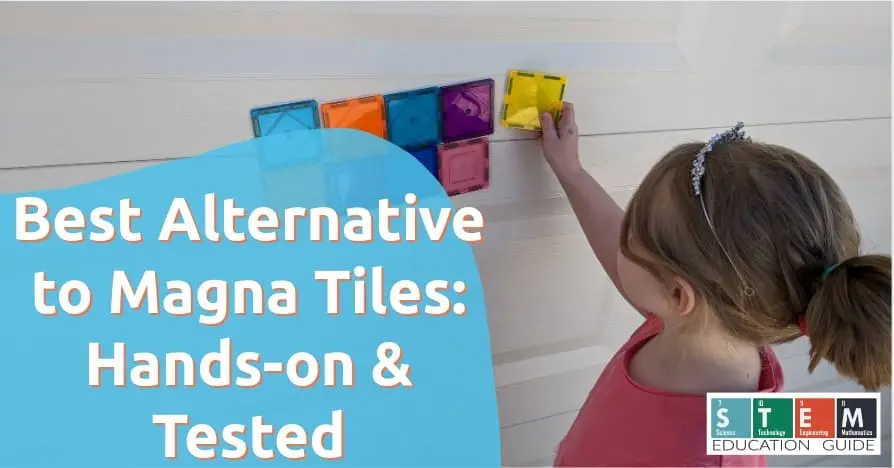
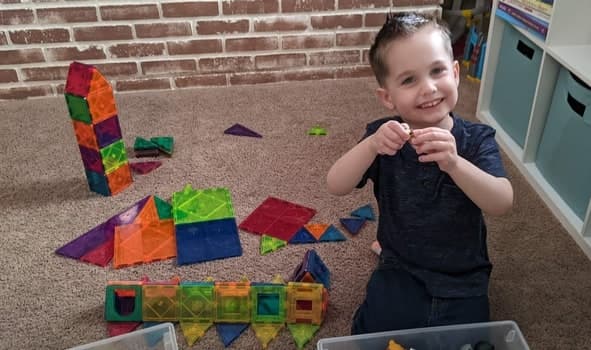
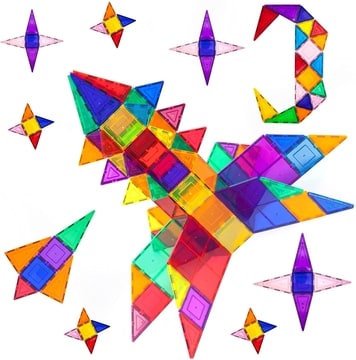
Magnetic building tiles have taken the modern toy market by storm, establishing themselves as a cornerstone of early childhood STEM (Science, Technology, Engineering, and Mathematics) education. For families and educators alike, toys like Magna-Tiles represent the gold standard of open-ended play: they are durable, conceptually simple, and capable of transforming into any shape a child’s imagination can conceive. However, this high praise comes with a steep financial barrier to entry.
When parents inevitably seek to expand their children’s collections—turning a modest starter kit into a sprawling metropolis of magnetic towers, castles, and bridges—the true cost of the original brand becomes glaringly apparent. Because Magna-Tiles maintain strict price-fixing and control retail discounting through authorized distributors, finding a bargain on the market-leading brand is nearly impossible.
This financial hurdle has sparked a booming secondary market of high-quality, budget-friendly competitors. This comprehensive review investigates the phenomenon of magnetic building toys, examines why original sets command such high premiums, and rigorously evaluates the top alternatives—including PicassoTiles, Cossy, Shapemags, and Magblock—to determine whether off-brand magnetic tiles can genuinely match the performance, safety, and durability of the industry pioneer without breaking the family budget.
Detailed Chronology: The Evolution of Magnetic Building Toys
To understand the modern landscape of magnetic tiles, one must look back at how the category originated and evolved over the last three decades.
1997: The Birth of the Pioneer
Magna-Tiles were first introduced to the market in 1997, conceptualized by a Japanese math teacher who wanted a hands-on geometry tool to help young students understand 2D and 3D shapes. These original tiles revolutionized spatial learning by embedding powerful neodymium magnets inside safe, rigid ABS plastic frames. For years, the brand held a virtual monopoly on the concept, serving primarily educational institutions, museums, and affluent households.
The 2010s: The Patent Expiration and Market Expansion
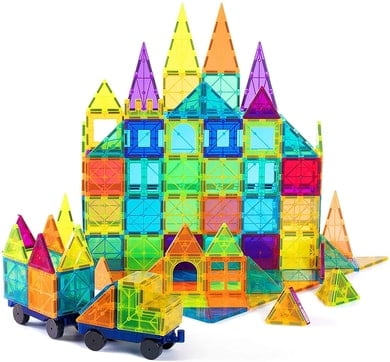
As early patents expired and manufacturing technologies in thermoplastics became more accessible and cost-effective, alternative toy manufacturers recognized a massive gap in the consumer market. Brands like PicassoTiles and Cossy emerged in the mid-2010s, introducing comparable magnetic construction sets at a fraction of the cost. These new market entrants did not merely copy the original design; they innovated by incorporating vibrant color palettes, higher transparency levels, and specialized architectural elements such as windows, doors, and arches that original kits lacked.
The Present Day: A Flourishing STEM Ecosystem
Today, magnetic tiles are recognized by developmental psychologists and the Good Housekeeping Institute as premier tools for fostering fine motor skills, hand-eye coordination, and foundational engineering principles. While brand-name Magna-Tiles still command respect for their rigid structural integrity, the stigma surrounding "knock-off" toys has completely dissolved. Parents now view alternative brands not as cheap imitations, but as smart, highly compatible investments that allow children to build on a grander scale.
Supporting Context & Metrics: Why Are Magna Tiles So Expensive?
When consumers purchase a 100-piece box of name-brand Magna-Tiles, a significant portion of the retail price pays directly for the brand name, marketing overhead, and historical R&D. However, cost is also driven by rigorous manufacturing standards.
+--------------------------------------------------------------------------+
|                       COST DRIVERS OF MAGNETIC TILES                     |
+---------------------------+----------------------------------------------+
| Brand Equity & History    | Premium pricing due to being first-to-market |
| Material Safety & Testing | Compliance with strict non-toxic ABS specs   |
| Structural Rigidity       | Thicker plastic walls and welded seams       |
| Retail Price Controls     | Enforced minimum advertised pricing (MAP)    |
+---------------------------+----------------------------------------------+
Safety and Material Integrity
Like leading STEM competitors such as Connetix Tiles, authentic Magna-Tiles must undergo rigorous safety evaluations to ensure they are free from toxic materials, harmful phthalates, and lead. Consumer testing organizations frequently note that reputable alternative brands also undergo these exact safety certifications. The plastic utilized across almost all major brands is food-grade, non-toxic ABS plastic.
Structural Differences in Testing
When subjected to drop tests and stress testing (such as prying pieces apart), original Magna-Tiles often exhibit slightly thicker plastic walls and a more rigid internal structure compared to some budget competitors. This extra reinforcement prevents cracking during heavy-handed toddler play. Nevertheless, many off-brand tiles utilize comparable ultrasonic welding techniques to seal the magnets securely inside, preventing the dangerous dislodging of small magnetic components.
Official Statements and Industry Insights
Child development experts and toy-testing institutes emphasize that the core value of magnetic tiles lies not in the logo stamped on the plastic, but in the cognitive benefits of open-ended play.
"Yes, Magna-Tiles are the best-constructed magnetic tiles on the market, but the marginal increase in durability is rarely enough to justify doubling or tripling the cost for a growing collection." — Family Toy Testing Panel
The Pricing Conundrum
Retailers selling name-brand Magna-Tiles are strictly bound by manufacturer agreements regarding pricing. This means sales, clearances, and deep discounts are exceptionally rare. When discounts do occur, they are typically negligible. Consequently, consumer advocates and parenting publications consistently point families toward vetted alternatives to achieve the high piece-counts necessary for complex architectural builds.
The Best Magna-Tile Alternatives Evaluated
For parents ready to expand their child’s playroom capabilities without draining their savings accounts, several standout brands offer seamless compatibility, robust safety profiles, and creative building enhancements.
1. PicassoTiles: The Undisputed Value King
PicassoTiles consistently rank at the top of consumer reviews for Magna-Tile alternatives. Side-by-side comparative testing reveals that these tiles hold up remarkably well against both original Magna-Tiles and premium Connetix sets.
Compatibility: They match up seamlessly with almost all major magnetic tile brands on the market, allowing children to integrate new pieces directly into existing collections.
Why We Love It: They offer massive starter sets and creative add-on packs (such as race car tracks and marble runs) at a budget-friendly price point, making it effortless to construct sprawling neighborhoods and intricate architectural masterpieces.
2. Cossy Kids Magnetic Tiles: Vibrant Transparency and Illumination
For families looking to maximize visual appeal, Cossy takes the lead.
Design & Aesthetics: Cossy tiles feature exceptionally high transparency and rich, saturated jewel tones. When sunlight streams through a child’s tall tower or stained-glass-style window build, the resulting colors vividly illuminate the room.
Durability: Built to withstand daily abuse in busy households, these tiles maintain their structural clarity and magnetic strength over years of heavy play.
3. Shapemags Magnetic Tiles: Merging Literacy with STEM
Shapemags introduce an innovative cross-curricular element to construction play by integrating literacy and visual learning into their building sets.
Unique Features: Alongside standard geometric shapes, options like "Stile Mags" provide magnetic slips featuring letters, numbers, and pictures that snap onto the surface of the tiles.
Educational Value: This thoughtful design transforms simple block-building into an interactive spelling, sorting, and storytelling exercise, bridging the gap between imaginative play and foundational early education.
4. Magblock Magnetic Blocks: Built-In Architectural Elements
One of the common limitations of basic magnetic tile starter kits is the absence of specialized structural components. Magblock solves this elegantly.
Advanced Pieces: Magblock sets frequently include pre-fabricated elements such as working doors, fences, archways, and curved balconies straight out of the box.
Play Potential: Children can replicate real-world buildings, suburban homes, and medieval castles without requiring parents to purchase costly separate expansion packs.
Comparative Brand Analysis
Brand
Price Point
Transparency / Color
Unique Features
Compatibility
Magna-Tiles
High ($$$$)
Moderate / Standard
Industry pioneer, maximum wall rigidity
Universal
PicassoTiles
Low ($)
High / Bright
Massive variety of thematic add-on kits
Universal
Cossy
Low ($)
Very High / Vibrant
Excellent light transmission and hue saturation
Universal
Shapemags
Moderate ($$)
Standard
Includes letter and picture "Stile Mags"
Universal
Magblock
Moderate ($$)
Good
Built-in doors, fences, and architectural arches
Universal
Future Outlook: The Growing Horizon of STEM Play
As the toy industry continues to evolve, the demand for high-quality, accessible STEM educational tools will only accelerate. The monopoly once held by pioneering brands has given way to a competitive, consumer-driven market where quality is no longer exclusive to high price tags.
For parents and educators, this democratization of play materials is a definitive win. Children no longer need to restrict their creativity to a modest 32-piece starter box. By mixing and matching compatible alternative brands like PicassoTiles, Cossy, Shapemags, and Magblock, kids can dream bigger, build taller, and explore complex engineering concepts on an unprecedented scale.
An Exploration Tip for Parents: Turn playtime into an analytical exercise by engaging children with open-ended questions. Ask them: "How does the weight of this PicassoTile compare to that Magna-Tile?" or "What do you notice about how light passes through different colored pieces?" Ultimately, open-ended STEM play fosters critical thinking, spatial awareness, and endless hours of imaginative joy—proving that smart parenting and heavy-duty fun can go hand in hand.