
Executive Overview
To an outside observer, the subject of this investigation lives a life of enviable order. As a successful writer, editor, wife, and mother of two teenagers, her days are orchestrated with precision. Her outward-facing life is defined by immaculate schoolwork from her youth, stellar professional deadlines met ahead of schedule, and an appearance of effortless grace.
Yet, beneath this polished exterior lies an intricate psychological scaffolding. It is a world governed by ten staggered alarms ringing throughout the morning to ensure basic operational checkpoints are met. It is fueled by a brain that runs at “a million miles an hour” with no off switch, leading to chronic insomnia, internal restlessness, and an exhaustive, lifelong performance of neurotypical capability.
This individual was not diagnosed with Attention-Deficit/Hyperactivity Disorder (ADHD) until her 40s. Her story is far from unique. Across the globe, an invisible cohort of women is navigating professional success, family management, and social expectations while silently carrying the crushing weight of undiagnosed neurodivergence.
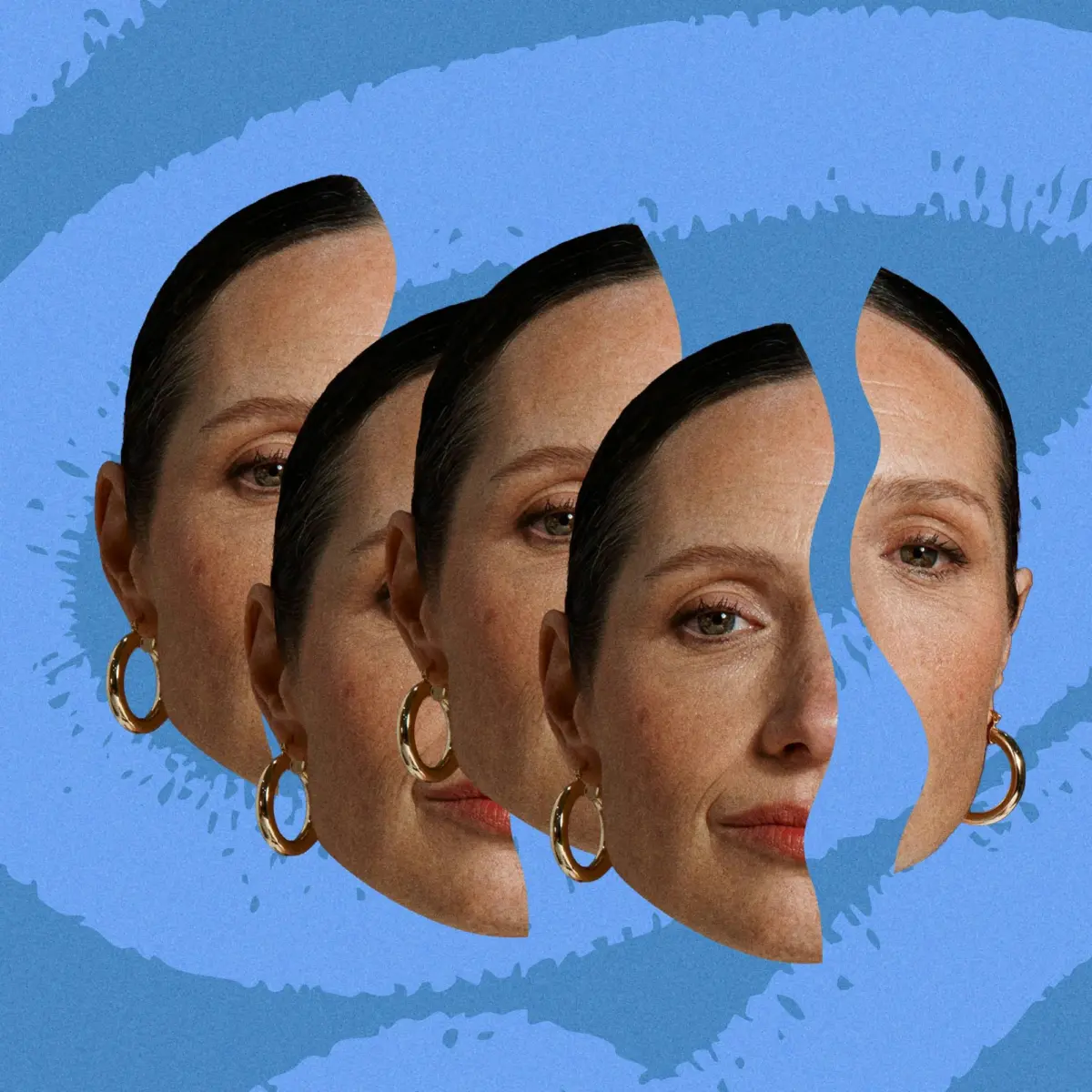
At the heart of this phenomenon is masking—the conscious or unconscious suppression, compensation, and camouflage of ADHD traits to meet external expectations. While masking allows many women to slip through the diagnostic net for decades, experts warn that it comes with a steep hidden toll: chronic anxiety, profound exhaustion, and eventual burnout.
This article explores the mechanisms of ADHD masking in women, the systemic failures in clinical detection, the heavy emotional toll of high-functioning neurodivergence, and the delicate journey toward sustainable unmasking.
Detailed Chronology: From Early Coping Mechanisms to Adult Realization
The Formative Years: Building the Framework
For many girls who grow up with neurodivergent brains, the internal experience is characterized by a high-velocity cognitive engine that struggles to filter distractions. In youth, this often manifests as jumping from one project to six others in a single breath, alongside a reputation for being flighty, distracted, or easily overwhelmed.
However, societal and familial expectations often alter this trajectory. For girls occupying specific birth-order roles—such as being the eldest daughter and middle child—the cultural mandate to be the "responsible one" is heavy. While male siblings or younger children may be granted grace for disorganization or impulsivity, high-achieving girls quickly learn that such behavior is unacceptable.
To survive this social contract, these children construct an elaborate behavioral framework. Bedrooms may be disorganized disasters, but schoolwork remains immaculate. Homework is completed early, lists are generated obsessively, and outward-facing benchmarks are aggressively hit. This creates a double-edged sword: the strategies work too well. Because the child appears successful, agreeable, and hyper-competent, parents, teachers, and authority figures have zero reason to suspect underlying neurodivergence.
The Decades-Long Performance
As these girls transition into adulthood, the coping mechanisms evolve from childhood checklists into complex adult systems. Careers are launched, families are raised, and households are managed. Yet, the internal state remains one of frantic stabilization.
The author’s personal realization arrived in her 40s. Despite working as a writer and editor—a profession that requires continuous engagement with information and mental health topics—the concept of masking served as a profound epiphany. It revealed that her relentless work ethic was not proof that she was naturally managing everything with ease, but rather a reflection of the sheer volume of effort required just to keep the foundation from collapsing.
The Breaking Point: When the Systems Fail
According to clinical psychologists, the longevity of these coping mechanisms often creates a false sense of security. Women learn to attribute their hyper-organization to personality quirks rather than survival tactics. They do not think, "I am compensating for ADHD." Instead, they think, "I am a perfectionist," "I am an anxious person," or "I have always been a people-pleaser."
However, life’s demands inevitably expand. Between career advancements, parenting responsibilities, aging parents, and socioeconomic pressures, a critical threshold is reached. At some point, the external responsibilities outpace the individual’s physiological and psychological capacity to compensate. When this happens, it can appear to the outside world as though ADHD has materialized out of nowhere, or that a woman who previously "had her sh*t together" is suddenly falling apart. In reality, the underlying executive-function difficulties were always present; what changed was simply the individual’s waning ability to maintain the mask.
Supporting Context & Metrics: The Gender Diagnostic Gap
The historical understanding of ADHD was built predominantly on studies of young boys, who typically present with hyperactive, disruptive behaviors that are difficult to ignore in a classroom setting. Consequently, girls and women have faced a profound diagnostic bias that persists today.
The Mechanics of Masking
Masking in ADHD encompasses a wide variety of compensatory behaviors designed to render neurodivergent traits invisible:
- Hyper-Organization: Relying heavily on digital apps, color-coded calendars, sticky notes, and multiple daily alarms to replace failing internal working memory.
- Perfectionism: Spending triple the necessary time checking work out of a paralyzing terror of missing a minute detail.
- People-Pleasing: Automatically agreeing to commitments well beyond personal capacity to avoid the risk of disappointing others or being perceived as difficult.
- Procrastination and Panic-Driven Execution: Utilizing the adrenaline spike of imminent deadlines to kickstart executive functioning when standard motivation fails.
Achievement Versus Cost
Clinical professionals emphasize a vital distinction in psychological evaluation: Achievement tells us what someone accomplished; it does not tell us what it cost them to accomplish it.
When evaluators look at a woman who earns advanced degrees, maintains a thriving career, and runs a household, they see the outcome. They do not see the five alarms required to remember a routine appointment, the physiological panic driving every deadline, the inability to initiate tasks until late at night when the rest of the world goes quiet, or the sheer exhaustion spent monitoring every word and gesture to ensure she does not appear "too much."
Official Statements and Expert Insights
To understand the clinical dimensions of this pattern, insights were gathered from Christal Castagnozzi, a clinical and school psychologist and the clinical director of the Thrive Psychology Health Team.
Defining the Behavioral Function
Castagnozzi notes that masking is not a formal diagnostic criterion within the DSM-5, yet it represents one of the most significant barriers to identifying adult ADHD, particularly among women.
"Girls often receive very strong messages about being organized, responsible, agreeable, socially attuned, and easy to manage," Castagnozzi explains. "A girl who repeatedly gets the message that she’s too loud, too emotional, too forgetful, too disorganized, or ‘too much’ may become very motivated to monitor and correct those behaviors."
When exploring overlapping traits such as perfectionism, anxiety, and people-pleasing, Castagnozzi stresses that clinicians look past the label to examine the underlying function of the behavior:
"None of those traits automatically indicate ADHD. People can be perfectionistic or people-pleasing for many reasons. Clinically, what we’re interested in is the function of the behavior: What is this strategy doing for the person? What happens when she doesn’t do it? What is she working so hard to prevent?"
The Irony of Success
Castagnozzi highlights the central paradox of high-functioning neurodivergence: the more efficiently an individual compensates, the harder it is to detect the underlying disorder.
"The irony is that the more successfully she compensates, the easier her ADHD can be to miss," Castagnozzi states. She points to the stark contrast between public perception and private reality: "We see the person who gets excellent grades, never misses a deadline, has a successful career, and appears incredibly organized. We don’t necessarily see the five alarms she uses to remember an appointment, the panic that drives her to meet every deadline, the work she couldn’t initiate until late at night, or the hours she spends checking something because she’s terrified she’s forgotten an important detail."
Future Outlook: The Path to Sustainable Unmasking
For women diagnosed later in life, the initial wave of relief is frequently accompanied by a heavy wave of grief. Looking back across decades of self-blame—believing oneself to be lazy, scattered, overly sensitive, or simply lacking willpower—brings a profound realization of how much vital energy was misdirected toward correcting an misunderstood neurology.
Reframing the Goal: What Does Unmasking Mean?
A common misconception following an adult ADHD diagnosis is that the individual should immediately "stop masking." However, experts caution against turning unmasking into yet another rigid performance metric or standard of perfection.
Many compensatory strategies—such as external calendars, digital alarms, structured routines, visual reminders, body-doubling, and requesting instructions in writing—are genuinely useful tools that externalize executive functions. The objective is not to strip away all coping mechanisms, but rather to evaluate their intent.
Castagnozzi frames the diagnostic transition around a single, liberating question:
"Does this strategy support you, or does it primarily help you hide the fact that you’re struggling?"
Moving toward authentic unmasking involves actionable shifts in daily life:
- Allowing "Good Enough": Releasing the compulsion to spend triple the time making a task flawless, accepting that "good enough" protects mental health.
- Honoring Capacity: Stopping the automatic reflex to say "yes" to every demand when personal bandwidth is exhausted.
- Embracing Accommodations: Utilizing tools and asking for written instructions without feeling guilt or believing one should be able to function without them.
Recommendations for Those Recognizing the Pattern
For readers who recognize their own lived experiences in these descriptions, the clinical recommendation is simple yet profound: get curious.
Because executive-function difficulties, forgetfulness, procrastination, and overwhelm frequently overlap with—or are exacerbated by—anxiety, depression, trauma, and sleep disturbances, a comprehensive psychological assessment is invaluable. Individuals do not need to arrive at an evaluation with a fully formed self-diagnosis or a briefcase of proof.
Instead, the entry point can be as simple as an honest admission:
"I’ve started recognizing these patterns in myself, they’ve been affecting my quality of life, and I’d like to understand what’s going on."
By shifting the focus from maintaining an exhausting outward-facing perfection to building genuinely supportive internal frameworks, late-diagnosed individuals can finally step out from behind the mask and begin living a life defined not by what it cost them to succeed, but by authenticity and peace.

