
Executive Overview
Introductory Science, Technology, Engineering, and Math (STEM) courses have long held a formidable reputation in higher education. Acting as institutional "gatekeepers," these foundational classes routinely subject undergraduates to intense academic pressure, steep performance curves, and high-stakes assessment models. In many traditional programs, midterms and final exams dictate 70% or more of a student’s final grade, transforming the pursuit of knowledge into a high-anxiety ordeal.
For decades, educators and academic researchers have grappled with a central dilemma: how to rigorously assess student understanding and maintain academic standards without exacerbating the psychological distress that too often leads to student burnout or attrition from STEM majors.
Recent empirical research sheds new light on this challenge, pointing toward gamified formative assessment as a viable antidote to classroom anxiety. A landmark study conducted by Adkins-Jablonsky and colleagues (2021) investigated the implementation of non-graded Kahoot! sessions in demanding introductory biology courses across two major American universities: the University of Alabama at Birmingham (UAB) and the University of California, Irvine (UCI).
The findings challenge conventional assumptions about competition in the classroom. While academic intuition might suggest that introducing leaderboards, countdown timers, and competitive scoring into an already high-stress environment would elevate student anxiety, the research proved the exact opposite. Across diverse institutional settings and pedagogical structures, students consistently rated Kahoot! sessions as significantly less anxiety-inducing than traditional learning practices, such as high-stakes exams, graded quizzes, and independent studying.
Crucially, the study revealed that students who struggled the most with the course material—those vulnerable to lower grades and heightened academic stress—benefited the most from the intervention. For these students, gamified learning offered a rare psychological safe space: an environment where participation carried no penalizing consequences, competition sparked laughter and motivation rather than dread, and self-assessment felt like an engaging game rather than a punitive audit. As universities continue to seek evidence-based strategies to improve student retention, mental well-being, and academic engagement, these findings offer a compelling blueprint for modernizing higher education pedagogy.
Detailed Chronology and Comparative Research Methodology
To understand the impact of gamification on student psychology, Adkins-Jablonsky and their research team designed a multi-institutional observational study focusing on introductory biology courses—universally recognized as critical hurdles for undergraduate STEM students. The investigation was structured to compare how students experienced gamified learning within fundamentally different instructional architectures.
The Institutional Landscapes: UAB and UCI
The two universities selected for the study offered contrasting pedagogical environments, allowing researchers to evaluate Kahoot! across varying levels of course structure:
- The University of Alabama at Birmingham (UAB): At UAB, the introductory biology course leaned toward a traditional lecture format with a lower degree of structural scaffolding. Student evaluation was heavily concentrated around four major exams, leaving little room for error and placing immense performance pressure on each assessment milestone.
- The University of California, Irvine (UCI): In contrast, the introductory biology course at UCI featured a highly structured pedagogical design. Students engaged in a dense web of continuous learning activities, including mandatory pre-class assignments, collaborative in-class activities, structured discussion sessions, weekly quizzes, midterms, and a comprehensive final exam.
Introducing the Intervention
Despite their structural differences, both courses shared a common trait: high stakes and high student anxiety. Into these demanding environments, researchers introduced non-graded Kahoot! sessions.
The intervention was deliberately designed to test whether the core mechanics of gamification—such as real-time points accumulation, dynamic countdown timers, and public leaderboards—would amplify or alleviate the stress inherent in these courses. Importantly, the sessions carried zero academic weight; scores did not impact final grades, ensuring the activity remained strictly formative.
Post-Intervention Evaluation
Following the integration of Kahoot!, researchers surveyed students to measure and compare the anxiety levels associated with a wide spectrum of academic practices. The evaluated activities ranged from answering cold-call questions and working in collaborative peer groups to independent studying, attending professor office hours, taking weekly quizzes, and sitting for high-stakes exams.
The comparative data revealed a striking consensus across both institutions. Despite its competitive elements, Kahoot! consistently anchored the low-anxiety end of the academic spectrum.
- At UAB, students reported that participating in Kahoot! sessions was significantly less stressful than numerous conventional learning practices embedded within the course.
- At UCI, the results were equally compelling: only passive activities—such as answering simple clicker questions or listening to a teaching assistant’s lecture—were rated as inducing less anxiety than the gamified quizzes.
Far from heightening the tension of high-stakes biology courses, the introduction of game mechanics provided a psychological release valve, reframing assessment as an interactive and enjoyable experience.
Supporting Context & Quantitative Metrics
The quantitative and qualitative metrics gathered during the study provide a granular view of how students perceive different academic stressors. By mapping student anxiety levels across various learning modalities, researchers were able to isolate the unique psychological profile of gamified formative assessment.
Deconstructing the Anxiety Spectrum
In high-stakes STEM courses, student stress is rarely distributed evenly across all academic tasks. Traditional evaluations—particularly midterm and final exams—consistently dominate the upper echelons of the anxiety scale. Independent studying and office hours also register moderate-to-high stress levels due to the implicit pressure of mastering complex biological concepts independently.
When researchers plotted Kahoot! against these established practices, the divergence was clear. At UAB, students distinguished sharply between high-stakes evaluations (such as Canvas quizzes and major exams) and low-stakes gamified reviews. While a standard quiz elicited anticipatory dread, a Kahoot! session was widely perceived as a low-risk opportunity to test existing knowledge.
The Equity of Gamification: Lifting Struggling Students
One of the most profound metrics uncovered by the study relates to student performance disparities. In conventional academic settings, a well-documented correlation exists between lower grades and elevated classroom anxiety. Students who find themselves falling behind often experience a compounding cycle of stress, diminished confidence, and declining academic performance.
- At UCI: Researchers discovered that while anxiety surrounding traditional classroom and study practices strongly correlated with final course grades (with lower-performing students experiencing the highest stress), Kahoot! broke this mold. It stood out as one of the very few assessed practices where anxiety levels were not significantly tied to student grades. Gamification leveled the psychological playing field.
- At UAB: Lower-performing students were statistically more likely than their high-performing peers to report tangible benefits from Kahoot! sessions. Specifically, struggling students indicated that the gamified reviews actively helped them feel less stressed heading into major exams. Furthermore, they were more likely to report that Kahoot! shaped their study habits, deepened their engagement with complex lecture materials, and served as a preferred alternative to traditional classroom clickers.
These metrics carry profound implications for educational equity. They demonstrate that students who struggle most with foundational coursework—and who are statistically at the highest risk of dropping out of STEM pipelines—stand to gain the most from pedagogical tools that invite active participation without threatening academic penalties.
Official Statements and Qualitative Insights
To fully grasp why gamified learning succeeded in reducing anxiety while maintaining academic rigor, researchers analyzed qualitative feedback from student surveys and open-ended response forms. The qualitative data revealed that students did not view competition as a source of stress, but rather as a catalyst for community, motivation, and self-reflection.
Redefining Competition in the Classroom
Conventional educational theory sometimes warns that introducing competitive elements—such as public leaderboards and timers—can alienate anxious students or foster a cutthroat atmosphere. However, the student responses from the UAB cohort defied this assumption.
An overwhelming 75% of student comments specifically addressing Kahoot!’s game mechanics were explicitly positive. Rather than describing the competition as intimidating, students associated the platform with positive emotional states, including laughter, intrinsic motivation, immediate feedback loops, and low-stress opportunities for knowledge testing.
In the Students’ Own Words: Qualitative Highlights
Direct student testimonials illustrate the psychological shift that occurs when high-stakes material is decoupled from punitive grading:
"It’s fun and I don’t feel nearly as much anxiety with a kahoot quiz as I do with a canvas quiz."
— UAB Undergraduate Student
This simple contrast highlights the core psychological differentiator. While a Canvas quiz represents an official, recorded assessment tied directly to a grade point average, a Kahoot! quiz functions as a collaborative sandbox.
Another student elaborated on the social and cognitive dynamics unlocked by the platform:
"I think Kahoot! before class positively engages students. There is competition, laughter, and self-critique. These actions would otherwise not take place without Kahoot!"
— UAB Undergraduate Student
This observation touches on a vital pedagogical breakthrough: the generation of organic self-critique. In traditional lecture settings, students are often reluctant to assess their own gaps in understanding out of fear of appearing uninformed to professors or peers. By wrapping self-assessment in a gamified, humorous framework, the platform disarms defensiveness. Students feel safe to make mistakes, laugh at incorrect answers on the leaderboard, and instantly course-correct their understanding.
Nuance and Individual Variance
While the macro-level data overwhelmingly pointed toward positive student reception, the researchers maintained scientific objectivity by noting individual differences. As with any classroom intervention, individual student responses to elements like countdown timers, upbeat background music, and competitive scoring can vary based on personality traits, learning styles, and baseline anxiety disorders.
Nevertheless, when evaluated at the aggregate class level, the overarching pattern was unmistakable: the vast majority of students experienced Kahoot! as a welcoming, low-anxiety mechanism that bridged the gap between passive listening and active, confident participation.
Future Outlook: The Evolution of STEM Pedagogy in Higher Education
The findings from the Adkins-Jablonsky et al. study arrive at a critical juncture for higher education. As universities worldwide grapple with declining undergraduate engagement, post-pandemic mental health crises, and persistent equity gaps in STEM fields, the demand for evidence-based pedagogical reform has never been more urgent.
Moving Beyond the "Gatekeeper" Model
For generations, introductory STEM courses have operated under an implicitly punitive philosophy: that high failure rates and intense psychological pressure serve as effective filters to identify "qualified" scientists and engineers. Modern educational research dismantles this outdated premise. High anxiety does not correlate with deeper conceptual mastery; rather, chronic stress impairs working memory, inhibits cognitive flexibility, and drives talented and diverse students away from vital technological and scientific disciplines.
Integrating low-stakes gamification into rigorous curricula represents a shift toward supportive accountability. By decoupling formative assessment from punitive grading, educators can maintain high academic standards while cultivating an emotional climate conducive to deep learning.
Scalable Implementation for Modern Universities
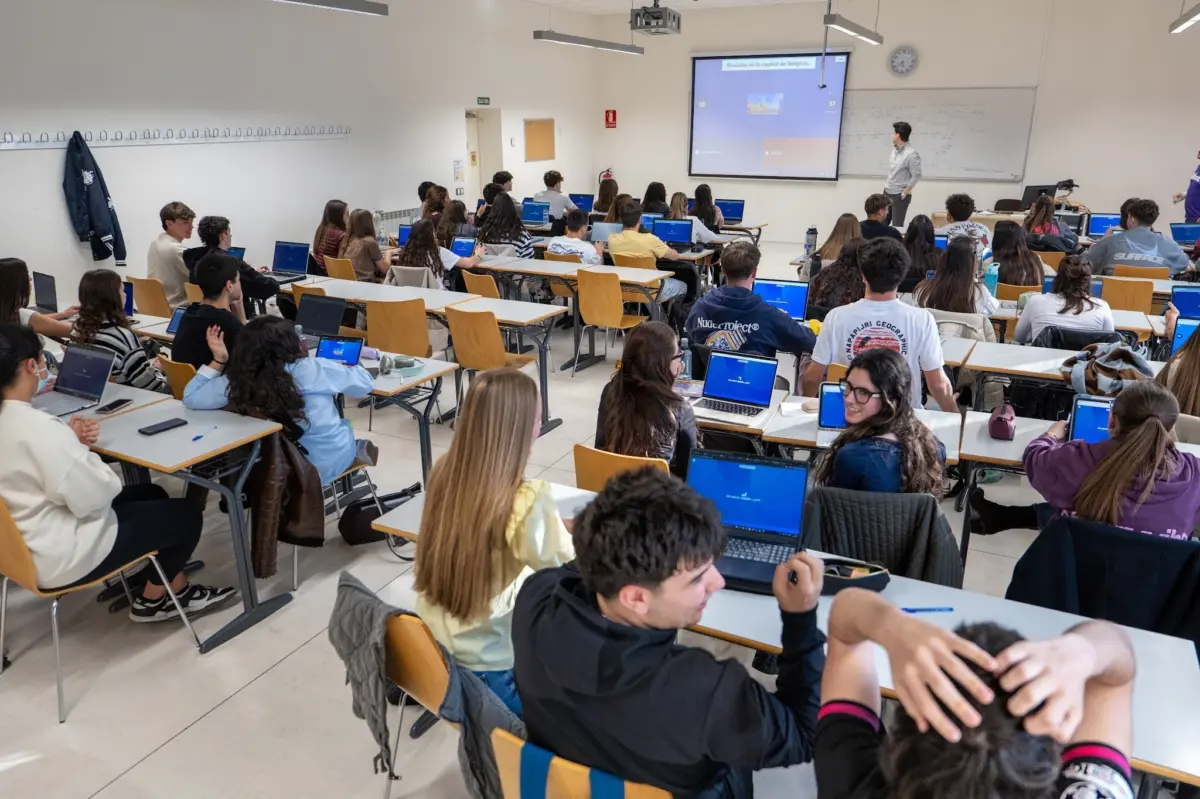
As institutions look toward the future, the scalability of gamified learning platforms offers a practical path forward. Unlike resource-intensive interventions that require one-on-one tutoring or small seminar redesigns, digital formative assessment tools can be seamlessly deployed across large lecture halls containing hundreds of undergraduates.
Whether implemented at research-intensive institutions like UCI or traditional comprehensive universities like UAB, gamified review sessions provide educators with real-time diagnostic data on student comprehension while simultaneously boosting classroom morale. Instructors can instantly identify which complex biological concepts require re-teaching, addressing knowledge gaps before they manifest as failing grades on high-stakes midterms.
Conclusion: A Blueprint for Compassionate Rigor
The intersection of rigorous STEM education and student mental well-being does not have to be a zero-sum game. As demonstrated by the empirical data and student voices captured in this research, academic rigor and playful engagement can coexist harmoniously.
By strategically lowering the psychological barriers to participation through gamified platforms like Kahoot!, universities can transform introductory classrooms from intimidating gatekeepers into vibrant communities of inquiry. For the students navigating these demanding academic landscapes—particularly those struggling to find their footing—this pedagogical shift offers more than just a fun break in the lecture; it offers a renewed sense of belonging, confidence, and enduring academic resilience.
To explore further research, institutional case studies, and educator resources on implementing formative review in higher education, visit kahoot.com/research.

