

Executive Overview
The debate surrounding cell phone use in K-12 classrooms has evolved from a minor classroom management annoyance into one of the most critical educational and public health discussions of the decade. While digital technology has undeniably transformed modern society, offering unprecedented access to information and tools, its unmitigated presence in academic environments has triggered a crisis of focus, mental well-being, and social development.
Today, schools across the globe find themselves at a historic crossroads. As the normalization of constant connectivity infiltrates every corner of daily life, educators face an uphill battle against devices specifically engineered to hijack attention spans. Although proponents of classroom access frequently cite parental communication and emergency preparedness as valid concerns, a mounting body of scientific research demonstrates that the mere proximity of a smartphone degrades cognitive performance, fractures attention, and stymies academic achievement.
This comprehensive investigation explores the multifaceted impact of mobile devices on student learning. By examining cognitive science, behavioral psychology, and classroom dynamics, we analyze the core reasons why establishing phone-free environments is no longer merely a preference for order, but an urgent prerequisite for genuine education. Furthermore, this report outlines the systemic challenges of monitoring digital usage, the degradation of in-person social dynamics, the exhaustion of limited self-regulation reserves, and the imperative for schools to teach healthy technological boundaries.
Detailed Chronology: The Rise, Peak, and Reversal of Classroom Connectivity
To understand how smartphones became the ultimate classroom adversary, it is necessary to trace the trajectory of technology integration over the last twenty years.
- The Early 2000s (The Integration Era): As mobile technology transitioned from luxury flip phones to early internet-enabled devices, schools initially viewed digital tools with optimism. Educational institutions invested heavily in computer labs, laptops, and eventually "Bring Your Own Device" (BYOD) policies, hoping to bridge the digital divide and prepare students for a tech-driven workforce.
- The 2010s (The Smartphone Boom): With the ubiquity of high-speed mobile internet and social media applications tailored specifically for younger demographics—such as Instagram, Snapchat, and later, TikTok—smartphones saturated youth culture. Schools struggled to keep pace, attempting nuanced, piecemeal policies that allowed phones for "educational purposes only."
- The Early 2020s (The Cognitive Toll Recognized): As post-pandemic learning deficits came to light, researchers and educators began connecting the dots between rampant device use and plummeting academic metrics. Landmark studies in cognitive psychology began proving what teachers already knew intuitively: phones were not just tools; they were cognitive disruptors.
- The Present Day (The Push for Phone-Free Zones): A significant cultural and institutional pivot is underway. School districts, state legislatures, and national education ministries are increasingly bypassing restrictive "rules" in favor of absolute bans—utilizing magnetic pouches, lockers, and strict zero-tolerance protocols to reclaim the learning environment.
Supporting Context & Metrics: The Science Behind the Distraction
The argument for removing cell phones from classrooms is not rooted in nostalgia or an aversion to progress; it is grounded in hard, empirical science.
The Cognitive Cost of Proximity
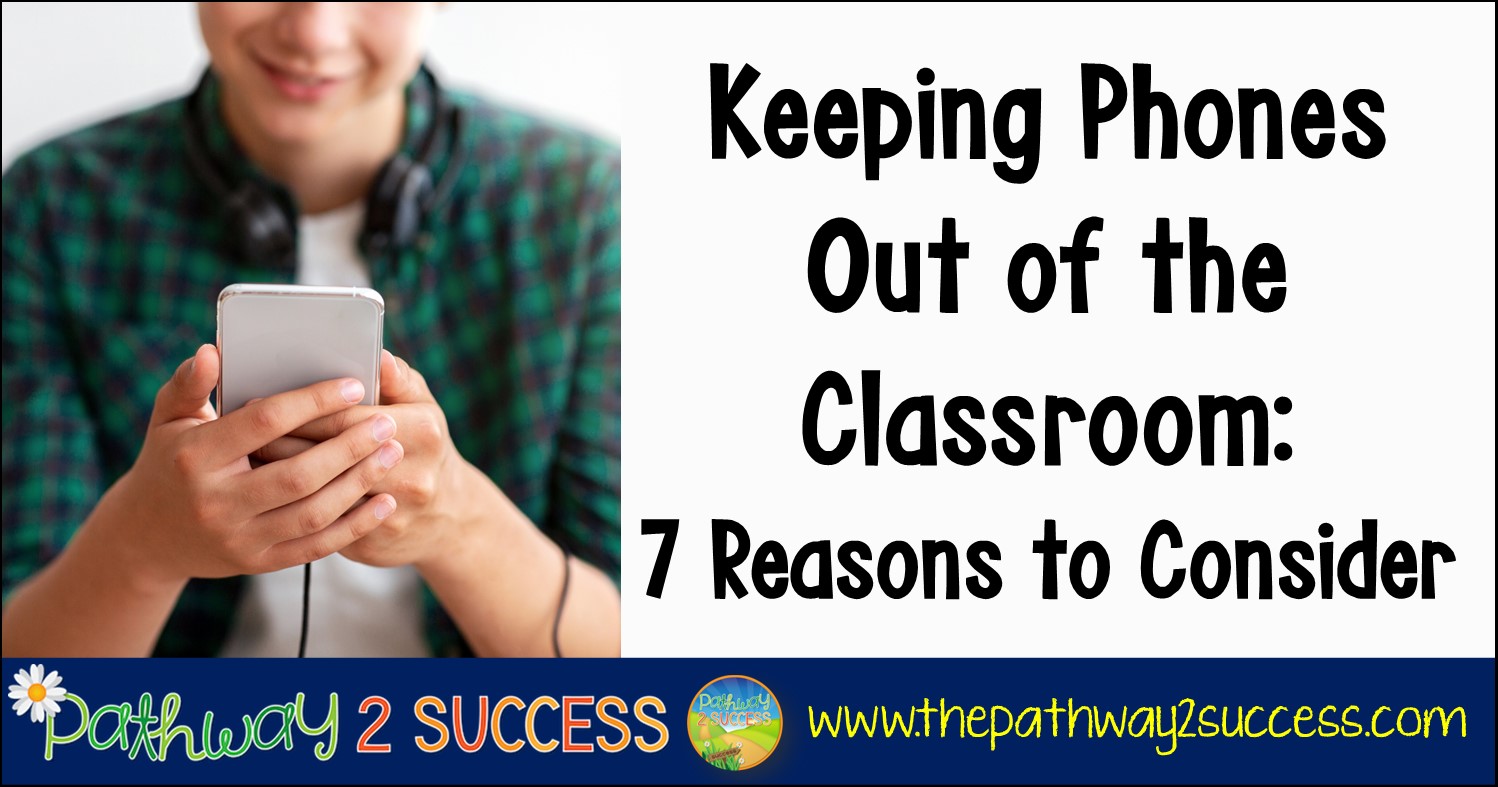
One of the most profound revelations in modern educational psychology is that a student does not need to be actively scrolling through social media to suffer the effects of a cell phone. According to a 2023 study by Skowronek, Seifert, and Lindberg published in Scientific Reports, the mere presence of a smartphone reduces basal attentional performance.
Even when a device is turned upside down on a desk, tucked safely inside a backpack, or resting within a pocket, the brain expends subconscious energy monitoring it for potential notifications. This invisible cognitive load drains the brain’s finite processing power, leaving students with fewer cognitive resources to dedicate to complex problem-solving, reading comprehension, and critical thinking.
The Academic Deficit
Meta-analyses and literature reviews continue to cement the negative correlation between mobile multitasking and academic output. Research by Chen et al. (2024) and Amez & Baert (2020) highlights a consistent trend: mobile phone distraction directly impairs immediate recall and long-term academic achievement. When students divide their attention between a challenging math equation or a historical text and the pull of an incoming text message, the quality of encoding in the brain’s hippocampus drops dramatically.
Exhausting the Finite Resource of Self-Regulation
Human beings possess a limited capacity for self-regulation—the mental stamina required to manage impulses, cope with difficult emotions, and resist immediate gratification. Children and adolescents, whose prefrontal cortices are still undergoing significant neurological development, have even more fragile self-regulation reserves.
When a student sits in a classroom with a smartphone within arm’s reach, they are forced to wage a continuous, exhausting internal battle to ignore it. By the time the student successfully uses their self-regulation to resist checking Instagram during a lecture, their mental battery is depleted. Consequently, they have little to no self-control left to handle frustrations with a difficult assignment, regulate their emotional responses to peer conflicts, or maintain focus through a long lecture.
Official Perspectives and Classroom Realities
The friction between policy and practice in modern schools reveals why half-measures regarding mobile devices consistently fail.
The Illusion of Moderation
Many school administrators initially believed that compromise was the best path forward: allow students to keep their phones, provided they remain silenced and out of sight during instructional periods. However, educators quickly discovered that appropriate usage is virtually impossible to monitor at scale.
Modern applications and websites are expertly engineered by behavioral psychologists to trigger dopamine loops, making them profoundly addictive. Expecting developing brains to self-regulate against multi-billion-dollar attention economies is setting them up for failure. Furthermore, teachers cannot simultaneously deliver rigorous instruction, monitor classroom safety, manage student behavior, and actively police hidden screens beneath desks or inside hoodies.
The Trap of Power Struggles
When schools attempt to enforce vague, conditional phone policies, classrooms frequently degenerate into battlegrounds. A teacher notices a glowing screen, asks the student to put it away, and is met with resistance, negotiation, or outright defiance. These friction points trigger disruptive power struggles that halt learning for the entire room, create high-stress environments for educators, and damage the essential mentor-student rapport required for effective teaching.
Removing the variables entirely—by establishing definitive, school-wide "no-phone zones"—drastically reduces these daily confrontations, returning classrooms to their primary function: centers of intellectual growth.
Social Development, Safety, and the Case for Presence
Beyond academics, the relentless intrusion of smartphones profoundly impacts the psychological and social health of the rising generation.
Reclaiming Face-to-Face Social Skills
Human communication relies heavily on non-verbal cues: micro-expressions, posture, tone of voice, and eye contact. When students spend unstructured hours—such as lunch breaks, hallways, and study halls—glued to glowing rectangles, these vital social muscles atrophy.
A phone-free school environment forces students back into the sometimes awkward, but ultimately rewarding, arena of real-world human interaction. Without digital buffers, young people learn how to initiate conversations, listen actively, negotiate peer conflicts organically, and build authentic resilience.
Rethinking the Safety Argument
Undoubtedly, the most common objection raised by parents against phone bans is physical safety. In an era marked by anxieties over school security, parents understandably want a direct line of communication to their children.
However, security experts and school administrators frequently point out a counterintuitive truth: during a genuine school emergency, cell phones can actually compromise student safety. When panic arises, students texting or calling parents can jam local cellular networks, spread misinformation, and—most critically—divert their attention away from the vital instructions of trained adult first responders.
For routine communication, such as after-school pickup changes or scheduling adjustments, school main offices remain fully equipped to relay messages. For medical necessities, targeted accommodations can always be made without granting open-access mobile privileges to the entire student body.
Future Outlook: Building a Sustainable Digital Boundary
As the empirical evidence piles up, the cultural pendulum is swinging decisively away from permissive tech policies in schools. The future of education relies on recognizing a fundamental truth: schools should be sanctuaries for deep focus, human connection, and cognitive development.
By instituting proactive, institution-wide measures—such as secure entry pouches, mandated locker storage, and clear community expectations—schools are successfully restoring the learning environment.
Ultimately, restricting cell phones in the classroom is not about rejecting technology; it is about teaching children and teenagers the value of healthy boundaries. Just as adults must learn to unplug during job interviews, meaningful family dinners, and moments of quiet reflection, young people need dedicated spaces where they can practice living entirely in the present. By removing the digital noise, we give students their focus back—and with it, the best possible foundation for lifelong success.
References and Research Citations
- Skowronek, J., Seifert, A. & Lindberg, S. (2023). The mere presence of a smartphone reduces basal attentional performance. Scientific Reports, 13, 9363. https://doi.org/10.1038/s41598-023-36256-4
- Chen, Q., Yan, Z., Moeyaert, M., & Bangert-Drowns, R. (2024). Mobile Multitasking in Learning: A Meta-Analysis of Effects of Mobilephone Distraction on Young Adults’ Immediate Recall. Computers in Human Behavior, 157, 108432.
- Amez, Simon & Baert, Stijn. (2020). Smartphone use and academic performance: A literature review. International Journal of Educational Research, 103, 101618. https://doi.org/10.1016/j.ijer.2020.101618

