
Executive Overview
The crisp, optimistic dawn of the back-to-school season is a universal ritual celebrated with fresh notebooks, pristine sneakers, and the renewed academic ambitions of children and parents alike. Yet, within a matter of weeks, this idyllic routine routinely crashes against a harsh biological reality. The communal ecosystem of the modern classroom acts as an unrivaled incubator for seasonal pathogens, efficiently transporting germs from shared desks to domestic environments.
Within days, the first back-to-school cold breaches the household perimeter, methodically picking off family members one by one. As congestion sets in, taste buds become casualties of upper respiratory inflammation, sore throats transform swallowing into a formidable chore, and the collective energy of the household plummets to near zero. In this state of domestic incapacitation, the traditional expectations of meal preparation evaporate. Standing over a hot stove for an hour becomes a physical impossibility.
However, clinical nutrition and culinary tradition offer a robust defense against these seasonal onslaughts. The correct dietary interventions can provide critical hydration, deliver bioavailable nutrients that support immune function, and soothe inflamed mucosal membranes—all without demanding arduous labor from caregivers who are themselves battling illness. This report examines the physiological impacts of household contagion during the autumnal transition and provides an authoritative, structured compendium of low-effort, high-impact recipes designed to nourish the body, appease sensitive stomachs, and restore a sense of well-being when a family is down for the count.
Detailed Chronology: The Lifecycle of the Back-to-School Illness Wave
Understanding how to feed a sick household requires examining the predictable progression of microbial transmission that occurs every autumn.
Phase One: The Classroom Exposure (Days 1–3)
The cycle begins the moment children re-enter communal indoor spaces. Close-quarters seating, shared educational supplies, and developing immune systems create an optimal environment for rhinovirus, adenovirus, and early strains of seasonal influenza to spread. Children act as asymptomatic vectors during the incubation period, bringing microscopic passengers home on backpacks, clothing, and unwashed hands.
Phase Two: The Domestic Breach (Days 4–7)
The initial line of defense—typically the child’s innate immune response—succumbs, marked by the classic presentation of a low-grade fever, rhinorrhea, and a scratchy throat. Within 48 hours of the child’s symptom onset, the pathogen successfully breaches adult immune defenses. Because adult immune systems mount more vigorous inflammatory responses, the resulting symptoms can often feel disproportionately severe. Congestion sets in, blocking the olfactory receptors and dulling the palate. Fatigue and body aches force both parents and children onto the living room sofa, surrounded by boxes of facial tissues and empty medicine cups.
Phase Three: The Nutritional Crisis (Days 8–10+)
As the illness entrenches itself across multiple family members, the logistical crisis of household maintenance peaks. Refrigerator inventories dwindle, grocery shopping trips are canceled, and the capacity for complex cooking vanishes. Traditional comfort foods become an urgent necessity, serving not merely as sustenance, but as a psychological anchor and a physiological restorative.
Supporting Context & Metrics: The Science of Comfort Food
When illness strikes, the human body undergoes a complex inflammatory cascade. Basal metabolic rates may rise slightly due to fever, yet caloric intake typically plummets due to loss of appetite, localized pain during swallowing, and anhedonia—the inability to derive pleasure from food due to impaired taste and smell.
Nutritional science validates several traditional remedies, proving that culinary instincts often align with biochemical needs:
- Hydration Dynamics: Up to 70% of an adult body is composed of water, yet mucosal defenses rely heavily on optimal systemic hydration to trap and expel pathogens. Warm liquids not only provide essential fluid intake but also stimulate salivary and mucous flow, soothing irritated pharyngeal tissue.
- The Pharmacokinetics of Broth: Classic chicken soups contain bioactive compounds, including amino acids like cysteine released from simmering poultry, which exhibit mild anti-inflammatory effects by inhibiting neutrophil migration. Furthermore, high sodium concentrations in broths help maintain electrolyte balance during periods of fever and reduced solid food intake.
- The Role of Micronutrients: While high-dose Vitamin C remains a subject of ongoing clinical debate regarding its ability to prevent infections, adequate intake of ascorbic acid and other antioxidants supports immune cell function and oxidative stress reduction during acute illness.
Official Recommendations: 9 Therapeutic Recipes for the Sick-Day Survival Kit
When the household is compromised, kitchen labor must be minimized. The following curated collection of nine recipes is engineered for maximum nutritional benefit, minimal active preparation time, and gentle digestibility.
1. Homestyle Chicken Noodle Soup
There is profound scientific backing for the inclusion of chicken noodle soup in any recovery protocol. This classic comfort food provides necessary fluids, bioavailable electrolytes, and easily digestible carbohydrates.
- The Recipe: Utilize Damn Delicious’s Homestyle Chicken Noodle Soup method. It allows the home cook to produce a large, restorative batch with remarkably little active effort.
- Workflow: Simmer the ingredients in a large pot, allowing you to check the broth periodically while resting on the couch between rounds of sniffling.
2. Easy Homemade Ramen
Instant ramen packets are a pantry staple, but their commercial iterations are often devoid of nuanced nutrients. Elevating simple noodles transforms them into a restorative, takeout-quality meal without the delivery fees.
- The Recipe: Damn Delicious’s Easy Homemade Ramen provides a blueprint for enriching standard noodles with aromatic broths, soft-boiled eggs, and green onions.
- Workflow: Ready in 30 minutes flat, this dish delivers warm, sodium-rich broth that clears nasal passages and comforts a weary palate.
3. Instant Pot Mashed Potatoes
Stomach bugs and severe throat inflammation require foods that demand virtually no digestive effort and cause zero mucosal friction.
- The Recipe: Princess Pinky Girl’s Instant Pot Mashed Potatoes offer an ultra-smooth, bland, and comforting carbohydrate source.
- Workflow: Potatoes are naturally easy to digest and gentle on sore throats. Because butter and salt remain detectable even when olfactory senses are compromised, this dish satisfies gustatory cravings when complex flavors taste muted. Ready in just 20 minutes via pressure cooking.
4. Quickie Faux Phở
Traditional Vietnamese phở requires hours of simmering bone broth, but an acute illness demands immediate gratification.
- The Recipe: Budget Bytes’ Quickie Faux Phở replicates the aromatic, herbaceous profile of the traditional dish in a fraction of the time.
- Workflow: The fragrant infusion of lime, fresh herbs, and warm broth targets congestion directly, providing olfactory stimulation and throat-soothing hydration in just 20 minutes of minimal effort.
5. Orange Creamsicle Smoothie
When a sore throat makes solid food unappealing and traditional meals feel heavy, nutrient-dense beverages bridge the gap.
- The Recipe: All The Healthy Things’ Orange Creamsicle Smoothie packs the Vitamin C equivalent of an entire orange into a cooling, velvety format.
- Workflow: Combining whole fruit with gut-friendly probiotics, this smoothie serves as an ideal breakfast or mid-day snack that cools localized inflammation while supporting immune function.
6. One-Pot Chicken & Rice
For digestive tracts recovering from a severe gastrointestinal bug, bland, binding foods are essential.
- The Recipe: Princess Pinky Girl’s One-Pot Chicken & Rice is specifically tailored for sensitive stomachs.
- Workflow: This dish combines tender chicken and rice with a subtle touch of cheese, creating a comforting, low-irritant meal that requires washing only a single pot.
7. Kimchi Fried Rice
Severe nasal congestion dampens appetite, sometimes creating a craving for pungent, spicy foods that can temporarily clear sinuses.
- The Recipe: Damn Delicious’s Kimchi Fried Rice introduces fermented, probiotic-rich ingredients with bold flavor profiles.
- Workflow: Requiring only 30 minutes of preparation, this dish provides the sensory jolt needed when taste buds are blocked by mucus, allowing you to quickly return to your blanket and tissues.
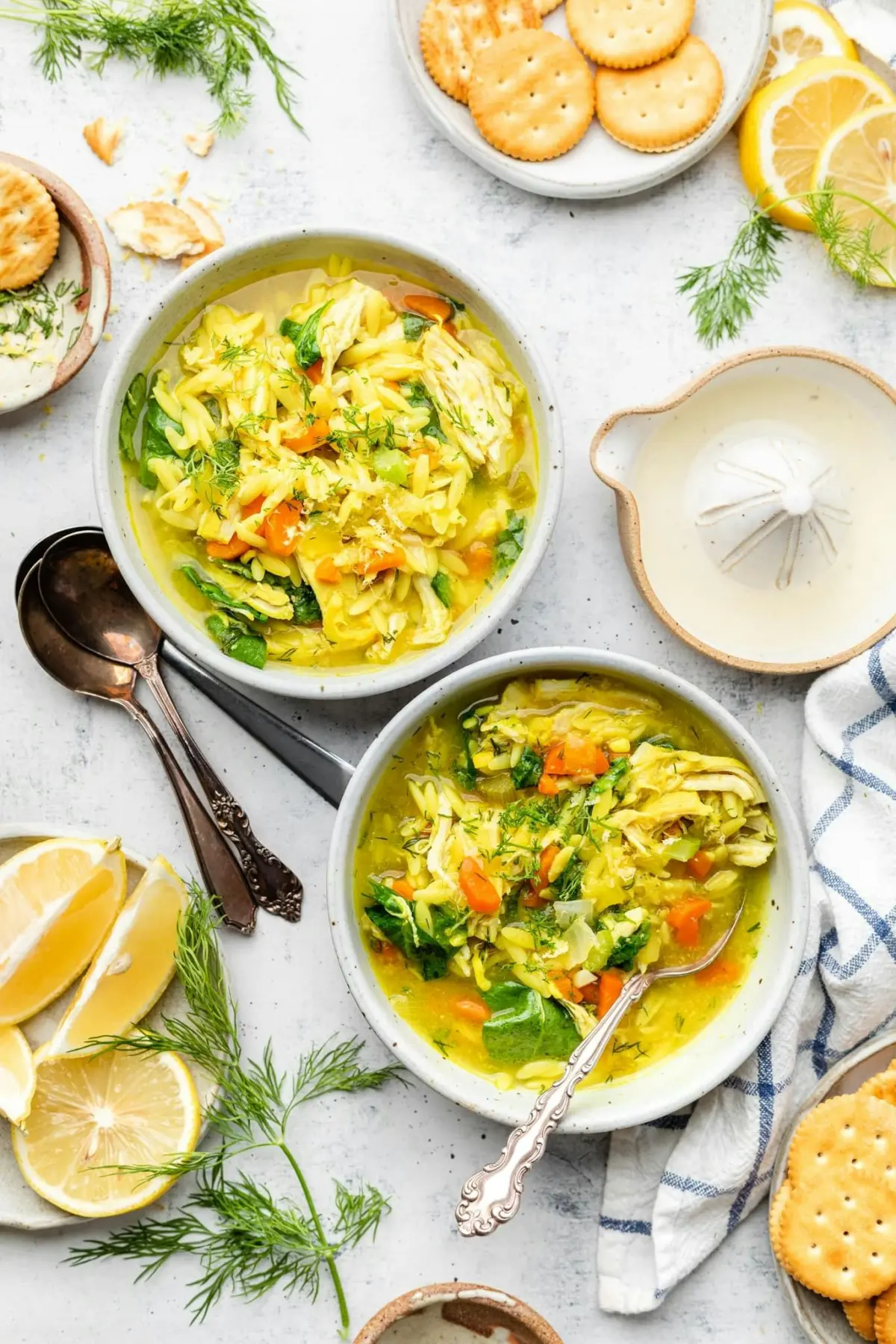
8. Lemon Chicken Orzo Soup
Citrus provides a psychological and physiological lift during prolonged illness, cutting through the heavy, stagnant feeling of being confined indoors.
- The Recipe: All The Healthy Things’ Lemon Chicken Orzo Soup delivers bright, clean flavors wrapped in a traditional comforting soup structure.
- Workflow: This dish mimics the high-end restorative soups one might hope a caring friend would leave on the front porch during recovery.
9. Orange Ginger Splash Pressed Juice
Maintaining adequate fluid intake is the primary hurdle of home-based patient care. When water loses its appeal, intensely flavored fresh juices can incentivize consumption.
- The Recipe: A Beautiful Plate’s Orange, Ginger, and Apple Juice acts as a vibrant, nutrient-dense elixir.
- Workflow: Rich in gingerols and Vitamin C, this beverage acts as a healing potion for sore throats and fatigue. While optimized for a juicer, the recipe can easily be executed using a standard kitchen blender followed by straining through a fine-mesh sieve or cheesecloth.
Future Outlook: Building Resilience for the Next Seasonal Wave
The annual collision between academic calendars and viral transmission is an immutable feature of modern family life. However, households that anticipate these disruptions can significantly mitigate their impact.
Future preparedness involves maintaining a dedicated "sick-day pantry shelf" stocked with non-perishable components—such as quality chicken broths, dried noodles, rice, and canned tomatoes—long before the first cough echoes through the hallway. By pairing advanced logistical readiness with nutritionally targeted, low-effort recipes, caregivers can transform the inevitable post-bellum recovery period from a state of total domestic paralysis into a manageable, restorative healing phase.

