
In the ever-evolving landscape of early childhood education, bridging the gap between foundational reading theory and engaging classroom practice remains a paramount challenge for educators and parents alike. Recently, This Reading Mama, a widely recognized digital hub for literacy resources founded by literacy advocate Becky, released a brand-new educational tool: the FREE Beginning Blends Puzzles. This strategic release addresses a critical bottleneck in early literacy development—the transition from oral phonemic awareness to grapheme-phoneme correspondence.
Designed specifically for early learners, these puzzles merge tactile play with cognitive skill-building, allowing children to isolate, segment, and visually match beginning consonant blends. By combining playful puzzle assembly with structured literacy principles, the resource serves as a dual-action intervention tool. This report provides an in-depth look at the educational mechanics behind the puzzles, explores the broader pedagogical framework of phonics versus phonemic awareness, and outlines how digital platforms are shifting the paradigm of teacher resource accessibility.
Detailed Chronology & Resource Development
The conceptualization and rollout of the Beginning Blends Puzzles follow a deliberate timeline rooted in evidence-based reading instruction:

- Phase 1: Identification of Educational Need
Educators frequently report that while children easily grasp single-letter sounds (phonemes), complex structures like consonant blends (e.g., /bl/, /st/, /pr/) present a significant hurdle. Children often struggle to separate the individual sounds within a cluster, leading to reading and spelling stumbles. - Phase 2: Prototype Design & Multisensory Integration
To combat this, This Reading Mama engineered a puzzle format that forces dual-processing. The resource was structured so that learners must first interact with images (isolating auditory sounds) before matching them to corresponding letter combinations (visual graphemes). - Phase 3: Digital Launch & Accessibility Optimization
The puzzles were made publicly available as a complimentary digital download, bypassing traditional paywalls. Alongside the launch, the platform integrated supplementary tools—such as video guides explaining the nuances between phonemes and graphemes—to support educators who may be transitioning to structured literacy models. - Phase 4: Community Integration & Expansion
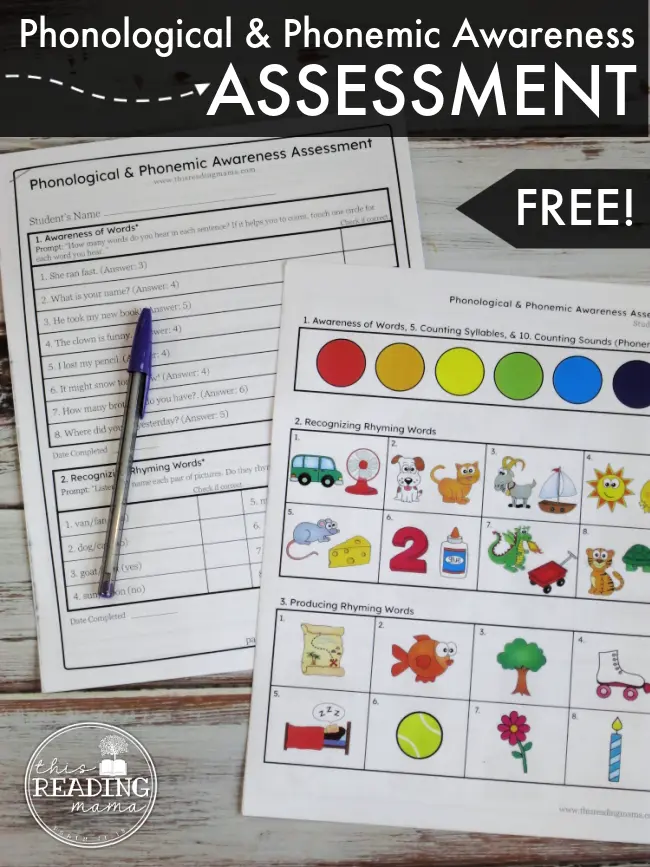
Simultaneously, the platform expanded its offerings through subscription models like The Library and complementary diagnostic tools, such as the Phonological and Phonemic Awareness Assessment, creating a closed-loop system of instruction, assessment, and remediation.
Supporting Context & Pedagogical Metrics
To understand the value of the Beginning Blends Puzzles, one must examine the underlying cognitive science of reading. Contemporary reading research heavily emphasizes the "Science of Reading"—a multidisciplinary body of scientifically-based research about how proficient reading is developed.
Phonemic Awareness vs. Phonics: A Critical Distinction
A core tenet promoted by literacy specialists is the differentiation between phonemic awareness and phonics, two components that are often conflated:
- Phonemic Awareness (The Ear): This is the ability to notice, think about, and work with the individual sounds (phonemes) in spoken words. It is strictly an auditory exercise. For example, hearing that the word blocks begins with the /b/-/l/ blend does not require looking at written letters.
- Phonics (The Eye and Hand): This involves connecting the sounds of spoken language to the letters or letter groups (graphemes) of written language.
The Beginning Blends Puzzles uniquely bridge these two domains. When a child picks up a picture puzzle piece—such as a picture of "blocks"—and names it, they exercise phonemic awareness by listening for the initial blend. When they search for and snap together the corresponding puzzle piece featuring the letters "bl," they cross the threshold into phonics by marrying the sound to the symbol.

The Role of Multisensory Learning in Retention
Cognitive studies consistently demonstrate that multisensory learning—engaging visual, auditory, and kinesthetic pathways simultaneously—improves memory retention and cognitive mapping in young learners. Physical puzzles provide a tactile feedback loop. The mechanical action of fitting two puzzle pieces together reinforces the cognitive connection that these discrete sounds and letters belong to a unified linguistic unit.
Official Statements and Educational Insights
"We wanted to create an activity that does double duty," notes Becky, creator of This Reading Mama. "Too often, children practice phonics in isolation without fully hearing the sounds they represent, or they practice listening without ever connecting it to print. These puzzles bridge that gap seamlessly, making the abstract concrete through play."
Literacy experts across the primary education sector have increasingly advocated for instructional materials that do not rely strictly on rote memorization. According to curriculum specialists, tools that utilize targeted manipulative play significantly lower student frustration levels during foundational reading acquisition.

Furthermore, educational platforms are placing heavy emphasis on teacher empowerment. By providing direct, ad-free pathways to resources via hubs like The Library, and pairing free puzzles with diagnostic assessments like the Phonological and Phonemic Awareness Assessment, creators are equipping educators with a holistic ecosystem rather than isolated worksheets.
Future Outlook & Industry Implications
The release of targeted, no-cost resources like the Beginning Blends Puzzles signals a broader trend in educational publishing: the democratization of high-yield, research-aligned teaching materials.
As schools nationwide continue to align curricula with the Science of Reading, the demand for transparent, scientifically grounded tools will only accelerate. Developers and independent educators alike are moving away from aesthetically driven, pedagogical "fluff" in favor of structured literacy resources that target specific cognitive milestones.
Looking ahead, we can anticipate several developments in this sector:
- Increased Integration of Digital and Tactile: Hybrid resources that combine printable manipulatives with digital tracking will likely become the standard for modern classrooms.
- Emphasis on Early Diagnostics: The coupling of instructional games (like puzzles) with precise assessment tools will enable educators to intervene earlier and more effectively.
- Community-Driven Resource Hubs: Platforms that offer ad-free environments and curated resource libraries will continue to capture market share from traditional, ad-heavy publishing sites, prioritizing user experience and pedagogical integrity.
Ultimately, simple yet scientifically backed interventions—such as matching a picture of a block to its corresponding letters—will remain foundational in building confident, capable readers for generations to come.

