
Executive Overview
In an era defined by hyper-connectivity and the relentless, round-the-clock firehose of digital information, the modern classroom has quietly transformed into the front line of a new ideological war. The battleground is not physical territory, but human perception, and the weapons of choice are deepfakes, sensationalized headlines, out-of-context imagery, and weaponized disinformation. As generative artificial intelligence democratizes the creation of hyper-realistic falsehoods, educators worldwide are abandoning passive teaching methodologies in favor of active, immersive interventions.
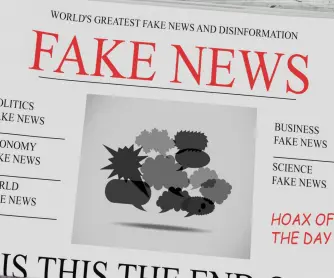
At the vanguard of this pedagogical shift is a newly popularized interactive classroom activity designed to train students of all proficiency levels to systematically spot, analyze, and deconstruct fake news. Developed by educator María Teresa Sedano Anior and widely disseminated through international teaching platforms, this deceptively simple exercise—which pairs provocative visual media with guided peer-to-peer inquiry—is reshaping how young minds process the digital world.
By challenging students to judge the veracity of ambiguous headlines and deceptive photographs before the unvarnished truth is revealed, the exercise does more than teach media literacy; it forces students to confront their own cognitive biases. In a media ecosystem where algorithmic engagement metrics reward outrage over accuracy, equipping the next generation with the forensic tools to separate fact from fabrication is no longer an academic luxury—it is an urgent societal imperative. This report examines the mechanics of this groundbreaking educational module, contextualizes it within the broader crisis of global disinformation, and explores the systemic hurdles educators face as they attempt to inoculate students against an epidemic of deceit.
Detailed Chronology: The Evolution of Disinformation Literacy in Education
To understand the significance of interactive tools like Sedano Anior’s "Spot Fake News" module, one must trace the rapid evolution of digital deception and the corresponding, often lagging, educational response over the past two decades.
Phase One: The Web 1.0 and Early Web 2.0 Era (2000–2010)
When the internet first permeated classrooms, the prevailing educational philosophy was centered around basic digital literacy. Schools focused on teaching students how to find information using search engines, how to cite online sources, and how to differentiate between a .edu website and a .com domain. At this stage, fake news largely consisted of amateurish phishing scams, satirical websites like The Onion taken out of context, or poorly photoshopped images. The prevailing assumption among educators was that blatant falsehoods would be easily spotted by rational minds. Critical thinking curricula were largely conceptual, encouraging students to "check multiple sources" without providing systematic methodologies for evaluating conflicting claims.
Phase Two: The Social Media Boom and Algorithmic Polarization (2011–2018)
The proliferation of smartphones and the dominance of social media platforms fundamentally altered the information landscape. Algorithms optimized for user engagement began actively prioritizing sensationalism, emotional resonance, and confirmation bias. Disinformation evolved from a fringe annoyance into a sophisticated, highly profitable industry—and a tool for geopolitical interference. High-profile events, from the 2016 United States presidential election to the Brexit referendum, exposed deep vulnerabilities in public media literacy. Educators realized that traditional digital literacy frameworks were wholly inadequate. Students were no longer just reading static web pages; they were swimming in an ocean of algorithmic feeds designed to manipulate their emotions.
Phase Three: The Generative AI Revolution and Immersive Deception (2019–Present)
The current era is characterized by the democratization of advanced generative artificial intelligence. Tools capable of producing hyper-realistic deepfake videos, flawlessly written synthetic journalism, and fabricated photographic evidence have lowered the barrier to entry for bad actors. In this environment, traditional heuristics—such as "look for spelling errors" or "check if the photo looks blurry"—are utterly obsolete.
It is against this backdrop of high-tech deception that educators began developing experiential, gamified learning models. Rather than lecturing students on the abstract dangers of propaganda, modern innovators like Sedano Anior introduced methodologies rooted in behavioral psychology and active observation. By thrusting students into simulated real-world scenarios where they must actively interrogate provocative titles and manipulated imagery, these new frameworks bridge the gap between theoretical media literacy and practical forensic analysis.
Supporting Context & Metrics: The Anatomy of the Misinformation Crisis
To fully grasp why classroom interventions have become so vital, one must examine the staggering scale of the global disinformation crisis through hard data and sociological research.
The Speed and Reach of Falsehoods
Decades of psychological research have confirmed what social media metrics daily demonstrate: falsehoods travel exponentially faster and wider than the truth. A landmark Massachusetts Institute of Technology (MIT) study analyzing Twitter data from 2006 to 2017 revealed that false news stories were 70% more likely to be retweeted than true stories. Furthermore, while true stories rarely reached more than 1,000 people, the top 1% of false stories routinely cascaded to between 1,000 and 100,000 people.
The primary driver of this phenomenon is human psychology. False news often triggers novel, high-arousal emotions such as surprise, fear, and disgust. When students enter a classroom, they bring these deeply ingrained cognitive vulnerabilities with them. Without structured intervention, young people—despite being digital natives—are just as susceptible to manipulation as older generations, often lacking the historical context or skepticism required to evaluate viral claims.
The Mechanics of the "Spot Fake News" Classroom Module
The worksheet and activity framework developed for this educational niche operate on a four-stage psychological and pedagogical cycle:
- Exposure and Priming: Students are presented with a curated series of compelling visual artifacts—ranging from sensationalized news photographs to ambiguous headlines culled from contemporary media.
- Initial Assessment and Hypothesis Generation: Before any external context is provided, students are asked to make an individual or small-group determination: Is this story true, or is it fake? This forces learners to commit to an intellectual stance, making them psychologically invested in the outcome.
- The Reveal and Deconstruction: The instructor unveils the verifiable truth behind each artifact. This phase is critical, as it shatters assumptions and highlights the specific visual or textual cues that signaled deception.
- Reflective Discourse: The class engages in an open forum to discuss why the fake news item was convincing, what emotional triggers it exploited, and how societal biases contributed to its believability.
This active-learning approach shifts the student from a passive consumer of information to an active investigator. By experiencing the moment of realization when a seemingly obvious fact is unmasked as fiction, students develop a heightened sensitivity to manipulative framing techniques.
Official Statements and Pedagogical Perspectives
Educational leaders, cognitive scientists, and international policy bodies have increasingly voiced alarm over the state of youth media literacy, while championing interactive classroom reforms.
Dr. Aris Thorne, a senior researcher at the Global Institute for Information Integrity, emphasized the necessity of moving away from rote memorization in digital education:
"For too long, we treated media literacy as a checklist. We told students to ‘look for credible sources’ as if bad actors haven’t spent millions of dollars mimicking the exact aesthetic of credible journalism. What makes interactive methodologies so powerful is that they simulate cognitive dissonance. When a student is tricked by a well-crafted piece of fake news in a safe classroom environment, the lesson is etched into their memory permanently. It shatters the illusion of their own infallibility."
Meanwhile, educational policymakers have begun integrating these frameworks into national curricula. Maria Elena Vance, a curriculum director specializing in secondary humanities, noted the psychological resilience built by such exercises:
"Adolescents are navigating an unprecedented psychological landscape. They are bombarded with curated perfection, outrage bait, and synthetic media during their most formative developmental years. Activities that demystify how media is manipulated give them a sense of agency. They stop feeling like victims of algorithms and start acting as critical guardians of their own attention."
Teachers utilizing the resource have similarly reported profound shifts in classroom dynamics. Feedback collected from educators implementing the "Spot Fake News" module highlights an immediate increase in critical questioning. Students who previously accepted social media headlines at face value begin interrogating sources independently, asking probing questions about funding, photographic angles, and editorial bias.
Future Outlook: Challenges and Horizons in Media Literacy Education
As educators look toward the horizon, the challenge of combating misinformation in the classroom is bound to intensify. Several critical trends and hurdles will define the future of media literacy education over the coming decade.
1. The Generative AI Arms Race
The most immediate challenge facing educators is the rapid advancement of generative artificial intelligence. As text-to-video tools, hyper-realistic voice cloning, and AI-generated journalism become indistinguishable from human-created content, static classroom worksheets will require constant, real-time updates. Future iterations of media literacy curricula will need to incorporate modules specifically focused on identifying synthetic media, understanding the limitations of AI watermarking, and recognizing algorithmic bias in automated news curation.
2. Institutional and Political Resistance
Implementing robust media literacy programs is not without friction. In many regions, discussions around "fake news," political propaganda, and media bias have become deeply politicized. Educators attempting to use real-world political examples in their classrooms frequently face pushback from parent groups, school boards, or political actors who accuse them of ideological bias. Overcoming this hurdle will require strict adherence to objective, verifiable fact-checking standards and a focus on the structural mechanics of deception rather than partisan narratives.
3. Scaling Teacher Training
While innovative activities and modular lesson plans are readily available on global teacher-sharing platforms, systemic professional development remains uneven. Many teachers—particularly those trained before the digital age—feel underequipped to navigate the complexities of modern disinformation. Bridging this gap will require substantial investment in teacher training programs, ensuring that educators at every level possess the forensic and technological skills necessary to guide their students through an increasingly murky information ecosystem.
Conclusion
The battle for truth is no longer fought exclusively in newsrooms, courtrooms, or parliaments; it is won or lost in the minds of students sitting in contemporary classrooms. Through innovative, interactive exercises that challenge assumptions and deconstruct digital illusions, educators are providing the youth with armor against a rising tide of manipulation. While the technological hurdles ahead are formidable, the grassroots adoption of practical, inquiry-based media literacy tools offers a powerful beacon of hope. By teaching students not what to think, but how to investigate what they see, we lay the indispensable foundation for a resilient, critically minded democratic society.

