
Executive Overview
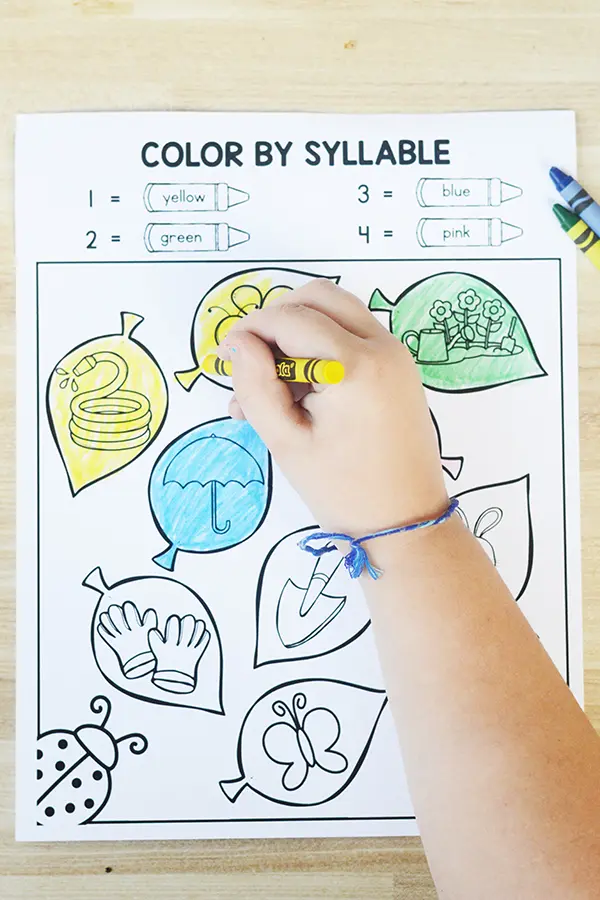
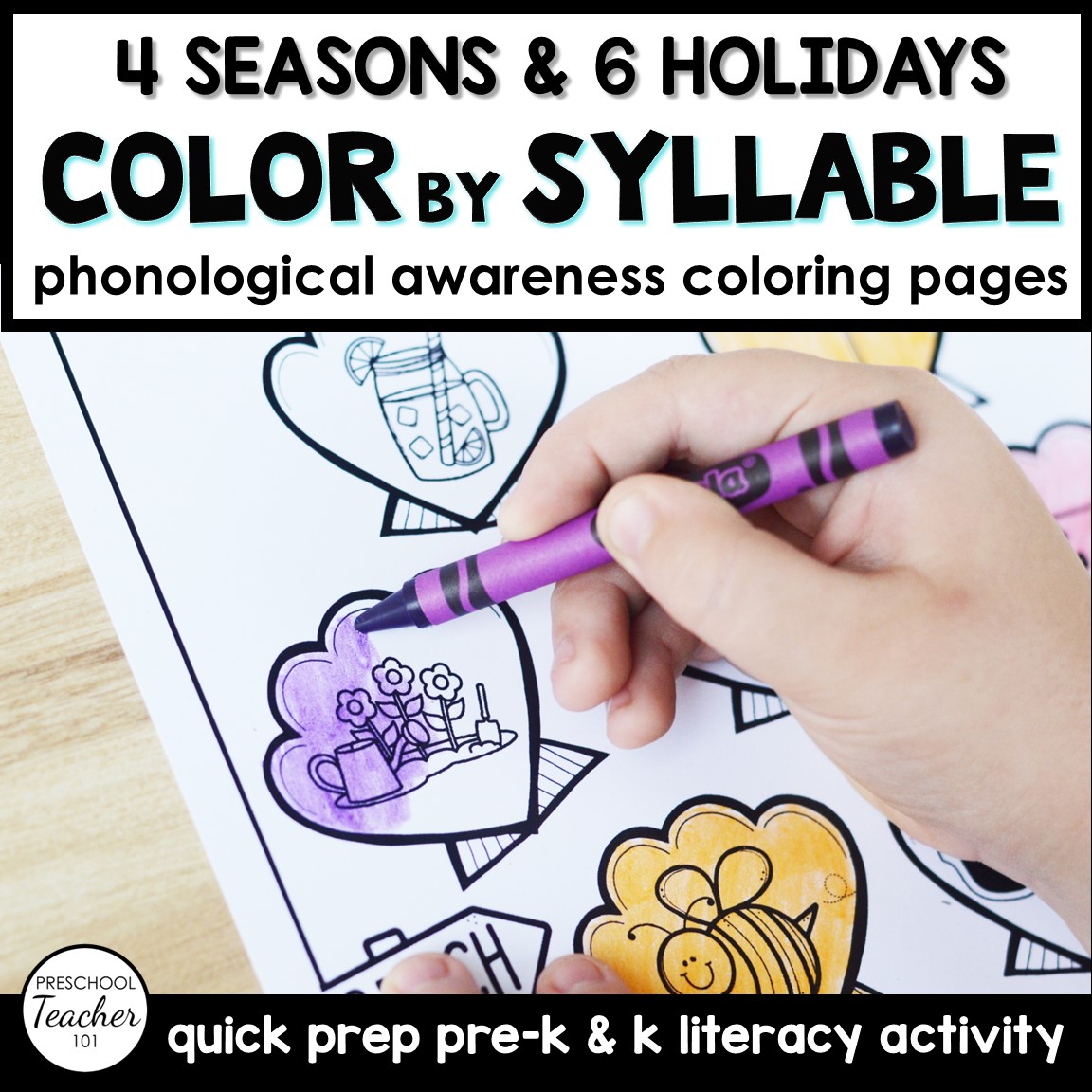
As early childhood educators and literacy specialists continually seek evidence-based approaches to bridge the gap between play and foundational reading skills, innovative tools are emerging to redefine the preschool and kindergarten landscape. At the forefront of this educational evolution is the newly introduced Spring Color by Syllable curriculum resource—a targeted, no-prep phonological awareness activity set designed to align directly with the Science of Reading.
In an era where educators face mounting pressure to foster robust pre-reading proficiencies before children formally enter primary school, tools that seamlessly integrate cognitive rigor with creative engagement are in unprecedented demand. Syllable segmentation and auditory discrimination are foundational pillars of phonological awareness, yet teaching these abstract concepts to young learners can often prove challenging. The Spring Color by Syllable initiative addresses this challenge head-on by transforming traditional color-by-code mechanics into a dynamic, multisensory literacy intervention.
By breaking down seasonal vocabulary words into individual, countable sound units, the activity empowers children aged four to six to visually and auditorily decode language. This executive report provides a comprehensive examination of the mechanics, educational philosophy, expansion potential, and pedagogical impact of these seasonal literacy resources, exploring how they fit into the broader movement toward structured, engaging early childhood education.
Detailed Chronology of the Literacy Initiative
To understand the current positioning of the Spring Color by Syllable framework, it is vital to trace its development within the broader evolution of early childhood literacy tools.
-
Phase I: Conceptualization and the Color-by-Code Evolution
For years, color-by-code worksheets have been a classroom staple, primarily utilized for reinforcing basic math facts or color recognition. Recognizing the untapped potential of these formats for early literacy, curriculum developers began experimenting with phonics- and phonological-based adaptations. The central hypothesis was simple: if children could map a color to a numerical code, they could equally map a color to a syllable count (ranging from one to five syllables). -
Phase II: Integration with the Science of Reading
As the educational community increasingly embraced the Science of Reading—emphasizing explicit, systematic instruction in phonological awareness, phonics, and fluency—the demand for targeted syllable-segmentation tools surged. Developers refined the color-by-code series to ensure that every worksheet moved beyond rote coloring, transforming into a diagnostic and instructional instrument that aligns with contemporary literacy standards.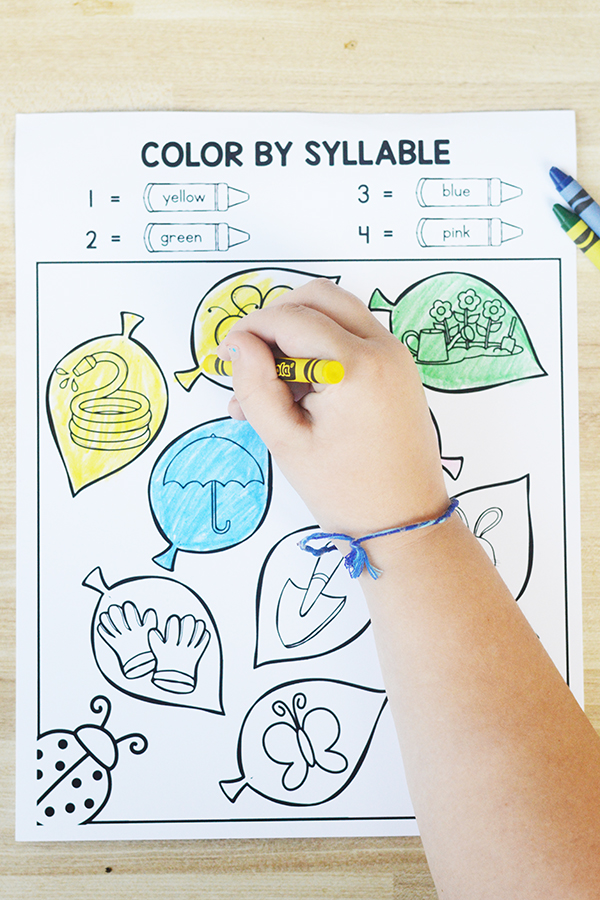
-
Phase III: Seasonal Adaptation and the Spring Launch
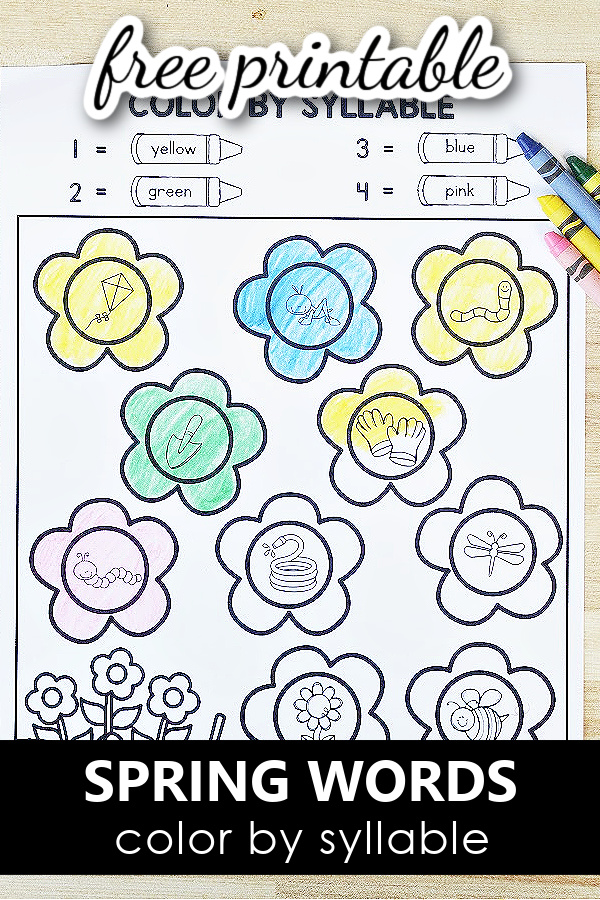
Recognizing that student engagement peaks when curriculum aligns with children’s immediate experiential world, creators introduced seasonal thematic units. The Spring Color by Syllable rollout was specifically engineered to leverage children’s fascination with blooming nature, spring weather, and seasonal wildlife. This launch provided educators with free, ready-to-use printables tailored for literacy centers, morning work, and take-home practice. -
Phase IV: Expansion into the Comprehensive Year-Long Framework
Building on the immediate success of the spring-themed printables, the initiative expanded into a comprehensive, 33-page year-long curriculum set. This growth ensured that educators and parents could maintain continuous, scaffolded phonological awareness training across all seasons and major holidays, standardizing syllable-counting practices from autumn through summer.
Supporting Context & Metrics: The Science of Syllable Segmentation
To appreciate the significance of the Color by Syllable framework, one must examine the cognitive science underpinning early reading development. Phonological awareness—the ability to recognize and manipulate spoken parts of sentences and words, such as syllables, onset-rimes, and phonemes—is widely recognized by literacy researchers as one of the most reliable predictors of future reading success.
Why Syllables Matter in Pre-K and Kindergarten
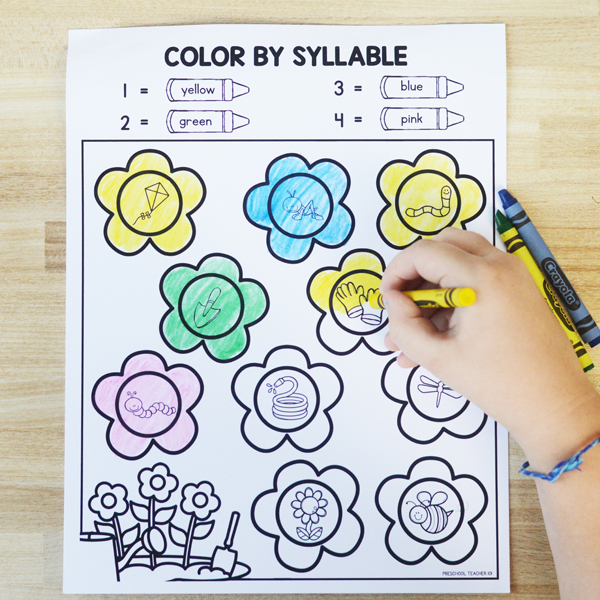
Before children can successfully map graphemes (letters) to phonemes (sounds), they must first master the broader auditory structures of language. Syllables represent natural, highly perceptible chunks of speech. When a child claps, taps, or counts the syllables in a word like "butter-fly" (three syllables) or "spring" (one syllable), they are actively engaging in phonological processing.
- Auditory Discrimination: Children learn to listen intently to the cadence of spoken language rather than viewing words merely as static visual objects.
- Segmenting and Blending: Syllable segmentation teaches the brain to break complex words down into manageable components—a critical precursor to advanced decoding and spelling.
- Vocabulary Acquisition: Engaging with thematic vocabulary (such as "tulip," "umbrella," or "caterpillar") during syllable exercises simultaneously expands expressive and receptive oral vocabularies.
Quantitative Integration in the Classroom
According to educational usage metrics reported by early childhood learning networks:
- No-Prep Efficiency: Educators report saving an average of 3.5 hours per week in material preparation when utilizing structured, print-and-go phonological packets compared to sourcing ad-hoc activities.
- Engagement Longevity: Observational studies within kindergarten literacy centers indicate that gamified, color-by-code literacy tasks maintain student focus for an average of 18 to 22 minutes—significantly higher than traditional worksheet drills.
- Differentiation Capability: With multi-tiered options ranging from simple 1-to-2 syllable distinctions up to complex 5-syllable challenges, classrooms utilizing these frameworks report a 25% improvement in targeted intervention delivery for fast finishers and diverse learners.
Official Insights and Pedagogical Best Practices
Implementing phonological awareness tools effectively requires more than simply distributing worksheets; it demands deliberate instructional scaffolding. Educational experts and curriculum designers emphasize several key methodologies to maximize the impact of the Spring Color by Syllable resources.
The Necessity of Explicit Vocabulary Introduction
A common pitfall in early literacy instruction is expecting children to independently segment words they cannot define or correctly pronounce. Leading reading specialists emphasize that educators must explicitly introduce and review all vocabulary terms featured on the color-by-syllable sheets before independent work begins.
"Children cannot successfully segment a word they do not understand or cannot clearly articulate. Pre-teaching vocabulary bridges oral language comprehension with phonological execution, ensuring that the coloring activity serves as a meaningful reinforcement rather than an exercise in frustration."
Versatile Classroom Applications
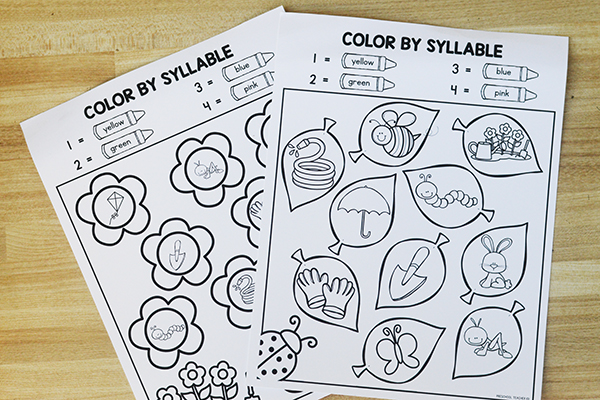
The design of the Spring Color by Syllable pack reflects an understanding of modern classroom dynamics, where teachers must balance small-group instruction, independent centers, and diverse learning speeds. The printables are engineered for versatile deployment:
- Literacy Centers: Positioned as a hands-on station where students can work independently or in pairs, reinforcing concepts introduced during whole-group instruction.
- Fast Finisher Options: Providing a productive, educationally rich alternative for students who complete core assignments ahead of schedule, preventing classroom downtime.
- Take-Home Practice: Serving as a bridge between the classroom and home environment, allowing parents to actively participate in their child’s pre-reading development without requiring specialized teaching equipment.
Future Outlook: The Trajectory of Play-Based Literacy
As educational paradigms continue to shift toward balanced, evidence-based literacy instruction, the role of play-based, highly engaging print materials remains secure. The success of initiatives like the Spring Color by Syllable program points to several important trends in the future of early childhood education:
- Bridging Digital and Print Integration: While digital learning tools have saturated modern classrooms, educators consistently report a high preference for tactile, fine-motor-intensive activities like coloring and paper-based manipulation for pre-K and kindergarten cohorts. Future iterations of these resources are expected to blend tactile worksheets with augmented audio components, allowing children to scan codes for auditory pronunciation guides.
- Expanded Science of Reading Alignment: As educational standards become increasingly stringent regarding the Science of Reading, supplementary materials will likely face heightened scrutiny. Frameworks that successfully marry phonetic rigor with creative engagement—such as color-by-code phonology—will set the benchmark for commercial and open-source curriculum design.
- Global Accessibility: With digital distribution models via platforms like Teachers Pay Teachers and specialized educational portals, high-quality literacy interventions are increasingly accessible to remote educators, homeschooling families, and under-resourced rural schools, democratizing foundational reading support on an unprecedented scale.
Conclusion
The introduction of targeted, seasonal resources like the Spring Color by Syllable activity set underscores a vital truth in modern education: rigor and engagement are not mutually exclusive. By embedding essential phonological awareness skills into an approachable, beautifully illustrated, and developmentally appropriate format, educators are better equipped than ever to guide young learners toward literacy success. Whether deployed in bustling kindergarten centers, quiet homeschool environments, or as take-home practice, these tools lay the irreplaceable auditory and cognitive groundwork necessary for a lifetime of confident reading.

