
EXECUTIVE SUMMARY
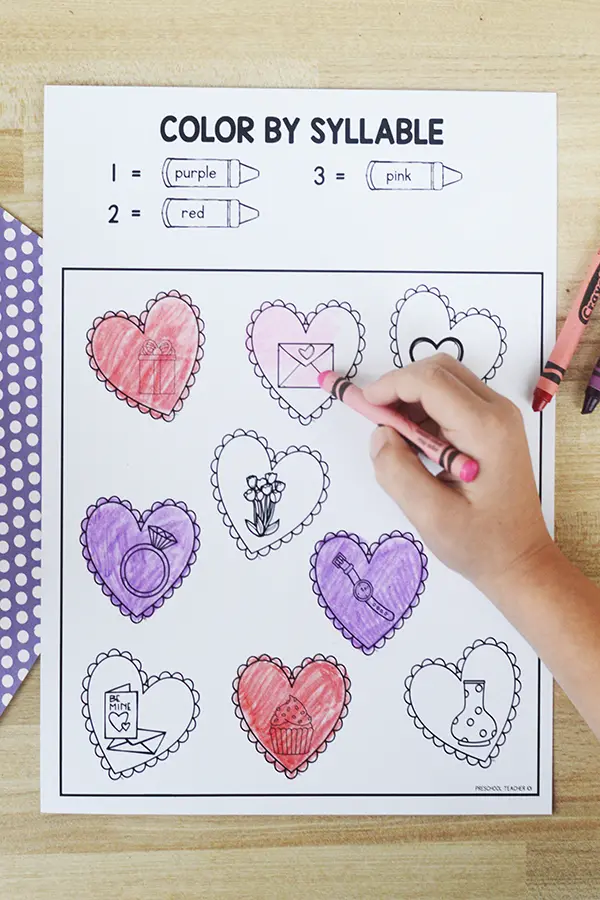
As early childhood educators continually search for innovative, low-preparation resources to bolster foundational reading skills, a quiet revolution is taking place in pre-kindergarten and kindergarten classrooms across the country. Spearheaded by educational resource developers like Shaunna Evans of Fantastic Fun and Learning, holiday- and seasonally-themed phonological awareness tools—most notably the newly released "Valentine’s Day Color by Syllable" activity—are capturing the attention of both teachers and parents.
These resources marry the beloved, low-stress format of traditional color-by-number worksheets with rigorous science-of-reading principles. By breaking words down into their individual component sounds and teaching children to segment syllables, these no-prep printables offer an effective solution for literacy centers, take-home practice, and fast-finisher stations. Building upon these holiday-specific offerings, comprehensive yearlong curricula containing dozens of targeted coloring pages are bridging the gap between play and cognitive development. This report provides an investigative look at the mechanics of phonological awareness, the pedagogical value of gamified learning tools, and the broader implications of integrating creative arts into early childhood literacy instruction.
1. Executive Overview: The Shift Toward Play-Based Phonological Awareness
The landscape of early childhood education has undergone a significant paradigm shift over the past decade. Policymakers, researchers, and classroom practitioners increasingly recognize that formal reading instruction must be preceded by robust training in phonological awareness—the ability to recognize and manipulate the spoken parts of sentences and words, including syllables, onsets, rimes, and phonemes.

Yet, translating complex linguistic concepts into engaging lessons for four- and five-year-olds remains a persistent challenge for educators. Enter playful, low-preparation literacy tools designed to seamlessly integrate into established classroom routines. The Valentine’s Day Color by Syllable activity, introduced ahead of the 2025 holiday season, exemplifies this modern approach. By transforming traditional syllable-counting exercises into a color-by-code art project, the activity lowers affective filters, reduces cognitive fatigue, and encourages independent practice.
Educational experts note that resources requiring zero preparation time are invaluable for modern teachers navigating high-stress classroom environments. By supplying ready-to-print materials that target specific developmental milestones—such as identifying one to five syllables—developers are providing essential scaffolding that educators can adapt to diverse student populations.
2. Detailed Chronology: The Evolution of the "Color by Syllable" Framework
To understand the current popularity of seasonal phonological awareness worksheets, it is necessary to examine how these instructional materials evolved from basic worksheets into comprehensive, yearlong learning suites.
The Rise of No-Prep Literacy Centers
Historically, literacy centers required extensive preparation, material gathering, and lamination to ensure durability. While hands-on manipulatives remain a staple of early childhood education, teachers frequently encounter administrative and time-related bottlenecks that limit their ability to produce custom materials for daily centers.

Recognizing this operational friction, curriculum developers began adapting the classic "color-by-code" mechanism—traditionally used for math facts or color recognition—and pivoting it toward literacy foundations. The resulting "Color by Syllable" series was born out of a simple pedagogical question: How can we help young children physically segment words while maintaining the relaxing, rewarding nature of coloring?
The Integration of Holiday Themes
By anchoring literacy exercises to cultural touchstones and holidays like Valentine’s Day, developers capitalized on children’s natural enthusiasm for seasonal celebrations. The timeline of development for these resources generally follows a structured trajectory:
- Initial Conception: Designing basic, isolated worksheets to test whether young learners could successfully bridge auditory syllable counts with visual color keys.
- Classroom Feedback and Expansion: Refining the difficulty curve to accommodate both pre-K students (who may only be mastering one- and two-syllable words) and kindergarteners (who are prepared to tackle complex multi-syllabic vocabulary).
- Comprehensive Suite Development: Expanding seasonal offerings into a unified, 33-page yearlong curriculum covering major holidays, seasonal shifts, and thematic units.
3. Supporting Context & Metrics: The Science of Syllable Segmentation
Phonological awareness is widely considered by reading researchers to be one of the single best predictors of later reading success. Before children can decode written letters into sounds (phonics), they must understand that spoken language is composed of smaller sound units. Syllable segmentation serves as an essential stepping stone in this developmental sequence.
Understanding Syllables in Early Childhood
A syllable is a unit of pronunciation having one vowel sound, with or without surrounding consonants, forming the whole or a part of a word. When pre-K and kindergarten students clap, tap, or count syllables, they are performing foundational auditory processing tasks.

According to developmental milestones in early literacy:
- Ages 3 to 4 (Pre-K): Children begin to identify rhyming words, clap out the syllables in their own names, and recognize the rhythmic beats in simple compound words (e.g., cup-cake, sun-shine).
- Ages 5 to 6 (Kindergarten): Students systematically segment words ranging from one to four or five syllables, connecting auditory beats to structural representations on the page.
The Mechanics of "Color by Code" Learning
The Color by Syllable methodology leverages dual-coding theory, which suggests that the brain processes verbal and visual information through separate channels. When a child looks at an image on a Valentine’s Day worksheet, says the word aloud, claps to find the syllable count, consults the color key, and applies the corresponding crayon color, multiple cognitive pathways are activated simultaneously.
- Auditory Processing: Hearing and articulating the vocabulary word.
- Kinesthetic Engagement: Clapping or tapping to physically measure word length.
- Visual-Spatial Discrimination: Matching the numerical syllable count to the designated color key.
- Fine Motor Control: Coloring within the designated spaces to complete the seasonal artwork.
This multi-sensory approach ensures that students with varying learning styles—auditory, visual, and kinesthetic—can access the core literacy content successfully.
4. Official Statements and Pedagogical Insights
Leading voices in early childhood education emphasize that tools like the Color by Syllable series are most effective when embedded within a rich, comprehensive literacy framework rather than used as isolated busywork.

"Phonological awareness activities must be engaging, purposeful, and developmentally appropriate," notes Shaunna Evans, creator of Fantastic Fun and Learning. "When we introduce concepts like syllable segmentation through holiday themes, we aren’t just celebrating a season—we are inviting children into the mechanics of language in a way that feels safe, joyful, and entirely achievable."
Educational consultants and preschool curriculum specialists highlight several critical best practices for implementing these resources in the classroom:
- Explicit Vocabulary Introduction: Children cannot accurately segment a word if they do not know what the illustrated object is. Educators stress the importance of pre-teaching vocabulary terms before assigning independent or center-based tasks.
- Differentiation: Because developmental readiness varies widely in early childhood classrooms, having tiered options—such as focusing on simpler one- and two-syllable words for younger pre-K students versus advanced multi-syllabic challenges for kindergarteners—is vital for equitable instruction.
- Scaffolded Practice: Teachers are encouraged to complete the first few items of a color-by-syllable sheet as a whole-group guided practice session before transitioning students to independent center work or fast-finisher stations.
Furthermore, partnerships with platforms like Teachers Pay Teachers and specialized preschool lesson planning networks (Preschool Teacher 101) have democratized access to these materials, allowing educators in under-resourced schools to download and utilize professional-grade phonological awareness tools at little to no cost.
5. Future Outlook: The Next Wave of Play-Based Literacy Tools
As educational technology and print resources continue to converge, the future of early literacy instruction points toward increasingly integrated, thematic, and flexible classroom tools.

Expanding Beyond the Classroom Walls
With the rise of hybrid learning models and increased emphasis on home-school connections, resources like the Valentine’s Day Color by Syllable printables are finding a second life in take-home practice packs. Parents are increasingly looking for actionable, screen-free ways to support their children’s reading readiness outside of school hours. No-prep coloring sheets provide an ideal bridge, enabling parents to engage in meaningful literacy conversations around the kitchen table without requiring specialized pedagogical training.
The Comprehensive Yearlong Approach
The expansion from single, isolated holiday worksheets to comprehensive 33-page yearlong sets signals a broader demand for curricular consistency. Educators no longer want a patchwork of unrelated activities; they seek cohesive, predictable frameworks that spiral key literacy skills across all four seasons. By maintaining a familiar format—color-by-code art—while rotating the underlying phonological concepts and seasonal vocabulary, students build confidence through routine while continuously advancing their skills.
Conclusion
Ultimately, the success of tools like the Color by Syllable series underscores a timeless truth in education: children learn best when rigor is married to joy. By turning the cognitive work of syllable segmentation into a festive, creative exercise, educators and developers are laying a rock-solid foundation for a lifetime of literacy, ensuring that every child can approach reading with both capability and confidence.

