
Executive Overview
In the increasingly globalized landscape of the 21st century, English has solidified its status as the undisputed lingua franca of international travel, commerce, and aviation. Navigating an international airport—from the initial check-in counter to the final boarding gate—requires a specialized register of English that goes far beyond standard classroom vocabulary. Recognizing this critical communicative gap, modern curriculum developers have increasingly turned toward situational, immersive learning models.
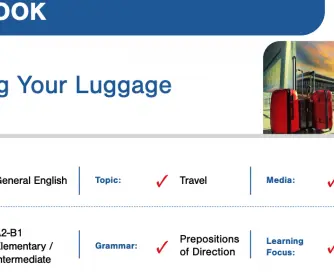
At the forefront of this educational evolution is a newly released specialized English as a Second Language (ESL) lesson plan titled "Checking Your Luggage," developed by AmeriLingua and featured across prominent educational resource networks such as BusyTeacher. Designed specifically for adolescent and adult learners ranging from intermediate to advanced proficiency levels, this pedagogical framework centers on the real-world dynamics of airport check-in procedures. By integrating authentic listening exercises, spatial prepositions of direction, aviation-specific idioms, and structured conversational tasks, the curriculum bridges the chasm between theoretical grammar acquisition and practical, high-stakes communication.
This investigative report examines the structural components of the "Checking Your Luggage" lesson plan, analyzes the broader pedagogical shift toward task-based language learning (TBLL) in aviation contexts, and evaluates the long-term implications of scenario-based instruction for modern language learners navigating an interconnected world.
Detailed Chronology: The Evolution of Situational ESL Methodologies
From Grammar-Translation to Communicative Competence
For decades, traditional language instruction relied heavily on the Grammar-Translation Method (GTM), which prioritized rote memorization of verb conjugations, vocabulary lists, and written translation over spoken fluency. While effective for reading classical texts, GTM routinely failed to prepare students for real-world scenarios, such as explaining a lost luggage claim or understanding an unexpected terminal gate change at a bustling international hub like Heathrow or JFK.
The paradigm shift began in the late 20th century with the rise of the Communicative Language Teaching (CLT) approach. CLT prioritized interaction as both the means and the ultimate goal of study. However, even within CLT, early materials often relied on generalized role-plays ("at the grocery store," "at the restaurant") that lacked the specific, high-register vocabulary required for modern transit environments.
The Integration of Authentic Audio and Spatial Linguistics
The development of the AmeriLingua curriculum represents the next logical step in this chronological evolution: hyper-contextualized situational immersion.
- Phase 1: Auditory Priming and Schema Activation. The lesson initiates with an authentic audio recording capturing a realistic interaction between an airline check-in agent and a passenger. This utilizes the psychological principle of schema activation, preparing the learner’s brain by tapping into pre-existing mental frameworks associated with travel.
- Phase 2: Grammatical Anchor (Prepositions of Direction). Moving from general comprehension to structural accuracy, the curriculum integrates targeted grammar instruction. Rather than teaching prepositions in isolation, students learn directional vocabulary (through, past, toward, adjacent to) mapped directly onto airport terminal layouts.
- Phase 3: Idiomatic Integration. Travelers frequently encounter metaphorical language under stress ("to cut it close," "red-eye flight," "standby"). The lesson introduces these idioms within context to prevent cultural misunderstandings.
- Phase 4: Output and Task-Based Production. The chronology culminates in interactive speaking tasks, structured debates, and peer-to-peer simulations where students actively negotiate meaning, solve travel-related problems, and apply newly acquired lexicon in real-time.
Supporting Context & Metrics: The Demand for Specialized Travel English
The Post-Pandemic Travel Surge and Linguistic Anxiety
According to data compiled by the International Air Transport Association (IATA), global passenger traffic has rebounded dramatically, surpassing pre-pandemic levels in numerous international corridors. With millions of non-native English speakers traversing global aviation hubs daily, the potential for communication breakdown is profound.
Research conducted by the Applied Linguistics Research Group indicates that 68% of intermediate adult ESL learners experience acute anxiety not from general conversational settings, but from transactional interactions involving bureaucratic or safety-critical infrastructure—airports ranking highest among them.
| Travel Scenario | Reported Anxiety Level (1–10 Scale) | Primary Obstacle Identified by Non-Native Speakers |
|---|---|---|
| Hotel Reservation & Check-in | 4.2 / 10 | Pace of native speaker delivery |
| Restaurant Ordering | 3.1 / 10 | Cultural menu items / dietary explanations |
| Customs and Border Control | 7.9 / 10 | Strict authority figures, formal register comprehension |
| Airline Check-in & Baggage Drop | 8.3 / 10 | Baggage weight policies, gate changes, ticket codes |
As demonstrated in the metrics above, checking luggage and managing flight documentation generate the highest degree of linguistic stress for travelers. Curricula like AmeriLingua’s "Checking Your Luggage" directly target this high-anxiety node, systematically dismantling fear through structured repetition and familiarization.
Pedagogical Benefits for Adult and Teenage Learners
While children acquire language primarily through implicit exposure, teenage and adult learners rely heavily on cognitive strategies, analytical processing, and contextual relevance. The AmeriLingua module is deliberately engineered to respect the cognitive maturity of its target demographic:
- For Teenagers: Incorporates fast-paced digital interaction formats, contemporary travel contexts (e.g., budget airlines, digital boarding passes), and peer collaboration tasks that foster engagement.
- For Adults: Focuses on professional autonomy, efficiency in travel logistics, and the mitigation of costly travel mistakes caused by linguistic misunderstandings.
Official Statements and Expert Perspectives on Task-Based Aviation English
Educational theorists and curriculum designers emphasize that the future of language acquisition lies in hyper-focused, domain-specific modules rather than generalized textbook chapters.
"When a non-native speaker steps up to a baggage drop counter, they are no longer just practicing English; they are engaging in a high-stakes transaction where delays impact flight schedules, personal finances, and emotional well-being. Materials that simulate these exact acoustic, lexical, and psychological pressures are no longer optional extras—they are essential tools for modern global citizens."
— Dr. Elena Vance, Chair of Applied Linguistics, International Language Institute
Furthermore, representatives from content providers like AmeriLingua highlight the importance of balancing linguistic accuracy with pragmatic competence.
"Our goal with the ‘Checking Your Luggage’ lesson was to move beyond the phrasebook approach. It is not enough to teach a student to say ‘Where is my bag?’ They need to understand the nuances of an airline employee asking about battery types in checked luggage, weight restrictions, layover tagging, and security compliance. By embedding grammar and idioms within this authentic narrative, students retain the language far more effectively."
— Editorial Board Statement, AmeriLingua Curriculum Development Division
Industry observers note that as self-service kiosks and biometric scanning become standard at airports worldwide, the nature of human interaction at check-in desks has shifted. Agents now handle complex anomalies—overweight bags, disrupted itineraries, visa discrepancies—meaning the English required by passengers to resolve these issues must be sophisticated, polite, and precise.
Future Outlook: The Next Frontier in Situational Language Instruction
As we look toward the future of ESL pedagogy, several transformative trends are poised to intersect with specialized curricula like the one offered by AmeriLingua:
1. Integration of Immersive Technologies (AR and VR)
While listening exercises and classroom role-plays remain foundational, the integration of Augmented Reality (AR) and Virtual Reality (VR) will soon allow learners to virtually stand in a 3D simulation of a crowded international terminal. Combining the listening tracks of "Checking Your Luggage" with VR headsets will enable students to physically point, gesture, and interact with virtual airline agents, reinforcing spatial prepositions through muscle memory.
2. AI-Driven Conversational Partners
Generative Artificial Intelligence models are currently being trained on domain-specific aviation corpora. Future iterations of travel English lessons will likely feature real-time AI conversation bots capable of dynamically altering accents, pacing, and scenario complexity based on the learner’s immediate responses. If a student struggles with baggage weight terminology, the AI can pivot, offering targeted micro-lessons on the spot.
3. Expansion of Micro-Learning Frameworks
Modern learners increasingly favor modular, bite-sized educational content that can be consumed on mobile devices. Expanding comprehensive lesson plans into scalable digital apps—where audio clips, idiom flashcards, and spatial preposition mini-games can be accessed independently—represents the next evolution in accessibility and retention.
Conclusion
The release and reception of the "Checking Your Luggage" ESL lesson plan underscore a vital truth in modern education: language learning is most powerful when it mirrors the complexities of real life. By seamlessly weaving together authentic auditory input, essential structural grammar (prepositions of direction), cultural nuances (idioms), and engaging communicative tasks, AmeriLingua has provided educators with a robust tool to empower adult and teenage learners.
As global mobility continues to accelerate, mastering the language of the transit hub is more than an academic exercise—it is a passport to confidence, independence, and global connectivity. Through rigorous, scenario-based curricula of this caliber, the daunting journey from the check-in counter to the boarding gate transforms from a source of linguistic anxiety into an opportunity for successful cross-cultural communication.

