
Executive Overview
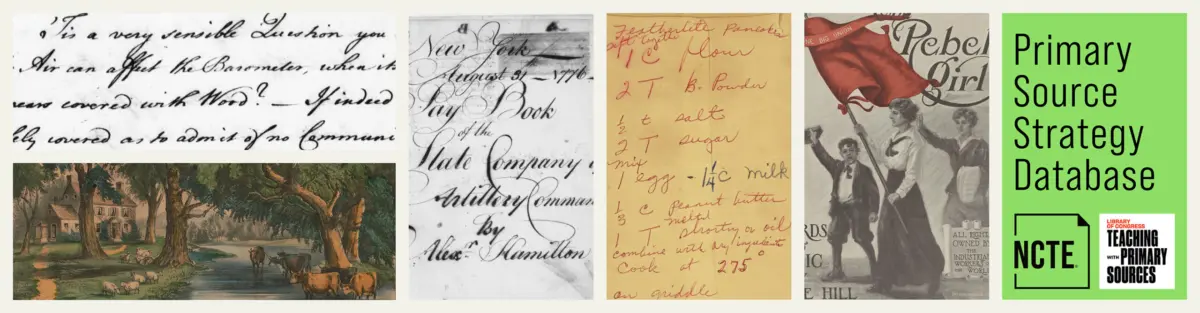
In an era defined by the rapid democratization of information and the ongoing re-evaluation of educational curricula, the National Council of Teachers of English (NCTE) has announced a pivotal nationwide initiative. Collaborating directly with the Library of Congress as an active member of the prestigious Teaching with Primary Sources (TPS) Consortium, the NCTE is fundamentally shifting how educators and students interact with historical documentation. At the heart of this partnership is a newly unveiled, highly searchable digital database designed to integrate more than 150 meticulously curated primary source items from the Library of Congress’s vast digital archives directly into English Language Arts (ELA) and literacy classrooms.
Created through the collaborative efforts of more than two dozen distinguished educators, literacy specialists, and instructional leaders, this database does more than merely catalog history—it contextualizes it. By aligning specific historical artifacts with modern educational standards, thematic units, and pedagogical strategies, the initiative equips teachers to bridge the gap between rigorous textual analysis and critical social discourse. Among the most compelling artifacts featured in this repository is a historic 19th-century dispatch from The Salt Lake Tribune, which details the extraordinary, often overlooked lives of women who lived as men.
This initiative arrives at a critical juncture for American education. As school districts nationwide grapple with how to present complex, nuanced, and historically marginalized narratives, the NCTE-Library of Congress partnership provides a scalable, standards-aligned framework. By leveraging primary sources like The Salt Lake Tribune article, educators can foster critical thinking, challenge binary historical assumptions, and cultivate empathy. This comprehensive report explores the architecture of this educational partnership, examines the pedagogical value of unearthing hidden gender histories, analyzes the structural alignment with state academic standards, and projects the long-term trajectory of primary source integration in modern classrooms.
Detailed Chronology: From Archives to Classrooms
The integration of Library of Congress archives into standard ELA curricula is the culmination of years of targeted programmatic development spearheaded by federal cultural institutions and professional teaching organizations.
The Genesis of the TPS Consortium
The foundation of this current educational wave was laid by the Library of Congress through the establishment of the Teaching with Primary Sources program. Designed to build awareness of the Library’s immense digital collections—comprising millions of manuscripts, maps, photographs, audio recordings, and printed texts—the TPS program sought to move educators past textbook-driven instruction. By training teachers to use primary sources, the Library aimed to transform students from passive recipients of historical narratives into active historical investigators.
Forging the NCTE Partnership
Recognizing the natural alignment between historical inquiry and literacy development, the NCTE integrated its network of English language arts professionals into the TPS Consortium. Literacy is no longer viewed strictly as decoding text; contemporary ELA pedagogy demands advanced media literacy, rhetorical analysis, and the ability to synthesize multiple perspectives. Through this alliance, the NCTE committed to developing pedagogical pathways that specifically harness Library of Congress artifacts to bolster reading comprehension, argumentative writing, and historical empathy.
Developing the Searchable Database
To make these massive archives actionable for busy educators, the NCTE mobilized over two dozen classroom teachers and ELA curriculum leaders. This working group sifted through the Library of Congress’s vast digital holdings to select items with profound instructional value. They designed a searchable database categorized by tags such as picturebook, argument, vocabulary, and media literacy. Each entry is paired with concrete teaching strategies, suggested themes, unit frameworks, and explicit connections to state academic standards.
Unveiling the Historical Core: The Salt Lake Tribune Dispatch
A cornerstone of this database is a historical artifact that bridges journalism, social history, and gender studies: a late-19th-century article published in The Salt Lake Tribune. Filed by London-based correspondent Rupert Neville as a "Special Cable to The Tribune," the piece chronicles the remarkable, clandestine lives of historical women who lived, worked, and fought as men.
The dispatch documents figures such as:
- Marie LeRoy
- Madame Velasquez (Loreta Janeta Velázquez, a Cuban-born woman who famously disguised herself as a Confederate soldier, "Lieutenant Harry T. Buford," during the American Civil War)
- Hannah Snell (An 18th-century Englishwoman who enlisted in the British Marines)
- Mary Ann Talbot (A British woman who served as a soldier and sailor disguised as a boy in the late 18th century)
- Catherine Coome
- Marion Edwards
For decades, these narratives were marginalized, omitted from standard history textbooks, or relegated to the realm of sensationalist folklore. By introducing this primary source into contemporary high school classrooms, the NCTE-Library of Congress initiative brings these hidden histories into the light, offering students a complex look at gender non-conformity long before the modern era of gender studies.
Supporting Context and Educational Metrics
The effectiveness of this partnership is best understood through the lens of modern educational frameworks and the specific literacy demands placed on secondary students. The resources housed within the NCTE database are strategically mapped to address core educational competencies, particularly those outlined by state content standards such as the New Mexico Adopted Content Standards for Reading and Literacy in History/Social Studies.
Curricular Alignment and Rigorous Standards
The instructional design of the database ensures that teachers do not have to sacrifice academic rigor to introduce unconventional historical texts. Instead, these primary sources serve as the exact vehicle through which rigorous standards are mastered.
- RI.9-10.1 (Citing Textual Evidence): Students are required to cite strong and thorough textual evidence from historical journalism (such as Rupert Neville’s cable) to support both explicit analyses and implicit inferences regarding societal expectations of women in the 19th century.
- RI.9-10.8 (Evaluating Arguments and Claims): Learners must delineate and evaluate the specific claims made by journalists of the era, assessing whether the reporting relied on valid reasoning and relevant evidence, or whether it succumbed to period-specific sensationalism and bias.
- RH.11-12.2 (Central Ideas in History): Upper-level students determine the central ideas of complex primary and secondary sources, synthesizing key details to articulate how historical reporting shaped public perception of gender roles.
Methodological Frameworks for the Classroom
The database goes beyond static text by embedding dynamic, multi-modal teaching approaches designed to foster collaborative and critical engagement:
- Media Literacy and Source Analysis: Students analyze The Salt Lake Tribune article not just for what it says, but how it was transmitted ("Special Cable to The Tribune"). This introduces discussions surrounding international news syndication, journalistic ethics, and the role of foreign correspondents in the 19th century.
- Vocabulary in Context: Historical dispatches use language and idioms unique to their era. Teachers utilize minilessons to unpack archaic terminology, enabling students to track how language surrounding gender, identity, and social deviance has evolved over time.
- Comparative Historiography: By contrasting the sensationalized tone of 19th-century newspaper dispatches with modern historical scholarship, students learn to interrogate the biases inherent in historical record-keeping.
Official Statements and Pedagogical Rationale
The educational rationale driving this initiative is rooted in the belief that historical literacy must reflect the full spectrum of human experience. The inclusion of figures who subverted traditional gender expectations is not merely an exercise in historical trivia; it is a vital tool for cognitive and emotional development.
According to curriculum design frameworks developed by the NCTE working group, exploring the lives of women who defied social norms yields profound instructional benefits:
"The women in this article defied social norms and expectations. Their stories show the limitations placed on women. Discussing these women encourages students to question traditional gender roles and analyze the impact of societal expectations on individuals. While students are familiar with some historical women who dressed as men, this article uncovers some who are lesser known. Many of these women have been erased from history or hidden."
Furthermore, the instructional materials emphasize that unearthing these narratives transforms the classroom dynamic, fostering inclusivity and deep historical empathy:
"By bringing them into the classroom, students gain a more complete and nuanced understanding of history. Learning about these women and the challenges they faced can help students build empathy and understanding for people who defy societal norms and fight for their rights. Using this resource, students can develop a deeper understanding of history, gender, and the ongoing struggle for equality."
Educational leaders within the TPS Consortium have repeatedly underscored that primary sources act as powerful catalysts for student engagement. When learners interact with unmediated historical voices—whether through a handwritten letter, an archival photograph, or a century-old newspaper dispatch—they transition from passive consumers of knowledge to active historians capable of constructing their own well-reasoned arguments.
Future Outlook: The Evolution of Primary Source Literacy
As the NCTE and the Library of Congress continue to expand the Teaching with Primary Sources Consortium, the implications for the future of American education are profound. The digital database is not a static project; it represents a living, growing repository designed to adapt to the changing needs of 21st-century classrooms.
Scaling Access and Professional Development
Future phases of the partnership will likely focus on scaling professional development opportunities for educators nationwide. By offering workshops, webinars, and collaborative modules, the NCTE aims to demystify archival research for teachers who may feel intimidated by digital repositories containing millions of historical documents. Equipping educators with the confidence to navigate these collections ensures that primary source integration becomes a standard pedagogical practice rather than an isolated classroom activity.
Navigating Contemporary Educational Landscapes
In an educational climate where curricular content frequently faces public scrutiny, the NCTE-Library of Congress initiative provides a secure, academically rigorous anchor. By grounding discussions of gender, equity, and social change in verifiable, peer-reviewed historical documentation—backed by the cultural authority of the Library of Congress—educators are equipped with objective frameworks to navigate sensitive topics. The focus remains steadfastly on evidence-based inquiry, critical reading, and historical methodology.
Expanding Interdisciplinary Boundaries
Looking ahead, the database’s tagging system—spanning categories such as Arts and Culture, Government, Law, and Politics, History, and News, Journalism, and Advertising—signals a growing movement toward interdisciplinary instruction. English language arts teachers are increasingly partnering with social studies, art, and media studies departments to create holistic, thematic units. A single primary source, such as Rupert Neville’s 19th-century dispatch, can thus serve as the springboard for a multi-week, cross-curricular investigation into journalism, gender history, legal rights, and creative writing.
Through this visionary partnership, the NCTE and the Library of Congress are ensuring that the archives of the past do not gather digital dust in federal servers. Instead, they are being placed directly into the hands of students—sparking curiosity, challenging orthodoxies, and forging a more comprehensive, empathetic understanding of the human story.

