
Executive Overview
As terrestrial data centers face escalating constraints—colliding directly with power grid limitations, water scarcity, and zoning bottlenecks—the artificial intelligence industry is looking upward. On August 21, 2026, Redmond, Washington-based orbital data center pioneer Starcloud announced a massive $250 million Series A extension, propelling the startup to a $2.3 billion post-money valuation.
This latest funding round more than doubles the valuation Starcloud achieved just five months prior in March 2026, bringing its total capital raised to an impressive $450 million since its inception in late 2024. The extension was led by Manhattan West, with firm executives Ken Abdalla and Lauren Selig spearheading the transaction; Selig will also join Starcloud’s board as an observer.
The financing drew significant participation from a powerhouse roster of existing investors, including Benchmark, EQT, Soma, NFX, and 776. Notably, it also welcomed a wave of strategic heavyweights: NVIDIA, Cisco Investments, Cedar Capital, Goanna Capital, and Standard Capital.
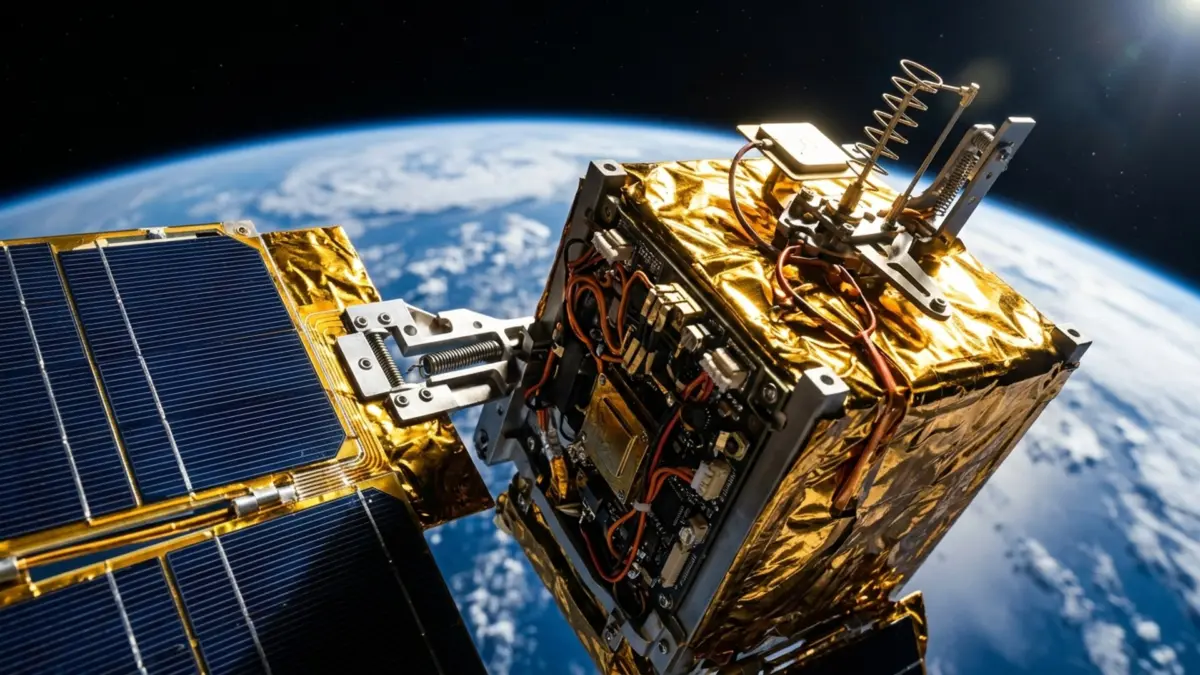
This capital injection arrives at a pivotal juncture for the burgeoning orbital compute market. Starcloud is not merely conceptualizing science fiction; it is deploying real, flight-hardened hardware. Having successfully sent the world’s first data center-grade GPU into low Earth orbit (LEO) in late 2025, the company is now preparing to scale its manufacturing capacity, deepen its technical collaboration with NVIDIA, and aggressively secure precious launch allocations.
In an era where terrestrial AI infrastructure faces tightening power grids, Starcloud’s extraterrestrial blueprint offers a glimpse into the next frontier of scalable computation. However, this high-stakes endeavor relies entirely on external dependencies—specifically, the cadence and pricing of heavy-lift rockets managed almost entirely by SpaceX.
Detailed Chronology: From Y Combinator Breakthrough to Orbital Unicorn
Starcloud’s trajectory from a fledgling Y Combinator concept to a multi-billion-dollar aerospace and AI infrastructure player is one of the fastest in startup history.
The Incubation and Rapid Deployment (Late 2024 – 2025)
Evolving out of Y Combinator in late 2024, Starcloud was founded by CEO Philip Johnston, CTO Ezra Feilden, and Chief Engineer Adi Oltean. Armed with a modest $3 million pre-seed round, the founding trio set out to bypass terrestrial grid limits by launching enterprise-grade AI hardware into space.
Moving at an astonishing pace, the team designed, manufactured, and deployed Starcloud-1 in just 21 months. Launched in November 2025, the satellite carried an NVIDIA H100 GPU—marking the first time a data center-grade accelerator had ever operated in orbit. Operating roughly 100 times more powerfully than any legacy space-borne compute architecture before it, Starcloud-1 achieved historic milestones: it trained the first AI model in space, executed inferences on a version of Google’s Gemini, and demonstrated orbital model fine-tuning.
The Unicorn Milestone and Strategic Partnerships (Early 2026)
Building on its space-borne successes, Starcloud closed a $170 million Series A round at a $1.1 billion valuation in March 2026, co-led by Benchmark and EQT Ventures. This milestone made Starcloud the fastest company in Y Combinator history to reach unicorn status, achieving the feat just 17 months after its demo day.
The momentum continued into May 2026, when Starcloud signed a transformative contract with SpaceX’s Starlink division. Under the agreement, Starcloud integrated more than 50 Starlink Mini Laser terminals across a planned constellation of at least 25 satellites. This integration established intersatellite optical links capable of delivering up to 25 Gbps of bandwidth, ensuring that orbital data nodes could communicate seamlessly without routing back through ground stations.
The $250 Million Series A Extension (August 2026)
Cementing its status as an industry leader, the August 2026 Series A extension brought an additional $250 million into the company’s coffers, pushing its valuation to $2.3 billion. This round bridged the gap between early experimental validation and full-scale commercial manufacturing, setting the stage for the deployment of Starcloud’s next-generation orbital platforms.
Supporting Context & Metrics: The Mechanics of Orbital AI
To understand Starcloud’s valuation and technical roadmap, one must examine the fundamental bottlenecks of modern artificial intelligence and the physics of operating data centers in the vacuum of space.
The Terrestrial Compute Squeeze
As frontier AI models scale into trillions of parameters, data centers require gigawatts of continuous power. In major tech hubs, securing power purchase agreements (PPAs) for new data center campuses can take years, and local grids are increasingly strained. While nuclear energy and geothermal solutions are being aggressively explored on Earth, orbital data centers propose an alternative: continuous, unobstructed solar power harvested above the atmosphere, combined with the extreme cold sink of deep space.
The Physics of Orbital Cooling and Radiation
Deploying hardware designed for air-conditioned server rooms into the harsh environment of low Earth orbit introduces monumental engineering challenges:
- Thermal Management: On Earth, servers rely on forced-air cooling or liquid-immersion systems. In space, convection is nonexistent; heat must be radiated away entirely through specialized panels and deployable radiators.
- Radiation Hardening: Cosmic rays and solar flares can cause single-event upsets (SEUs) and hardware degradation. Starcloud’s engineering team works closely with chipmakers to ensure that enterprise GPUs can survive launch loads and long-term radiation exposure.
Launch Capacity as the Binding Constraint
Despite the promise of infinite solar energy and untethered expansion, Starcloud’s operational model faces one immutable constraint: launch capacity.
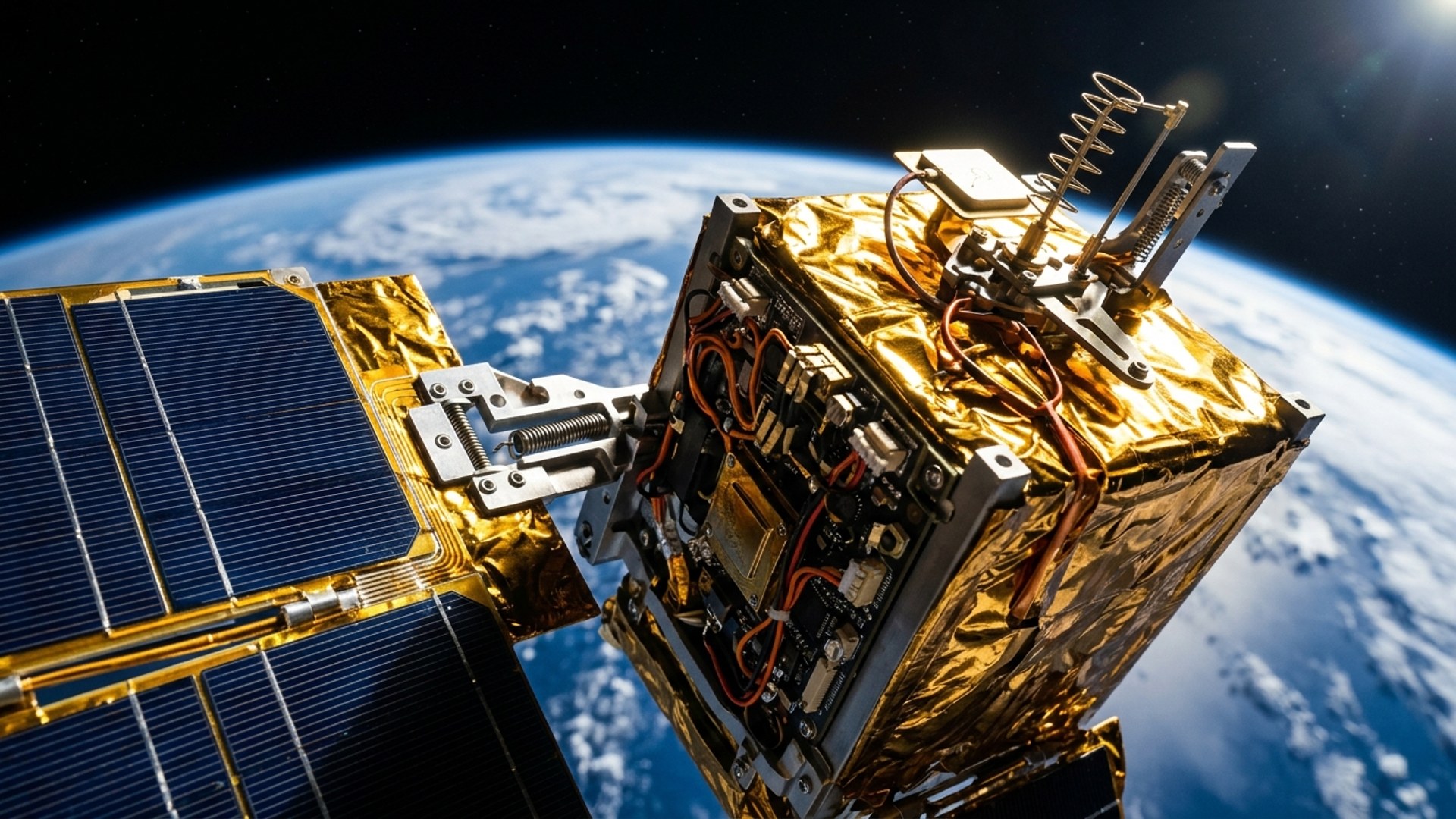
The company’s compute roadmap is inextricably linked to rockets it does not control. Its current-generation satellite, Starcloud-2, is scheduled for launch later in 2026. Because launch availability is scarce and expensive, a substantial portion of Starcloud’s $250 million funding round has been explicitly earmarked for procuring future launch allocations.
Starcloud is not alone in navigating this bottleneck. Fellow orbital compute startup Cowboy Space secured a $275 million Series B round in May 2026 at a $2 billion valuation, pursuing a vertically integrated model where rocket upper stages remain in orbit as one-megawatt data centers. Meanwhile, Google’s clandestine Project Suncatcher and other private initiatives are actively exploring the same orbital territory, underscoring a broader, high-stakes race to the stars.
Official Statements and Industry Perspectives
The convergence of Silicon Valley AI prowess and aerospace infrastructure has drawn enthusiastic endorsements from key investors and technology partners.
Reflecting on the milestone, Starcloud co-founder and CEO Philip Johnston emphasized the tangible progress of the company’s hardware roadmap:
"Last November we put the first NVIDIA H100 in orbit. Today this fresh capital empowers us to build the infrastructure to launch many more of NVIDIA’s most advanced GPUs into space."
The collaboration with NVIDIA is moving far beyond experimental deployments. The two companies are actively co-developing the Space-1 Vera Rubin Module—a space-rated variant of NVIDIA’s next-generation Vera Rubin architecture. This module is specifically hardened to handle extreme radiation and radiator-only thermal dissipation in LEO. Starcloud’s operational satellites will serve as the premier flight-testing ground for these systems.
Aleem Rizvon, Vice President at Cisco Investments—a new strategic participant in the August round—highlighted the critical role of secure networking in orbital architectures:
"Cisco has long been a leader in secure data center infrastructure and looks forward to bringing that expertise to the emerging world of orbital data centers."
From the investor perspective, Manhattan West’s Ken Abdalla and Lauren Selig recognized the paradigm shift occurring in AI infrastructure. Selig, who has taken a seat as a board observer, noted that scaling compute beyond Earth’s atmosphere is no longer theoretical, but an essential step to support future AI workloads.
Future Outlook: Starcloud-2, Starcloud-3, and the Gigawatt Horizon
As Starcloud looks toward the remainder of 2026 and beyond, several critical operational milestones lie ahead.
The Immediate Horizon: Starcloud-2
The next major hardware milestone is the launch of Starcloud-2, slated for later in 2026. This satellite will feature the largest commercial deployable radiator ever sent into space. It will service early enterprise customers such as Crusoe, alongside ongoing collaborative validations with AWS, Google Cloud, and NVIDIA.
Expanding Manufacturing in Washington
To support its accelerated deployment schedule, Starcloud is actively scaling its production capacity. The company is outfitting a new facility in Woodinville, Washington—strategically located near the aerospace hubs where industry giants like SpaceX and Amazon build their own satellite constellations. This facility will serve as the dedicated assembly line for Starcloud-3 and subsequent iterations.
The Long-Term Vision: Gigawatt-Scale Orbital Compute
Starcloud’s ultimate corporate trajectory aims toward gigawatt-scale orbital compute. However, achieving this scale depends entirely on macro-level aerospace developments—specifically, SpaceX’s Starship achieving routine, fully reusable orbital flights that drive launch costs down to promised economic thresholds.
While financial rounds can successfully fund manufacturing lines, software development, and launch reservations, the fundamental pacing item remains the rocket schedule. Whether launch vehicles arrive on time is the ultimate variable that no funding round can fully underwrite. Yet, with $450 million in total funding, a $2.3 billion valuation, and deep-rooted partnerships with NVIDIA, Cisco, and SpaceX, Starcloud is exceptionally well-positioned to lead humanity’s migration into orbital intelligence.

