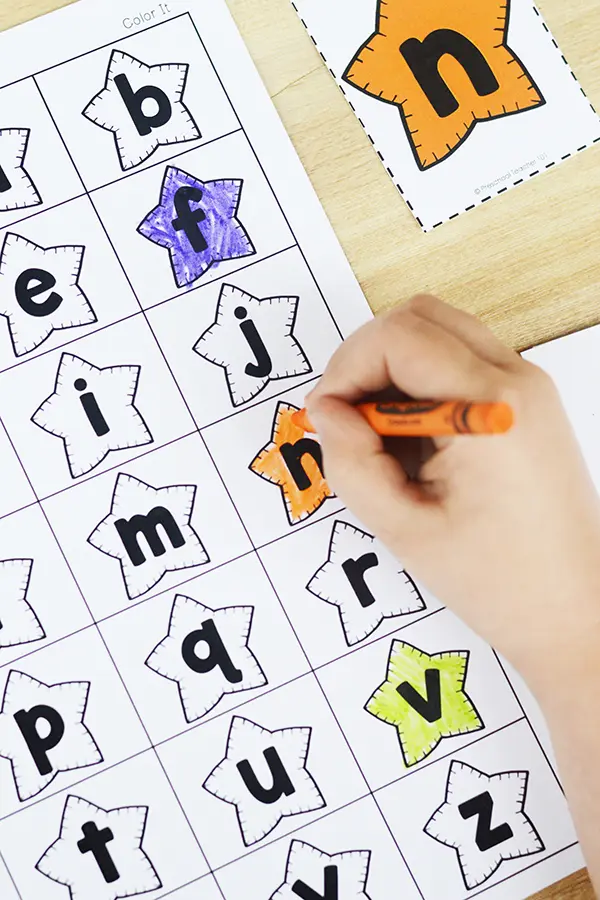
In the ever-evolving landscape of early childhood education, bridging the gap between physical movement and cognitive development remains one of the most persistent challenges for educators and parents alike. Enter the Stars ABC Scavenger Hunt, an innovative, space-themed alphabet activity designed for preschool (Pre-K) and kindergarten students. Released as part of a comprehensive yearlong initiative to incorporate active play into foundational learning, this program capitalizes on children’s natural fascination with the night sky, winter stargazing, and outer space.
By combining tactile letter recognition with gross motor movement, the scavenger hunt transforms traditional, sedentary desk-work into an immersive exploratory experience. Designed for seamless integration into both home-school environments and formal classrooms, the activity provides customizable recording sheets, differentiated instruction models, and adaptable letter cards. As educational paradigms increasingly shift toward experiential and kinesthetic learning, tools like the Star ABC Scavenger Hunt offer a compelling glimpse into the future of early literacy pedagogy—proving that children learn best when they are encouraged to move, explore, and reach for the stars.
Detailed Chronology of the Initiative’s Development
The journey from a simple concept to a comprehensive, multi-platform educational resource reflects a methodical approach to curriculum design.
Phase 1: Conceptualization and Pedagogical Research (Early Planning Stages)
Educational designers recognized a seasonal opportunity during the winter months. With shorter days providing children more frequent opportunities to observe the night sky, developers sought a way to harness this natural curiosity. Research consistently demonstrates that children retain foundational concepts, such as the alphabet, much faster when paired with thematic, high-interest topics like astronomy and space exploration.
Phase 2: Prototyping the Scavenger Hunt Mechanics
Developers formulated the core mechanics of the activity: a printable, star-themed recording sheet coupled with hidden letter cards. The goal was to create a flexible system that could be deployed inside a living room, across a school classroom, or taken outdoors. Durability was a primary focus; recommendations for lamination and reusable plastic pouches were integrated early to ensure sustainability and resource efficiency for educators operating on tight budgets.
Phase 3: Launch of the Free Sample and Community Feedback
To gauge reception and provide immediate value to parents and teachers, a free sample version of the Stars ABC Scavenger Hunt was released. This initial rollout focused heavily on basic letter recognition, featuring targeted prompts that allowed educators to test the kinesthetic learning model. Feedback highlighted the activity’s high engagement levels, particularly among children who struggle with traditional, paper-and-pencil alphabet drills.
Phase 4: Expansion into the Full Star-Themed Pack and Digital Marketplaces
Building on the success of the sample, creators expanded the offering into a comprehensive full-set package. This iteration introduced a broader array of recording sheets, large and small letter cards, and specialized lesson plan integrations. To maximize accessibility, the complete pack was made available across prominent educational distribution platforms, including specialized educator networks and digital marketplaces like Teachers Pay Teachers.
Supporting Context & Metrics: The Science of Kinesthetic Learning
To understand the value of the Stars ABC Scavenger Hunt, one must examine the broader educational framework supporting kinesthetic and thematic instruction in early childhood development.
The Power of Movement in Cognitive Retention
Traditional education models frequently rely on static instruction—asking young children to sit at desks and trace letters repeatedly. However, developmental psychologists and neuroscientists emphasize that physical movement significantly enhances neural pathway formation in children aged 3 to 6. When a child physically walks across a room, searches for a hidden star card, and connects it to a letter on their recording sheet, multiple sensory systems are activated simultaneously. This multi-sensory engagement drastically improves letter recognition speed and memory retention compared to rote memorization.
Seasonal Learning and Natural Curiosity
The timing of the program’s core themes—winter nights and outer space—is strategically aligned with psychological principles of seasonal curiosity. During winter, early sunsets bring astronomy to the forefront of a child’s daily experience. By channeling this natural wonder into structured literacy exercises, educators reduce cognitive friction. Children do not view the activity as "studying the alphabet"; instead, they view it as an interstellar mission, transforming compulsory learning into an intrinsically motivated quest.
Scalability and Differentiation Metrics
Modern classrooms are characterized by diverse learning speeds and varied developmental milestones. The Stars ABC Scavenger Hunt addresses this through built-in differentiation capabilities:
Targeted Intervention: Educators are not required to force an entire classroom to tackle all 26 letters simultaneously. The activity supports customized focus groups, allowing teachers to isolate specific letters.
Personalized Starting Points: Pedagogical guidelines suggest beginning with the letters contained within a child’s own name—a proven psychological hook that fast-tracks engagement.
Resource Optimization: With options for both laminated sheets and digital storage pouches, the system achieves high marks in cost-efficiency, reducing paper waste by up to 90% across repeated classroom rotations.
Official Statements and Pedagogical Insights
Educational specialists behind the development of the resource have emphasized the philosophy of "playful learning" as a core pillar of modern early childhood development.
"We designed these scavenger hunts because we noticed a profound disconnect between how young children naturally want to explore their environments and how traditional literacy materials are presented," noted a lead curriculum developer associated with the project. "When you give a preschooler a mission to hunt down glowing stars hidden around the room, the anxiety surrounding letter recognition completely vanishes. They are laughing, moving, and most importantly, they are learning without realizing they are working."
Furthermore, early childhood educators who have tested the materials in live classroom settings report notable shifts in student behavior and attentiveness.
"In a kindergarten classroom, keeping twenty-plus five-year-olds focused during literacy blocks can be daunting," shared a participating lead pre-K instructor. "The Star ABC Scavenger Hunt changed the dynamic entirely. By turning letter-hunting into a physical game, even our most restless learners stayed engaged from start to finish. The flexibility to scale the game up or down—using large cards for group games or small cards for table-top matching—makes it an indispensable tool in our seasonal curriculum."
Future Outlook: The Evolution of Play-Based Educational Resources
As educational institutions increasingly balance digital screen time with tactile, hands-on experiences, the demand for high-quality, printable physical activities is projected to grow. The success of the Stars ABC Scavenger Hunt points toward a broader trend in curriculum development: the fusion of physical exploration with foundational academics.
Upcoming Trends in Early Literacy
Blended Thematic Learning: Future iterations of early learning packs are expected to tie literacy even closer to cross-disciplinary subjects, merging astronomy, biology, and geography with basic reading and writing skills.
Eco-Friendly and Reusable Formats: As sustainability becomes a core value for schools and households, educational resources designed for repeated use—such as wipe-clean lamination sheets and digital-to-print hybrid modules—will dominate the market.
Customizable Accessibility: The push toward universal design means future pedagogical tools will increasingly prioritize adaptable scaling, ensuring children with varying physical or cognitive abilities can participate equally in kinesthetic learning games.
Conclusion
The Stars ABC Scavenger Hunt is more than just a seasonal alphabet activity; it is a masterclass in how to align children’s innate desire for play with critical educational milestones. By transforming the cold winter night sky into an accessible, interactive indoor or outdoor expedition, this program ensures that young learners take their first steps toward literacy with confidence, curiosity, and boundless enthusiasm. Whether utilized within a bustling kindergarten classroom or a quiet home-school setting, the message is clear: when education is treated as an adventure, every child can reach the stars.