
Executive Overview
In the landscape of early childhood education, foundational literacy remains the bedrock upon which all future academic achievement is built. As educators and curriculum specialists continually seek evidence-based, engaging methodologies to align with the Science of Reading, phonological awareness has emerged as a critical focal point for Pre-K and kindergarten classrooms. Entering this pedagogical arena with robust utility is the newly released Spring Syllable Sort and its comprehensive counterpart, the Four Seasons Syllable Sort.
Designed to target auditory processing, word segmentation, and seasonal vocabulary acquisition, these multisensory learning tools move away from rote memorization and toward dynamic, interactive phonics exploration. By utilizing tactile methods such as clapping, tapping, and picture sorting, young learners isolate sounds without the cognitive burden of decoding written text prematurely. This report provides an authoritative examination of these educational resources, analyzing their alignment with modern reading standards, classroom implementation strategies, and their broader implications for early childhood literacy development.
Detailed Chronology: The Evolution and Rollout of Seasonal Syllable Curricula
The development of structured phonological awareness tools like the Spring and Four Seasons Syllable Sorts represents a deliberate response to shifting paradigms in early literacy instruction.

- Early Pedagogical Frameworks: Historically, early childhood classrooms relied heavily on whole-word recognition and basic letter-sound identification. While valuable, these methods frequently omitted the crucial auditory stage of phonological awareness—specifically, the ability to hear and manipulate word parts before connecting them to graphemes (written letters).
- Integration of the Science of Reading: Over recent years, educational researchers and curriculum developers intensified calls for systematic, explicit instruction aligned with the Science of Reading. This movement underscored the necessity of mastering phonemes and syllables prior to advanced reading comprehension.
- January 2025 Launch: Responding to the demand for seasonal, high-engagement materials that fit seamlessly into thematic lesson plans, developers released the free Spring Syllable Sort printable pack. Engineered specifically for Pre-K and kindergarten literacy centers, the resource quickly gained traction among educators looking to merge seasonal themes with structured literacy.
- Expansion into the Four Seasons Pack: Building on the success of the spring-themed release, a comprehensive 42-page Four Seasons Syllable Sort pack was rolled out across major educational platforms, including Teachers Pay Teachers and dedicated preschool resource sites. This expansion provided year-round continuity for educators aiming to maintain consistent phonological routines across changing seasons.
Supporting Context & Metrics: The Science Behind Syllable Segmentation
To understand the value of the Spring and Four Seasons Syllable Sorts, one must examine the cognitive metrics surrounding phonological development in early childhood. Research consistently demonstrates that phonological awareness—the ability to recognize and manipulate the spoken parts of sentences and words—is one of the most reliable predictors of future reading success.
Why Syllables Matter
Syllables act as natural phonological stepping stones for young brains. Because syllables are easier to perceive than individual phonemes (the smallest units of sound), they serve as an ideal entry point for segmenting words. When children clap or tap out the syllables in words like "rain-bow" (two syllables) or "but-ter-fly" (three syllables), they are actively engaging in:
- Auditory Discrimination: Learning to distinguish distinct beats within spoken language.
- Motor Integration: Physicalizing language through clapping, tapping, or moving physical markers, which reinforces cognitive retention through kinesthetic learning.
- Vocabulary Expansion: Connecting words to real-world visual cues, ensuring that ELL (English Language Learner) students and native speakers alike comprehend the vocabulary before attempting phonological tasks.
Inside the Toolkit: What the Printables Include
The Spring Syllable Sort and its extended seasonal editions are meticulously structured to support diverse learning styles. Key components include:

- Syllable Counting Cards: Visual prompt cards featuring rich seasonal illustrations that bypass written words to keep the focus strictly on auditory and phonetic processing.
- Large Colorful Word Cards: Designed for group instruction, pocket charts, or guided literacy circles.
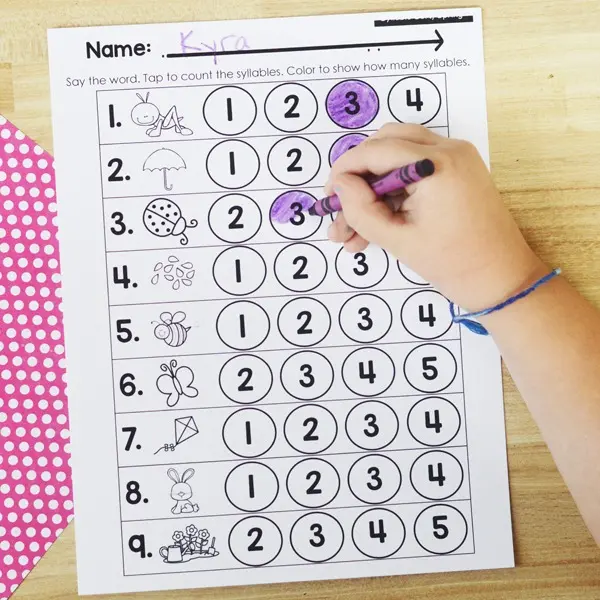
- Black and White Response Worksheets: Independent practice sheets that allow students to solidify their understanding individually while providing teachers with formative assessment data.
- Comprehensive Answer Keys: Ensuring rapid grading, peer review capability, or independent self-correction stations within classroom centers.
Official Statements and Educator Insights
The integration of thematic, hands-on sorting tools into daily routines has garnered enthusiastic feedback from preschool directors, kindergarten teachers, and literacy coaches alike.
"Phonological awareness cannot be treated as an abstract concept for young children," notes an early childhood literacy specialist. "When we give students physical representations of sounds—using colorful spring imagery, paired with clapping and sorting games—we bridge the gap between abstract auditory processing and concrete cognitive understanding. Tools like the Spring Syllable Sort make this transition seamless for teachers."
Classroom educators have similarly praised the flexibility of the curriculum materials. Because the activities require no advanced preparation beyond printing and basic laminating, they fit effortlessly into varied instructional windows:

- Morning Warm-Ups: Kickstarting the day with high-energy, whole-group syllable clapping.
- Literacy Centers: Operating as an independent station where students sort picture cards by syllable count and complete follow-up worksheets.
- Take-Home Literacy Practice: Extending classroom learning into the home environment, empowering parents to engage in structured phonics play with their children using the provided black-and-white printables.
Furthermore, curriculum developers emphasize the importance of vocabulary pre-teaching. Experts continually advise educators to explicitly introduce and define the picture cards before turning students loose on independent sorts. By anchoring the phonological exercise in known vocabulary, classrooms ensure that children are genuinely segmenting known words rather than guessing blindly at unfamiliar illustrations.
Future Outlook: The Trajectory of Thematic Literacy Centers
As educational standards continue to evolve toward rigorous, evidence-based practices, the demand for high-quality, low-prep classroom resources is projected to surge. The success of seasonal phonological tools points toward several key trends in the future of early childhood education:
1. The Blending of Thematic Units and Structured Literacy
For decades, some traditionalists viewed thematic units (such as spring plants, winter weather, or autumn leaves) as purely recreational, divorced from core academic rigor. However, contemporary curriculum design proves that themes and rigorous phonics instruction are not mutually exclusive. By leveraging seasonal vocabulary within structured phonological frameworks, educators can maintain student engagement while meeting strict developmental benchmarks.

2. Multisensory Learning as Standard Practice
The reliance on flat worksheets is steadily giving way to multisensory learning models. Future early literacy materials will likely lean even heavier into tactile, kinesthetic, and visual integrations—such as combining syllable sorts with manipulatives, digital sorting boards, and interactive whiteboard games.
3. Scalable Resources for Diverse Classrooms
With classrooms increasingly populated by diverse learners with varying entry points in literacy, scalable curricula—such as the 42-page Four Seasons Syllable Sort pack—provide educators with the tiered resources necessary for differentiation. Teachers can easily scale activities up for advanced kindergarteners ready for multi-syllabic challenge words, or scale them down for Pre-K students mastering basic two-syllable vocabulary.
Conclusion
The introduction of specialized instructional frameworks like the Spring and Four Seasons Syllable Sorts highlights a broader, positive shift in early childhood education: making foundational literacy both scientifically rigorous and genuinely fun. By transforming abstract phonological concepts into tactile, visual, and seasonal sorting games, educators are better equipped than ever to guide Pre-K and kindergarten students toward lifelong reading proficiency. As these tools continue to find homes in classrooms worldwide, they stand as a testament to the power of purposeful, playful, and evidence-based instruction.

