Early childhood education is undergoing a quiet, evidence-based revolution. As the educational community continues to align preschool and kindergarten instruction with the core tenets of the Science of Reading, the focus on foundational phonological awareness has never been more intense. Among the most critical milestones in this developmental journey is the mastery of syllable segmentation—the ability of young learners to hear, isolate, and count the distinct beats within spoken words.
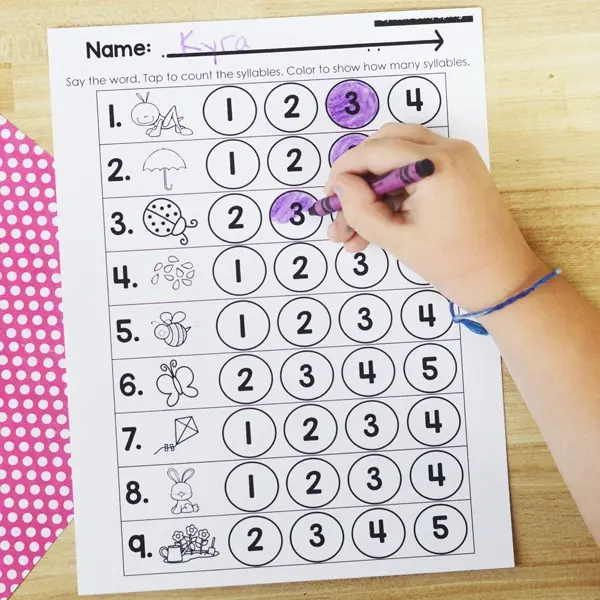
Entering this pedagogical landscape with timely ingenuity is the newly released Spring Theme Syllable Sort, a complimentary literacy resource designed specifically for Pre-K and kindergarten classrooms. Developed to seamlessly integrate seasonal wonder into daily instruction, this hands-on activity leverages picture clues and tactile movement—such as clapping and tapping—to teach children how to break words apart. Building upon this free offering, educators can also access an expansive, comprehensive 42-page Four Seasons Syllable Sort pack, providing a year-round framework for phonological mastery.
This article investigates the pedagogical significance of seasonal syllable sorting, exploring how playful, multisensory frameworks support cognitive development, bridge vocabulary acquisition with phonics, and offer educators practical tools that align with modern literacy standards.
Detailed Chronology: The Evolution of Phonological Awareness Tools
To understand the value of modern literacy resources like the Spring Syllable Sort, it is necessary to examine how early childhood reading instruction has evolved over recent decades.
The Shift Toward the Science of Reading
For years, early reading strategies heavily emphasized memorization and contextual guessing. However, cognitive science and longitudinal educational research eventually dismantled these approaches, underscoring the absolute necessity of explicit, systematic instruction in phonological and phonemic awareness. Long before children map graphemes (letters) to phonemes (sounds), they must master larger auditory units of language—words, rhymes, and syllables.
The Integration of Thematic Learning
As educational researchers advocated for explicit phonological training, curriculum developers faced a dual challenge: how to make abstract auditory concepts concrete for four- and five-year-olds, and how to maintain student engagement over extended periods. The solution emerged through thematic, seasonal instruction. By anchoring literacy tasks to familiar, highly anticipated real-world experiences—such as the blooming of spring flowers, summer sunshine, autumn leaves, and winter snow—educators found they could dramatically increase student investment and vocabulary retention.
The Introduction of the Spring Syllable Sort
The release of the Spring Theme Syllable Sort marks a modern milestone in this evolution. Designed to be lightweight, adaptable, and immediately deployable, the activity shifts away from text-heavy worksheets and toward interactive, picture-based sorting. By isolating sounds using visual prompts and physical motion, the resource bridges the gap between play-based preschool environments and structured kindergarten reading centers.
Supporting Context & Metrics: The Science Behind Syllable Segmentation
Phonological awareness is widely recognized as one of the single best predictors of future reading success. But why are syllables such a crucial stepping stone?
Cognitive Development and Auditory Processing
Young children naturally perceive language as a continuous stream of sound. Separating that stream into discrete words, and further breaking words down into syllables, requires sophisticated cognitive processing.
The Clapping and Tapping Method: When children physically clap or tap out the beats of a word (e.g., rai-bow = two beats; but-ter-fly = three beats), they engage both their auditory and kinesthetic sensory systems. This multisensory approach helps wire the brain to recognize phonetic boundaries.
Picture-Based Learning: By utilizing picture clues rather than written words, the Spring Syllable Sort ensures that cognitive load remains focused entirely on the sounds of spoken language, rather than premature decoding pressures.
Empirical Impact on Literacy Centers
Classroom metrics and teacher feedback consistently highlight the efficacy of hands-on sorting centers:
Engagement Rates: Interactive clip cards and sorting mats boast significantly higher student engagement metrics compared to traditional paper-and-pencil drills.
Vocabulary Acquisition: Seasonal sorting activities simultaneously build oral vocabulary. For instance, children encounter and master spring-specific terms like tulip, nest, tadpole, and umbrella, expanding their semantic networks while practicing phonology.
Differentiation: Low-threshold, high-ceiling activities allow educators to easily differentiate instruction. Struggling learners can work with two-syllable words and direct teacher support, while advanced students can tackle complex three- and four-syllable seasonal vocabulary independently.
Official Statements and Pedagogical Perspectives
Early childhood literacy specialists and curriculum designers emphasize that resources like the Spring Syllable Sort are vital tools for meeting modern educational standards without sacrificing the joy of early childhood play.
"Phonological awareness is the engine of early reading. When we ask children to listen for the beats in a word, we are teaching them how language is constructed at a structural level," notes an early childhood curriculum specialist. "Resources that gamify this process—turning syllable sorting into a tactile, seasonal game—remove the intimidation factor of literacy instruction."
Educators who have piloted the spring-themed activities emphasize the importance of vocabulary pre-teaching:
"Before students can accurately sort pictures by syllable count, they must accurately identify the object in the picture. Introducing the vocabulary beforehand transforms a simple phonics exercise into a comprehensive language-building experience," explains a veteran kindergarten educator.
Furthermore, developers of the expanded Four Seasons Syllable Sort pack designed the materials to be adaptable across multiple learning environments. Whether utilized in traditional preschool classrooms, kindergarten reading centers, or homeschool settings, the materials are structured to require minimal preparation while delivering maximum educational value.
Future Outlook: The Next Wave in Early Literacy Resources
As schools nationwide continue refining their approach to early reading instruction, the demand for high-quality, scientifically grounded, and engaging printables will only accelerate.
Expanding Beyond Spring
The success of the Spring Syllable Sort has paved the way for broader curricular frameworks, culminating in the comprehensive 42-page Four Seasons Syllable Sort collection. This expansion ensures that foundational phonological training is not treated as a fleeting seasonal novelty, but rather as a continuous, year-long developmental thread. Teachers can now effortlessly transition their literacy centers from autumn harvests and winter snowflakes to spring blossoms and summer sunshine, keeping the core learning mechanism fresh and exciting for students.
Accessibility and Digital Integration
Looking ahead, the intersection of physical manipulatives and accessible digital distribution (such as platforms like Teachers Pay Teachers and specialized early childhood educator networks) ensures that high-level pedagogical tools are within reach of every classroom, regardless of district budgets. Free printables like the Spring Syllable Sort democratize access to elite instructional strategies, empowering teachers and parents alike to foster early literacy success.
Conclusion
The journey from oral language to fluent reading is paved with small, deliberate steps. By transforming syllable segmentation into a playful, seasonal exploration, resources like the Spring Syllable Sort and the Four Seasons collection provide educators with the exact tools they need to nurture confident, capable readers. Through multisensory engagement, rigorous phonological practice, and joyful thematic discovery, the future of early literacy instruction is brighter—and more spring-like—than ever.