
Executive Overview
As the autumn leaves turn crisp and communities prepare for the annual celebration of chills, thrills, and sugar-fueled festivities, the intersection of education and entertainment is undergoing a digital renaissance. In October, traditional lesson plans, standardized study sessions, and family game nights are frequently sidelined in favor of themed distractions. However, learning platforms are increasingly leveraging seasonal cultural touchstones to maintain academic momentum rather than fighting against them.
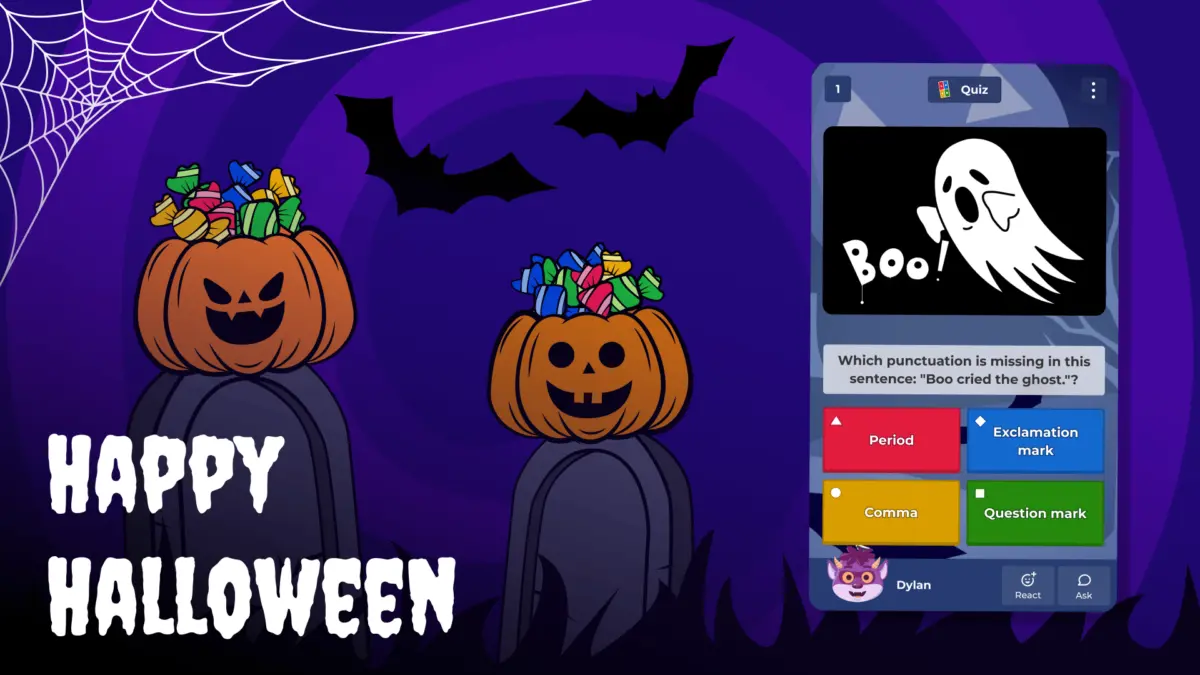
At the vanguard of this movement is Kahoot!, the global game-based learning platform. This season, the company has rolled out an expansive, curated library of ready-made Halloween learning content designed to inject "fang-tastic" fun into classrooms, living rooms, and study halls worldwide. By partnering with heavy-hitting cultural institutions and entertainment giants—ranging from TED-Ed and Disney to Marvel, Nickelodeon, and the World Wildlife Fund (WWF)—Kahoot! is redefining how students, teachers, and lifelong learners approach the final quarter of the calendar year.
This report provides a comprehensive examination of Kahoot!’s seasonal campaign. We will explore how gamified educational content is deployed across various demographics, analyze the pedagogical frameworks supporting these spooky sessions, detail the institutional partnerships driving the content, and project the long-term impacts of seasonal micro-learning on modern educational outcomes.
Detailed Chronology: The Evolution of Seasonal Gamification in Digital Education
To understand the strategic significance of Kahoot!’s current Halloween rollout, one must examine the broader evolution of digital learning platforms over the past decade. What began as a simple, browser-based quiz tool used primarily for formative classroom assessments has transformed into a sprawling ecosystem of interactive educational media.
Phase One: The Classroom Novelty (2013–2017)
In its early years, Kahoot! was predominantly viewed by educators as an end-of-week reward or a low-stakes review tool. Teachers manually built quizzes to test recall on multiplication tables, historical dates, or vocabulary words. Seasonal content during this period was entirely user-generated, piecemeal, and localized to individual classrooms. A teacher in Ohio might cobble together a rudimentary quiz about Dracula, but institutional, professionally designed curricula tied to holidays were virtually non-existent.
Phase Two: Strategic Content Partnerships (2018–2022)
As the platform scaled globally, Kahoot! recognized that user acquisition and user retention relied heavily on authoritative, high-interest content. The company began forging high-profile partnerships with content creators, publishers, and non-profits—including National Geographic, Disney, and various scientific organizations. During this window, holiday-themed content transitioned from amateur quizzes to polished, verified multimedia experiences. Curated collections began appearing systematically around major cultural events, including back-to-school season, Earth Day, and Halloween.
Phase Three: The Ecosystem Expansion & Multi-Audience Strategy (2023–Present)
Today, Kahoot! operates not merely as a school-centric tool, but as a multi-tiered platform catering to distinct user segments: K-12 educators, homeschooling parents, university and high school students preparing for exams, and corporate or casual lifelong learners.
The current Halloween content rollout exemplifies this maturity. Rather than treating Halloween as a monolithic event for children, Kahoot! has engineered a segmented content architecture. The platform now delivers tailored modules for:
- Teachers: Academic rigor masked by pop-culture iconography (Nickelodeon, Disney, TED-Ed).
- Parents: Foundational cognitive skill-building disguised as play (Hello Kitty, Marvel, Peanuts).
- Students: Exam-prep and curriculum-aligned STEM modules (Museum of Science, WWF, Wiktionary).
- Lifelong Learners / Party Hosts: High-level trivia and cultural histories (Wikipedia, Star Wars).
Supporting Context & Metrics: The Pedagogy of Play
The deployment of Halloween-themed educational games is not merely a marketing gimmick; it is grounded in contemporary learning science. Educational psychologists have long argued that affective filters—emotional variables such as anxiety, confidence, and motivation—play a critical role in second-language acquisition, math performance, and long-term memory retention.
Combatting the Autumn Slump
The period between the beginning of the academic year and the winter holidays is notoriously difficult for educators and students alike. Dubbed by some psychologists as the "autumn slump," this phase coincides with shifting daylight hours, post-summer adjustment fatigue, and the encroaching stress of mid-term exam seasons.

By integrating seasonal themes into rigorous academic subjects—such as exploring the physics of the moon’s phases via SciShow Kids or untangling complex etymology through Wiktionary—platforms like Kahoot! lower the cognitive resistance typically associated with studying.
Core Pedagogical Pillars of the Campaign
- Familiarity and Reduced Anxiety: Utilizing universally recognized characters (e.g., SpongeBob SquarePants, Groot, Snoopy) acts as an emotional anchor for young learners. When a child encounters a challenging subtraction problem embedded within a Marvel or Hello Kitty narrative, the fear of failure is mitigated by the comfort of familiar media.
- Multimodal Interactivity: Modern learning requires more than static text reading. Kahoot!’s integration of video clips, timed assessments, and competitive leaderboards stimulates multiple cognitive pathways simultaneously, reinforcing neural connections related to the subject matter.
- Scaffolding and Differential Learning: The content collections range from foundational counting exercises for early childhood development to advanced lexical challenges ("Wicked words for Halloween (hard)") for older students and adults. This structural diversity allows educators to deploy the tools across a wide developmental spectrum.
Sector-by-Sector Breakdown of Kahoot!’s Halloween Curriculum
A granular examination of the offerings reveals the breadth and depth of the platform’s seasonal strategy.
1. For Educators: Bringing Spell-Binding Interdisciplinary Learning to the Classroom
Teachers operating within formal school environments face the perpetual challenge of maintaining student engagement while strictly adhering to core curriculum standards. Kahoot!’s teacher-focused collections solve this by bridging pop culture and foundational academics:
- TED-Ed Collaboration: Students explore legendary historical narratives and scientific investigations, tracking the historical reality behind figures like Dracula alongside the socio-political context of the Salem Witch Trials.
- Nickelodeon & Disney Channels: These modules seamlessly merge entertainment properties with science and language arts curricula, allowing educators to leverage characters like SpongeBob SquarePants and the Teenage Mutant Ninja Turtles to illustrate complex physical and linguistic concepts.
2. For Parents: Unwrapping Cognitive Skills at Home
Parents seeking to combat the "summer slide" or reinforce daily classroom learning often struggle to find homework solutions that do not result in power struggles. Kahoot! positions its platform as a "sweet treat" that is more engaging than candy:
- Hello Kitty and Friends: Designed for young learners, this collection focuses on basic cognition, spatial awareness, and foundational math skills through festive, low-stress mini-games.
- Marvel’s Monster Math: Features characters like Groot to challenge children with counting, addition, and subtraction in a playful, monster-themed environment.
- Peanuts (It’s the Great Pumpkin, Charlie Brown): Beyond basic cognitive skills, this module targets emotional literacy, helping children process themes of resilience, imaginative play, and navigating disappointment.
3. For Students: Spooktacular Study Sessions for Exam Season
As high school and university students face their first major wave of examinations in late autumn, burnout becomes a primary risk factor. Kahoot! addresses this with advanced, curriculum-aligned study tools:
- Museum of Science: In partnership with SciShow Kids, modules like Why Does the Moon Change? break down complex Earth and space science standards (such as ESS1-1) into digestible, interactive quizzes.
- WWF Wild Classroom: Focuses on demystifying misunderstood animals—such as bats, owls, and spiders—fostering biological literacy while debunking seasonal superstitions.
- Wiktionary Advanced Vocabulary: Challenges high-performing students to explore rare, archaic, and unusually dark English vocabulary words, turning etymology into a competitive sport.
4. For Lifelong Learners: Frightfully Fun Social Celebrations
Adults and corporate teams increasingly turn to gamification for team-building, parties, and social gatherings. Kahoot! caters to this demographic with trivia that balances historical depth with pop-culture nostalgia:
- Wikipedia Seasonal History: Challenges participants on the anthropological origins of Samhain, the evolution of trick-or-treating, and global traditions surrounding All Hallows’ Eve.
- Star Wars (Happy Ghoul-actic Halloween): A lighthearted, tongue-in-cheek trivia experience designed for casual get-togethers, testing participants’ knowledge of the galaxy far, far away through a seasonal lens.
Future Outlook: The Convergence of Seasonal Engagement and EdTech Monetization
As we look toward the future of educational technology, the success of campaigns like Kahoot!’s Halloween rollout points to several clear industry trends.
The Rise of Event-Driven Micro-Learning
The traditional academic calendar is increasingly porous. Learning no longer stops when the school bell rings at 3:00 PM, nor does it pause for holidays. Platforms that capitalize on cultural touchpoints—whether Halloween, Earth Day, or major sporting events—are establishing a year-round cadence of micro-learning. By framing education as a cultural activity rather than an institutional obligation, platforms achieve higher user retention and daily active usage (DAU).
Premium Ecosystems and Institutional Adoption
To sustain high-production-value partnerships with entities like Disney, Lucasfilm, and the Museum of Science, platforms must evolve their monetization models. Kahoot! continues to push its tiered subscription model—such as the Kahoot!+ Gold plans tailored for K-12 classrooms, independent students, and personal family users. These premium tiers unlock unlimited access to verified, institutional-grade content creators, signaling a broader market shift: consumers and school districts are increasingly willing to pay for curated, high-integrity digital media that replaces fragmented internet searches with safe, structured learning environments.
Conclusion
Kahoot!’s expansive Halloween initiative demonstrates that education and entertainment are not mutually exclusive forces. By wrapping rigorous STEM concepts, historical analyses, and cognitive skill-building in the accessible, festive imagery of the spooky season, the platform has created a blueprint for modern digital engagement. Whether a kindergartener is counting pumpkins with Marvel’s Groot, a middle schooler is exploring lunar phases with the Museum of Science, or adults are debating Star Wars lore at a Halloween gathering, the underlying message remains clear: learning can happen anywhere, at any time, and it can be profoundly, irresistibly fun.

