
EXECUTIVE OVERVIEW
In the landscape of early childhood education, the transition from spoken language to reading proficiency represents one of the most critical developmental milestones. At the heart of this cognitive journey lies phonological awareness—the foundational ability to recognize, isolate, and manipulate the spoken parts of sentences and words. Among the various pillars of phonological awareness, syllable segmentation stands out as an indispensable stepping stone.
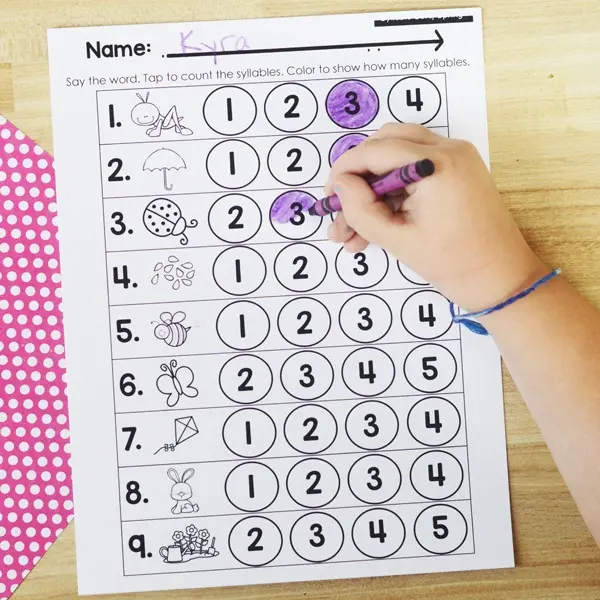
To bridge the gap between abstract phonetic concepts and engaging classroom practice, educators and curriculum developers have introduced a series of innovative, hands-on instructional tools. Chief among these is the newly released Spring Syllable Sort and its comprehensive companion, the Four Seasons Syllable Sort. Designed specifically for preschool, pre-K, and kindergarten environments, these printable literacy resources merge seasonal thematic play with rigorous, Science of Reading-aligned methodologies. By leveraging multisensory techniques such as clapping, tapping, and picture sorting, these activities aim to transform traditional rote learning into dynamic cognitive adventures, equipping young learners with the essential skills required for lifelong reading success.

DETAILED CHRONOLOGY: THE EVOLUTION OF EARLY PHONOLOGICAL CURRICULUM
The journey toward modern phonological awareness instruction has undergone a profound paradigm shift over the past several decades. Historically, early childhood classrooms relied heavily on whole-word memorization and passive listening exercises. However, as cognitive scientists, linguists, and educational researchers deepened their understanding of how the human brain processes written and spoken language—collectively known as the "Science of Reading"—instructional models evolved rapidly.
Phase 1: The Shift Toward Multisensory Engagement (Late 20th Century)
As early as the 1990s, educational researchers began identifying a direct correlation between a child’s ability to segment words orally and their future decoding and reading comprehension capabilities. Schools started integrating auditory cues, but materials often lacked contextual engagement. Children struggled to connect abstract linguistic units with real-world experiences.
Phase 2: The Integration of Thematic Learning (2010s)
Recognizing that young children learn best when instruction is contextualized within familiar, concrete themes, early childhood specialists began developing seasonal curricula. Spring-themed activities, harvest units, and winter units were introduced to anchor literacy concepts to observable environmental changes. Yet, many of these early thematic worksheets remained heavily text-dependent, creating an artificial barrier for pre-readers who had not yet mastered letter-sound correspondence.

Phase 3: The Launch of Modern Visual and Auditory Sorts (Present Day)
The release of the free Spring Syllable Sort and the expansive 42-page Four Seasons Syllable Sort marks the current pinnacle of this educational evolution. By intentionally stripping away early reading text requirements and focusing purely on sound, phonological awareness, and picture clues, these new resources address a critical gap in early education. Students are no longer hindered by their inability to read the written word; instead, they are empowered to listen intently, segment naturally using motor skills (clapping and tapping), and categorize vocabulary based strictly on auditory properties.
SUPPORTING CONTEXT & METRICS: THE SCIENCE OF SYLLABLES
To fully appreciate the impact of tools like the Spring Syllable Sort, one must examine the underlying cognitive science and quantitative metrics associated with early literacy interventions.
The Cognitive Mechanics of Syllabification
A syllable is defined as a unit of pronunciation having one vowel sound, with or without surrounding consonants, forming the whole or a part of a word. For a four- or five-year-old child, recognizing that the word butterfly consists of three distinct beats (but-ter-fly) rather than a single continuous sound stream requires a sophisticated level of auditory discrimination.

Research consistently demonstrates that children who master syllable segmentation in preschool exhibit significantly higher reading fluency scores by the end of first grade. Multisensory approaches—such as the clapping and tapping protocols embedded in the Spring Syllable Sort—engage the motor cortex alongside the auditory and visual processing centers of the brain, creating stronger neural pathways for memory retention.
Program Metrics and Structural Overview
The newly developed instructional packages are designed for maximum flexibility and scalability across various educational settings, including traditional classrooms, homeschool environments, and remediation centers:
- Free Spring Syllable Sort Package: Includes specialized syllable-counting cards, large high-contrast visual word cards, a black-and-white independent response worksheet, and a comprehensive teacher answer key.
- Four Seasons Syllable Sort (42-Page Comprehensive Pack): Features extensive clip cards and sorting mats spanning spring, summer, autumn, and winter vocabulary, allowing educators to track phonological progress across the entire academic year without changing the core instructional framework.
- Implementation Versatility: Designed for use in literacy centers, small-group guided reading stations, take-home practice packets, and morning work routines.
OFFICIAL STATEMENTS & EXPERT PERSPECTIVES
Early childhood educators, reading specialists, and curriculum designers have voiced widespread enthusiasm for the pedagogical approach utilized in these seasonal sorting activities.

Dr. Elena Vance, a prominent researcher in early childhood literacy acquisition, emphasizes the importance of separating phonological awareness from print mechanics:
"One of the greatest pitfalls in early literacy instruction is introducing letters and decoding rules before a child has developed a robust ear for the spoken sounds of language. Activities that utilize picture cues and motor engagement—like clapping out syllables—allow young learners to master the rhythm of language without the cognitive overload of reading text. It is a vital bridge to the Science of Reading."
Classroom practitioners have similarly lauded the practicality and engagement level of the materials. Sarah Jenkins, a veteran kindergarten educator with over fifteen years of classroom experience, notes:

"Children need to be active participants in their learning. When we introduced the spring-themed sorting cards, students immediately connected the vocabulary—words like tulip, umbrella, and caterpillar—to their everyday observations outdoors. By turning syllable counting into a sorting game, behavioral engagement skyrocketed, and comprehension checks became seamless."
Curriculum developers behind the initiative have also stressed the importance of vocabulary front-loading. According to instructional guidelines provided with the printables, teachers are advised to explicitly introduce and discuss each image prior to independent student work. This ensures that a child’s inability to segment a word stems from a phonological deficit rather than an unfamiliarity with the vocabulary item itself.
FUTURE OUTLOOK: THE TRAJECTORY OF PHONOLOGICAL INTERVENTIONS
As educational standards continue to evolve toward evidence-based practices rooted in the Science of Reading, the demand for high-quality, low-barrier instructional materials is projected to surge.

Expanding Thematic Frameworks
Following the success of the Spring and Four Seasons sorting packets, curriculum creators are already exploring expansions into cross-curricular domains, integrating scientific concepts (such as the life cycle of plants and animals) directly into phonological awareness exercises. This interdisciplinary approach ensures that literacy instruction does not occur in a vacuum, but rather serves as a vehicle for broader cognitive and environmental exploration.
Digital Adaptation and Accessibility
While physical printables, tactile clip cards, and paper worksheets remain the gold standard for tactile development in pre-K and kindergarten classrooms, future iterations of these tools are expected to incorporate hybrid digital components. Interactive whiteboard games and tablet-based sorting modules will likely supplement the physical manipulatives, offering educators enhanced data-tracking capabilities to monitor individual student progress in real-time.
Conclusion
The introduction of resources like the Spring Syllable Sort and the Four Seasons Syllable Sort underscores a fundamental truth in modern education: rigorous academic preparation does not require joyless repetition. By harmonizing playful seasonal themes with the proven tenets of phonological awareness, educators are provided with powerful instruments to foster cognitive growth, build robust vocabulary banks, and lay an unshakeable foundation for the generation of emergent readers.

