
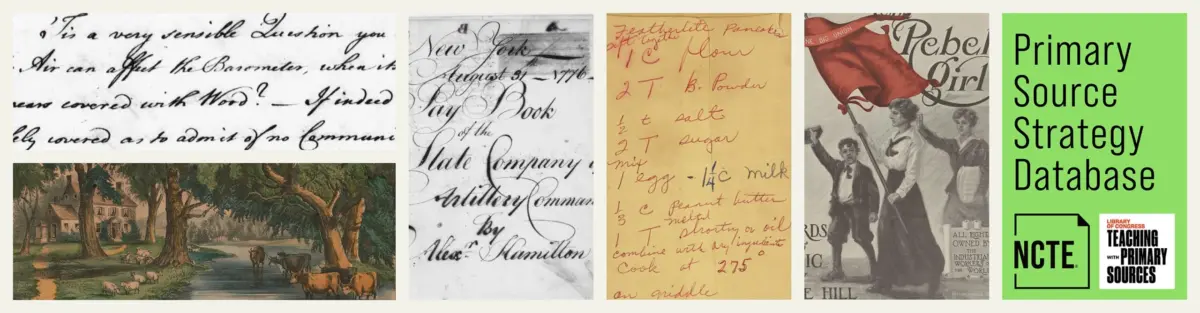
Executive Overview
In an era defined by an overwhelming influx of digital information, the ability to critically analyze source material has never been more vital for students and educators alike. At the forefront of this educational evolution is a dynamic partnership between the National Council of Teachers of English (NCTE) and the Library of Congress. Operating as an integral part of the prestigious Teaching with Primary Sources (TPS) Consortium, this collaboration is systematically expanding the integration of historical and cultural primary sources into everyday English language arts (ELA) and literacy classrooms.
At the heart of this initiative is a robust, searchable digital database housing instructional strategies for over 150 specific artifacts drawn directly from the Library of Congress’s expansive digitized archives. Developed by more than two dozen distinguished educators, literacy leaders, and ELA curriculum experts, these resources bridge the gap between historical inquiry and modern literacy instruction. Each entry is meticulously designed to articulate specific literacy merits, mapping out thematic connections, curriculum unit frameworks, and alignment with state academic standards.
By leveraging searchable tags such as picturebook, argument, comprehension, and advertising, educators can easily navigate a diverse repository of historical artifacts. More than just a collection of lesson plans, this partnership represents a profound pedagogical shift. It encourages students to interrogate the world around them, question deeply ingrained social norms, identify institutional biases, and build profound empathy through the exploration of authentic historical texts. As school districts nationwide grapple with how to prepare students for a complex, media-saturated society, the NCTE-Library of Congress initiative offers a masterclass in how primary sources can transform critical thinking in the modern classroom.
Detailed Chronology: Building the Bridge Between Archives and Classrooms
The integration of Library of Congress archives into standard English language arts curricula did not happen overnight; it is the result of years of intentional collaboration, strategic coalition-building, and iterative pedagogical design.
Phase One: Establishing the Foundation
The partnership between the NCTE and the Library of Congress was forged out of a shared recognition that literacy education extends far beyond traditional textbooks and contemporary novels. Recognizing the rich, untapped potential of the Library’s vast digital repositories—spanning centuries of American history, art, journalism, and cultural artifacts—educational leaders sought a way to make these materials pedagogically accessible to ELA teachers. Traditional archival research often felt intimidating or disconnected from standard literacy benchmarks. The TPS Consortium was established to bridge this divide, ensuring that historical documents, photographs, advertisements, and manuscripts could serve as foundational texts for reading, writing, speaking, and listening instruction.
Phase Two: Mobilizing Educational Leaders
To ensure the resulting resources were practical, rigorous, and directly applicable to contemporary classrooms, the NCTE engaged a select cohort of more than two dozen innovative teachers and ELA curriculum leaders. These educators were tasked with selecting over 150 specific items from the Library of Congress digital collection and developing comprehensive instructional strategies around them.
Rather than viewing historical artifacts strictly through a social studies lens, this collaborative team emphasized their profound literacy value. They demonstrated how historical documents could be used to teach rhetorical analysis, argumentative writing, grammar, vocabulary, and critical comprehension. Each resource was intentionally paired with thematic suggestions, instructional frameworks, and state standard alignments—most notably New Mexico’s Adopted Content Standards for Speaking, Listening, and History/Social Studies.
Phase Three: Launching the Searchable Database and Expanding Access
The culmination of this collaborative effort is a dynamic, publicly accessible online database hosted through the NCTE platform. By organizing the catalog with intuitive filtering tags—ranging from media formats like picturebook and advertising to cognitive skills like argument and comprehension—the initiative lowered the barrier to entry for busy classroom teachers.
Today, the database continues to evolve as an active, living repository. It provides educators with the tools to introduce complex historical narratives, unpack systemic cultural dynamics, and foster deep analytical thinking among middle and high school students.
Supporting Context & Metrics: Case Study of an Archival Resource
To understand the practical application of this initiative, one must examine how individual artifacts are operationalized within the NCTE database. A prime example within the collection is an advertisement for PORO Hair Grower featured in Franklin’s The Statesman, a historical primary source that serves as a powerful catalyst for exploring intersectional literacy, systemic racism, and visual rhetoric.
The Artifact: PORO Hair Grower Advertisement
The primary source features an advertisement detailing the efficacy of PORO Hair Grower products. The visual layout includes images of enterprise founder Annie Malone Pope-Turnbo alongside a woman identified as L. L. Roberts, both showcasing long, straight hair. Accompanying captions read:
- "4 years ago my hair was only a finger-length, and my temples were bald halfway up my head" (Pope-Turnbo)
- "4 years ago my hair just covered my shoulders" (Roberts)
Crucially, the advertisement includes consumer warnings cautioning readers against fraudulent hair growth products flooding the market, urging them to verify official PORO branding. While superficially an artifact of early 20th-century commerce, the pedagogical value of this text extends deep into the realms of cultural studies and media analysis.
Instructional Value: Intersection of Appearance and Power Structures
Within the ELA curriculum, this resource provides a vital gateway for students to explore how seemingly trivial or mundane aspects of personal appearance are deeply intertwined with historical power structures and systemic racism.
- Deconstructing Cultural Norms: Discussions surrounding Black hair highlight how dominant social systems historically and continuously aim to erase cultural identity and enforce conformity to eurocentric beauty standards. By examining historical advertisements, students learn to critically analyze how societal standards are constructed, how they perpetuate inequality, and how visual rhetoric is employed to shape public perception.
- Fostering Empathy and Psychological Awareness: Understanding the historical and ongoing impact of hair discrimination helps students grasp the profound psychological and emotional toll such policing takes on individuals and entire communities. This realization acts as a cornerstone for building empathy and compassion in the classroom.
- Empowering Marginalized Students: For students who have personally experienced discrimination, analyzing these historical artifacts provides essential context. It illuminates the roots of modern biases, helps them appreciate their cultural heritage, embraces their natural beauty, and equips them with the analytical tools to resist harmful stereotypes.
Standards Integration and Skill Development
The instructional strategy tied to the PORO advertisement directly aligns with rigorous state academic standards, ensuring that critical discussions of race, culture, and history reinforce core ELA competencies. According to the New Mexico Adopted Content Standards integrated into the resource:
- Speaking & Listening (SL.11-12.3): Students learn to evaluate a speaker or creator’s point of view, reasoning, and use of evidence and rhetoric. They assess the underlying stance, premises, links among ideas, word choice, points of emphasis, and tone used within historical promotional material.
- Literacy in History/Social Studies (RH.11-12.1 & RH.11-12.2): Students cite specific textual and visual evidence to support deep analysis of primary sources, connecting insights gained from minute details (such as captions and imagery) to an understanding of the text and historical era as a whole. Furthermore, they determine central ideas and summarize relationships among key historical details.
Official Statements and Educational Philosophy
The momentum behind the NCTE and Library of Congress collaboration reflects a unified philosophy among educational leaders regarding the necessity of primary source literacy in modern democratic societies.
While the database itself is driven by the collective expertise of classroom practitioners, organizational statements from participating bodies underscore a shared mission. The overarching objective of the TPS Consortium is to transform teaching and learning habits by moving away from passive textbook consumption and toward active, inquiry-based archival research.
Educational leaders emphasize that literacy is not merely a mechanical skill involving decoding and grammar; it is an active, civic engagement with texts across mediums. By integrating primary sources that address complex social realities—such as gender, race, commerce, and media manipulation—teachers are empowered to cultivate classrooms where inquiry is prioritized.
Furthermore, the pedagogical framework championing these resources asserts that true literacy instruction must be inclusive and reflective of diverse human experiences. When students are given the tools to examine historical artifacts with a critical eye, they are not only learning how to read the past; they are learning how to decode the present and author a more equitable future.
Navigating Challenges: Controversies and Classroom Realities
Any educational initiative that encourages the critical examination of systemic racism, cultural policing, and historical discrimination inevitably encounters external scrutiny and community debate. The curriculum guides associated with resources like the PORO advertisement explicitly address these potential challenges, providing educators with proactive strategies to navigate pushback from administrators, parents, and community members.
Anticipated Areas of Resistance
- The "Colorblindness" Argument: Some community members advocate for colorblind educational frameworks, arguing that race should not be a factor in instruction and that highlighting issues such as hair discrimination or systemic bias unnecessarily creates division among students.
- Political Sensitivities: Individuals holding conservative political viewpoints may express concern or objection, occasionally mischaracterizing discussions of systemic racism or historical power dynamics as unauthorized applications of Critical Race Theory (CRT) within K-12 settings.
- Curricular Prioritization: Critics may argue that exploring cultural and social histories distracts from the "core" mechanics of ELA curriculum, such as standardized grammar, vocabulary, and classical literature.
- Misunderstanding Historical Significance: A lack of foundational knowledge regarding the historical and contemporary significance of hair discrimination—and its unique psychological impact on the Black community—can lead to skepticism regarding the relevance of the text.
Professional Mitigation Strategies
To address these challenges constructively, the NCTE and supporting educators advocate for transparency, robust curriculum justification, and a steadfast focus on established academic standards. By anchoring discussions in textual evidence, rhetorical analysis, and state-mandated competencies (such as evaluating authorial intent and source credibility), educators can demonstrate that examining these artifacts fulfills core academic requirements rather than serving political agendas.
Moreover, providing professional development resources helps teachers articulate the deep connection between historical inquiry, empathy-building, and advanced literacy skills, ensuring that classrooms remain safe, intellectually rigorous environments for all students.
Future Outlook: The Horizon of Primary Source Literacy
As the NCTE and Library of Congress partnership continues to grow within the Teaching with Primary Sources Consortium, the future of literacy education looks increasingly interconnected, empirical, and analytical.
The expansion of the searchable database points toward a broader transformation in how instructional materials are curated and shared. By harnessing digital archiving technology, the initiative ensures that teachers in rural, suburban, and urban school districts alike have equitable access to museum-quality historical artifacts accompanied by expert pedagogical scaffolding.
Looking ahead, several key developments will shape the trajectory of this initiative:
- Digital Expansion: Continuous additions to the database will incorporate an even wider array of multimedia primary sources, including audio recordings, film reels, manuscripts, and digital art.
- Interdisciplinary Collaboration: The success of merging historical artifacts with ELA instruction paves the way for deeper cross-curricular collaboration between English and social studies departments, fostering cohesive project-based learning units.
- Enhanced Professional Development: As school districts navigate evolving standards and community expectations, ongoing professional learning networks will continue to support teachers in implementing culturally responsive, text-dependent inquiry methods with confidence.
Ultimately, the collaboration between the National Council of Teachers of English and the Library of Congress serves as a vital blueprint for modern education. By placing authentic, complex primary sources directly into the hands of literacy teachers and students, the initiative is helping to cultivate a generation of discerning thinkers capable of analyzing the past, questioning the present, and engaging meaningfully with the world around them.

