
Executive Overview
In an era defined by rapid technological shifts, hyper-connectivity, and an unprecedented barrage of daily stimuli, modern youth face formidable cognitive challenges. Educators, parents, and developmental psychologists increasingly report a decline in attention spans, emotional regulation, and frustration tolerance among children and teenagers. While mindfulness has traditionally been celebrated in mainstream culture as a passive tool for relaxation and stress reduction, contemporary cognitive research reveals a far more potent reality. Mindfulness is not merely a relaxation exercise; it is a foundational neurological workout.
When practiced consistently, mindfulness acts as a catalyst for strengthening executive functioning skills—the high-level, brain-based cognitive processes managed primarily by the prefrontal cortex. These critical skills include focused attention, working memory, cognitive flexibility, impulse control, emotional regulation, and perseverance. By integrating simple, evidence-based mindful practices into daily routines, educators and caregivers can equip children and young adults with the mental architecture required to navigate academic pressures, social hurdles, and personal goals. This report explores the deep scientific synergy between mindfulness and executive functioning, outlines core developmental competencies, and provides actionable, research-backed strategies for implementation in homes and classrooms.
Detailed Chronology of the Mind-Brain Connection
To understand why mindfulness so profoundly impacts cognitive output, it is necessary to trace how contemplative practices intersect with human neurobiology over time.
Phase 1: The Historical and Cultural Shift (Late 20th Century)
For decades, mindfulness remained largely confined to Eastern philosophical traditions. However, in the late 1970s and 1980s, pioneers like Dr. Jon Kabat-Zinn introduced secularized mindfulness programs (such as Mindfulness-Based Stress Reduction, or MBSR) into Western medical and psychological frameworks. Initially, these programs were utilized primarily for chronic pain management and generalized anxiety. The cultural perception was fixed: mindfulness equaled stress relief.
Phase 2: The Neuroimaging Revolution (Early 2000s to 2010s)
As functional magnetic resonance imaging (fMRI) technology advanced, researchers began mapping what actually happens inside the brain during and after mindfulness meditation. Scientists discovered neuroplasticity—the brain’s capacity to physically reorganize itself by forming new neural connections. Studies led by institutions such as Harvard Medical School revealed that regular mindfulness practice actually increases grey matter density in the hippocampus (responsible for memory and learning) and the prefrontal cortex, while physically shrinking the amygdala (the brain’s fear and stress center). This era marked the transition of mindfulness from an alternative wellness trend to a validated neurological intervention.
Phase 3: Application to Youth and Educational Frameworks (Present Day)
Most recently, developmental psychologists and educators recognized that if neuroplasticity allows adult brains to reshape through mindfulness, young, developing brains stand to benefit exponentially. Because executive functioning skills continue to mature well into early adulthood, childhood and adolescence represent a critical developmental window. Today, evidence-based SEL (Social-Emotional Learning) frameworks routinely incorporate mindfulness to support everything from kindergarten self-regulation to high-school standardized testing performance, proving that turning inward is the most effective way for youth to successfully engage with the outward world.
Supporting Context & Metrics: The Six Pillars of Executive Functioning
Executive functioning skills are the invisible conductors of human behavior. When these systems operate smoothly, individuals manage their time, plan ahead, adapt to unexpected changes, and regulate emotional impulses seamlessly. When these systems are underdeveloped or overloaded by stress, individuals struggle with basic daily tasks.
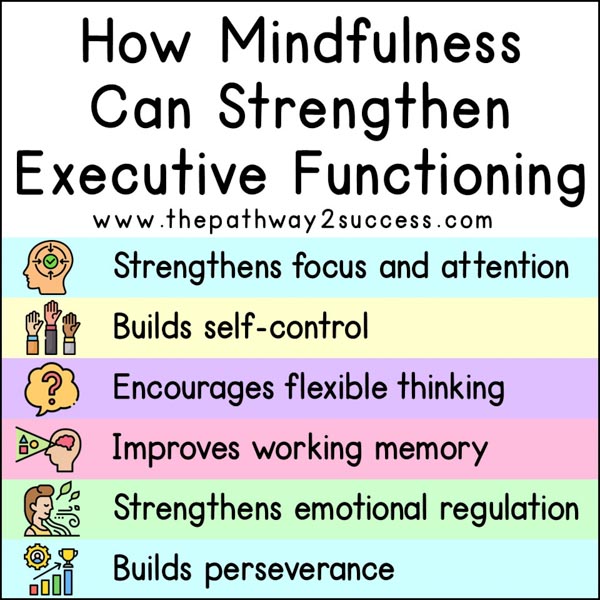
Mindfulness targets these capacities by systematically engaging the "thinking brain" (the prefrontal cortex) over the "reactive brain" (the limbic system). Below is a breakdown of the six core executive functioning domains and how mindfulness directly reinforces them:
1. Focus and Attention
- The Definition: Attention is the cognitive engine that allows an individual to sustain concentration on a person, task, or concept over a designated period. From listening to a complex lecture to collaborating on a group project, attention is non-negotiable.
- The Mindfulness Connection: Mindfulness exercises function as weightlifting for the attentional muscle. By instructing a child to focus solely on the sensation of breathing, the practice highlights how easily the mind wanders. Crucially, mindfulness does not demand a wandering-free mind; rather, it trains the child to notice when attention has drifted and gently guide it back to the present moment. Each successful return builds neural pathways dedicated to sustained focus.
2. Self-Control and Inhibition
- The Definition: Self-control is the behavioral brake pad—the capacity to pause, reflect, and evaluate consequences before acting on a sudden impulse.
- The Mindfulness Connection: Mindfulness introduces a vital spatial buffer between stimulus and response. For instance, a teenager provoked by a peer in a hallway experiences an immediate impulse to react aggressively. Regular mindfulness practice trains the nervous system to insert a micro-pause. Within that brief breath, the adolescent can let the reactive impulse dissolve and intentionally choose a constructive path forward, dramatically improving short- and long-term decision-making.
3. Emotional Regulation
- The Definition: Emotional regulation is the ability to monitor, evaluate, and modify emotional reactions to match the demands of a given situation, laying the groundwork for mental well-being.
- The Mindfulness Connection: Unmanaged emotions often hijack executive functioning, flooding the brain with cortisol and adrenaline. Mindfulness fosters radical self-awareness, allowing youth to observe their feelings—such as frustration, sadness, or anger—without becoming entirely consumed by them. A student who experiences social rejection can utilize deep breathing to return to physiological baseline, opening the door to rational problem-solving rather than emotional shutdown.
4. Working Memory
- The Definition: Working memory is our mental scratchpad: the capacity to retain, manipulate, and update complex information over short intervals. It is heavily utilized in multi-step directions, arithmetic computation, and reading comprehension.
- The Mindfulness Connection: Stress, anxiety, and environmental distractions create severe "mental clutter," overloading working memory. Mindfulness acts as a cognitive reset button, clearing extraneous thoughts and cognitive noise. By starting the day with mindful awareness, students enter academic tasks with a clean slate, maximizing their working memory capacity for critical instruction.
5. Flexible Thinking
- The Definition: Cognitive flexibility involves the ability to switch perspectives, adapt to unexpected rule changes, accept alternative viewpoints, and pivot when plans go awry.
- The Mindfulness Connection: Mindfulness champions non-judgmental acceptance. Practitioners learn to sit with experiences, thoughts, and realities even when they are uncomfortable or unfavorable. When a young adult receives critical feedback on a writing assignment, flexible thinking—grounded in mindfulness—prevents them from internalizing the critique as a personal failure, reframing it instead as an objective tool for growth.
6. Perseverance
- The Definition: Perseverance is the tenacity to stick with a challenging task, pushing through frustration until a goal is achieved.
- The Mindfulness Connection: Sitting quietly and focusing on the breath is inherently difficult for a developing mind. The brain naturally seeks immediate gratification and distraction. By committing to a mindfulness practice, children and teens regularly encounter the urge to quit—and choose to stay anyway. This daily repetition directly conditions perseverance in academic and personal endeavors.
Official Insights & Expert Perspectives
Educational leaders and mental health professionals increasingly advocate for the institutionalization of mindfulness within youth programming.
"When we teach children how to tune into their breath and body, we are not just helping them calm down in the short term; we are actively wiring their brains for long-term self-regulation and executive control," notes a leading developmental psychologist specializing in school-based mental health. "Executive functioning skills are the best predictors of lifelong success—often outweighing traditional IQ metrics. By supporting these skills through mindfulness, we provide children with an internal compass that lasts a lifetime."
Furthermore, educators utilizing structured social-emotional learning (SEL) curricula report remarkable shifts in classroom climate. Teachers note that spending just five to ten minutes on mindful breathing or mindful journaling dramatically reduces behavioral disruptions, decreases office referrals, and creates a collaborative learning environment where students feel safe to take academic risks.
Actionable Mindfulness Strategies for Kids and Teens
Implementing mindfulness does not require complex meditation retreats or hours of silence. It can be woven seamlessly into everyday routines at home or school using practical, age-appropriate strategies.
1. Transparent Education
Before introducing exercises, educators and parents should explain why mindfulness matters. Demystify the practice by telling learners that mindfulness is a superpower used by athletes, musicians, and scholars to sharpen their focus before high-stakes moments, such as giving a class presentation or stepping onto a sports field.
2. Structured Lessons and SEL Activities
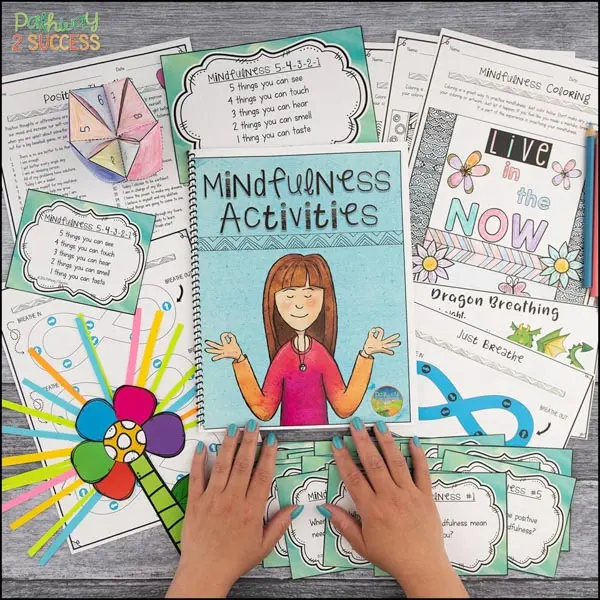
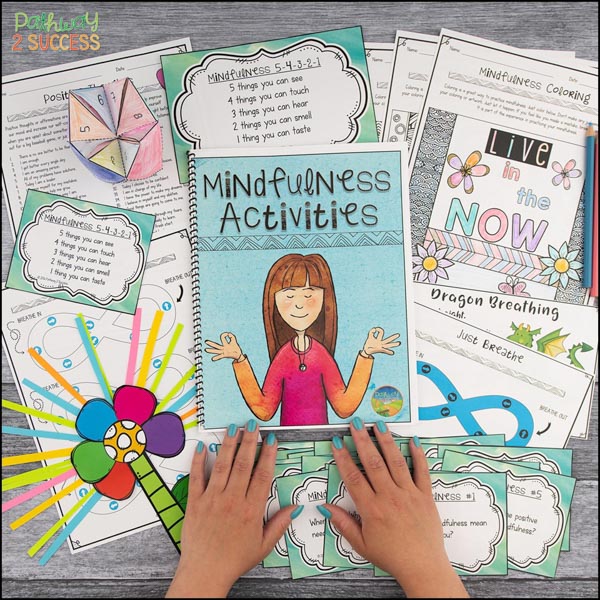
Utilizing comprehensive mindfulness curricula—such as dedicated lesson sets featuring interactive activities, crafts, discussion cards, and posters—ensures that mindfulness is taught systematically rather than as an afterthought.
3. Incorporating Literature
Storybooks serve as powerful springboards for discussions on emotional awareness and self-control. Even older children and teenagers respond well to narrative-driven explorations of mindfulness concepts, helping them externalize and analyze their own internal processes.

4. Mindful Breathing Exercises
Breathing is the anchor of all mindfulness work. Teach youth foundational belly-breathing techniques, then expand into engaging variations like "Cool Off the Pizza" or "Shape Breathing." These function simultaneously as mindfulness tools and highly effective mid-lesson brain breaks.
5. Mindful Coloring and Observance
For tactile learners, mindful coloring pages offer an accessible entry point. Instruct participants to immerse themselves entirely in the physical act of coloring without worrying about perfection. Similarly, mindful observance—focusing all attention on a simple everyday object like a pen or water bottle—trains the brain to tune out ambient distractions.
6. Yoga, Stretching, and Outdoor Mindfulness
Connecting physical movement with mindful awareness grounds youth in their physical bodies. Outdoor activities—such as mindful nature walks, cloud watching, or gardening—leverage natural environments to naturally capture and anchor wandering attention.

7. Mindful Journaling and Affirmations
Morning writing prompts give students a structured outlet to process thoughts and set positive intentions. Pairing these entries with daily mindful affirmations helps reinforce self-regulation, emotional resilience, and a growth mindset.
Future Outlook
As the scientific community continues to unveil the profound neurological benefits of contemplative practices, the integration of mindfulness into youth development is poised to shift from an optional enrichment activity to a core educational pillar. Future initiatives will likely focus on personalized digital mindfulness tools, longitudinal studies tracking executive function growth from early childhood through college, and systemic policy changes across school districts nationwide.
Ultimately, teaching mindfulness to the next generation is an investment in human agency. By equipping youth with the tools to master their attention, regulate their emotions, and steer their own cognitive processes, we do more than improve academic outcomes—we cultivate resilient, self-aware individuals prepared to shape a complex future with clarity, compassion, and unwavering focus.

