

Executive Overview
In an era defined by rapid technological adaptation and the urgent need to maintain student engagement in increasingly hybrid learning environments, the popular game-based learning platform Kahoot! has achieved a monumental milestone. The company recently announced that its global network of active educators has officially surpassed 10 million strong.
Spanning kindergarten classrooms to advanced university lecture halls, this diverse cohort of teachers, professors, and institutional leaders represents a profound shift in modern pedagogy. Rather than relying solely on traditional rote memorization and passive listening, these educators are harnessing gamification to drive real, measurable student outcomes.
This milestone is not merely a quantitative achievement for a software company; it is a testament to a global teaching community’s relentless dedication to making learning interactive, inclusive, and fundamentally enjoyable. As educational institutions continue to navigate post-pandemic learning recovery, digital equity challenges, and dwindling student attention spans, platforms like Kahoot! have transitioned from supplementary novelty tools to essential infrastructure in the modern educational toolkit.
Detailed Chronology: The Evolution of Interactive Learning
To understand the weight of the 10-million-educator milestone, it is essential to contextualize the journey of digital interactive learning over the past decade.
The Genesis of Game-Based Classrooms
When interactive response systems and early quiz-based digital tools first entered the market, they were often viewed with skepticism by traditionalists. Many educators worried that screen time would detract from deep critical thinking or that gamification would trivialize complex academic subjects. However, early adopters recognized a fundamental truth about human psychology: active participation breeds retention.
Scaling the Global Community
As internet infrastructure improved globally and schools increasingly adopted bring-your-device (BYOD) policies or provided 1:1 Chromebook and tablet initiatives, platforms like Kahoot! experienced exponential growth.
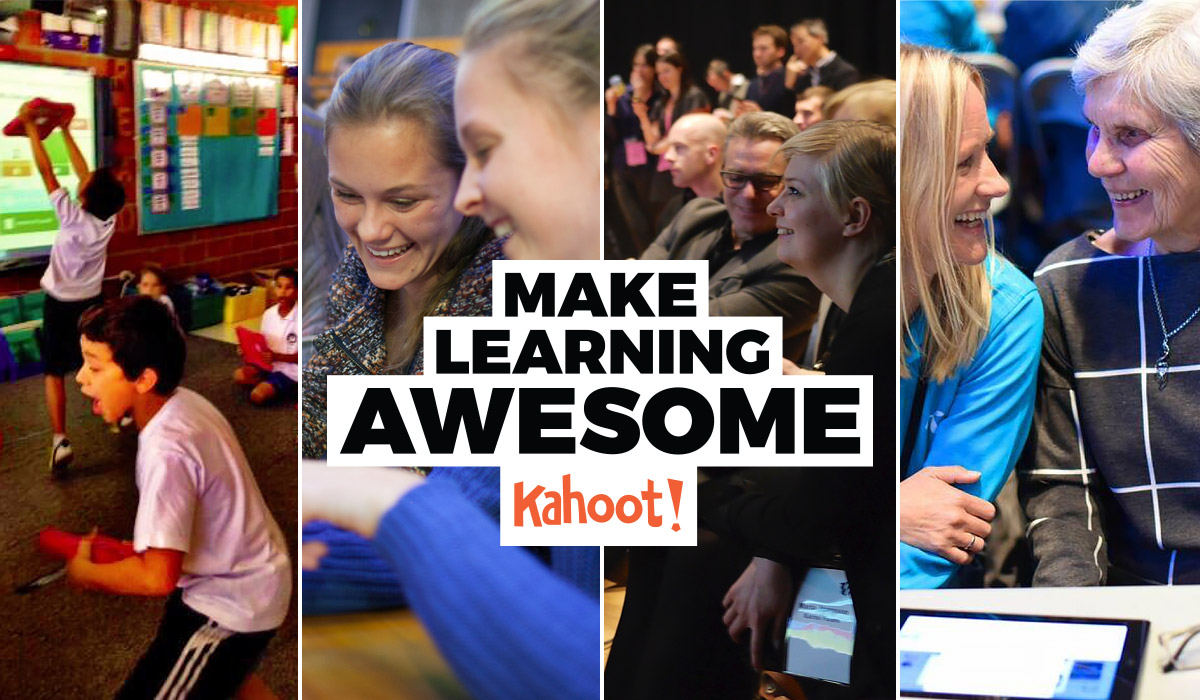
- The Early Years: Primarily utilized for end-of-week trivia or casual formative assessments, the platform quickly gained traction through grassroots advocacy among K-12 teachers.
- The Pandemic Pivot: When global health crises forced education entirely online, the platform served as a crucial digital anchor. Educators utilized its live-streaming capabilities and self-paced challenge modes to maintain a semblance of community, social connection, and academic rigor while isolated at home.
- Higher Education Integration: Initially perceived as a tool suited primarily for younger demographics, the platform steadily breached university lecture halls. Professors discovered that anonymous polling and real-time feedback broke down the intimidation barriers inherent in large lecture environments, encouraging even the most hesitant students to participate.
- Reaching the 10-Million Mark: Today’s milestone represents years of iterative product development, pedagogical research, and community feedback, culminating in a platform trusted across virtually every country and educational tier.
Supporting Context & Metrics: The Science of Engagement
What drives 10 million educators to integrate a digital gaming interface into their daily lesson plans? The answer lies in cognitive science and the mechanics of formative assessment.
Beyond the Quiz: The Pedagogy of Play
Modern education theory emphasizes the importance of formative assessment—the continuous, low-stakes monitoring of student understanding that allows educators to pivot instruction in real-time. Traditional testing often induces high levels of anxiety, which can hinder cognitive performance. In contrast, game-based formative assessments frame challenges as puzzles to be solved rather than high-stakes evaluations of self-worth.
By embedding multimedia, timed challenges, and friendly competition into academic content, educators can:
- Reduce Cognitive Load: Breaking down dense theoretical concepts into manageable, interactive checkpoints prevents cognitive overload.
- Identify Knowledge Gaps Instantly: Real-time dashboards provide teachers with immediate analytics, highlighting specific concepts or questions that the majority of the class struggled with, allowing for immediate remediation.
- Enhance Long-Term Retention: Active retrieval practice—the act of pulling information out of memory and applying it—is proven by cognitive psychologists to strengthen neural pathways far more effectively than passive rereading of textbooks.
Year-Round Momentum
A major operational challenge for modern educators is maintaining engagement consistency across distinct academic seasons. The back-to-school period typically starts with high enthusiasm, which frequently plummets during the grueling mid-winter months, only to spike again ahead of high-stakes spring testing and summer breaks.
The 10 million educators utilizing Kahoot! leverage its versatility to maintain momentum dynamically. Whether introducing a complex new historical era in September, reviewing foundational mathematics during the winter slump, or hosting collaborative student-led review sessions before final exams, the platform provides a continuous thread of dynamic interaction across the academic calendar.
Official Statements and Perspectives from the Frontlines
The true impact of this milestone is best understood through the voices of the educators who utilize the platform on a daily basis. Their experiences illustrate how digital tools can bridge the gap between abstract academic concepts and enthusiastic student participation.
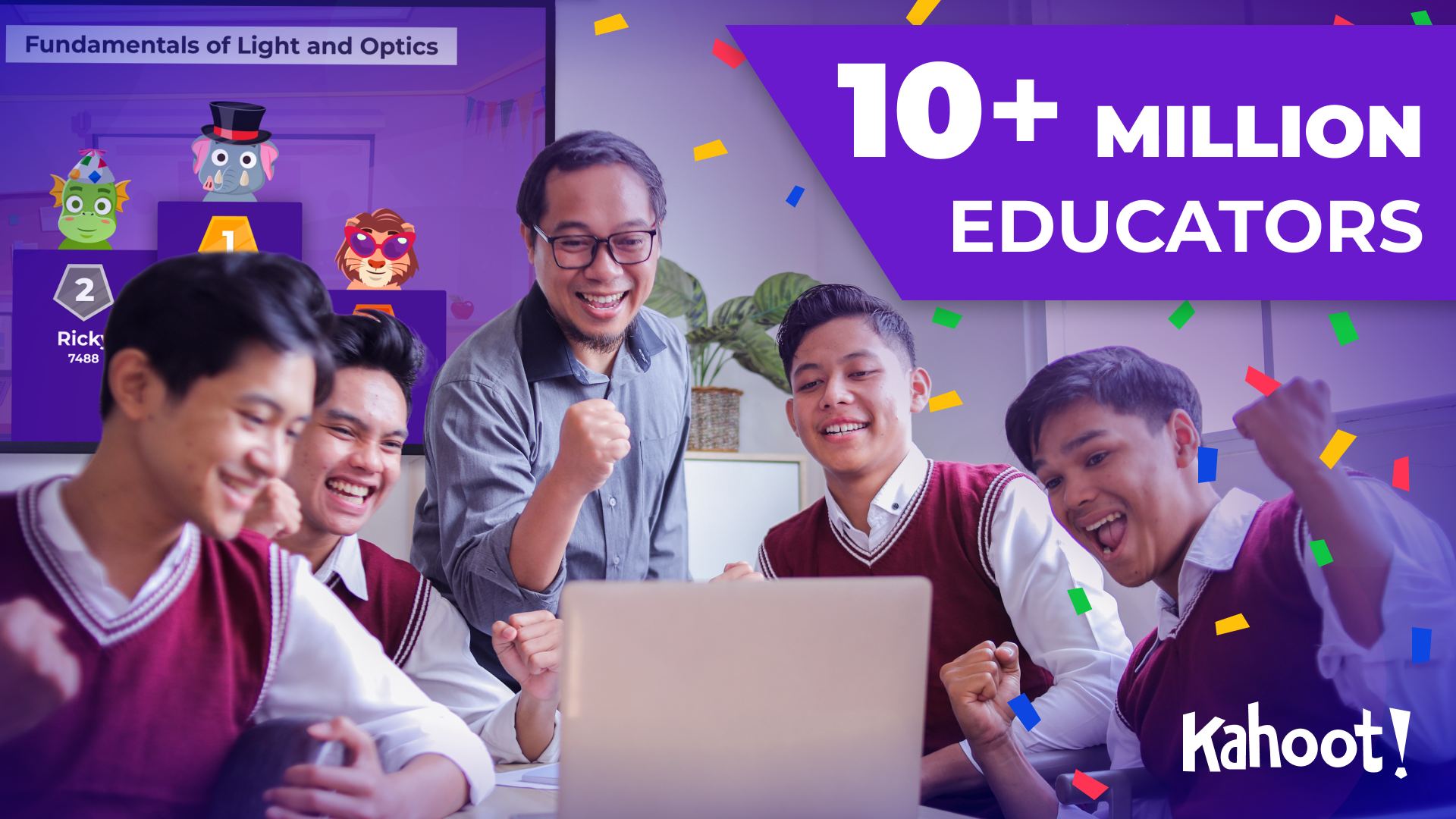
Pam Ganley, a primary and secondary educator based in Arizona, USA, highlights the multi-faceted utility of the platform in everyday teaching:
"I love using the Kahoot! platform because it allows me to create engaging, interactive content that enhances both my lessons and my students’ learning experience. I use Kahoot! to teach new concepts, review material, reinforce learning, and check for understanding."
The transformation is not restricted to primary and secondary education. In higher education, where student anonymity and disengagement in large lecture halls have long frustrated faculty, the platform has proven equally transformative.
Kurt Naicker, a Senior Lecturer at the University of Johannesburg, points to the profound impact of real-time data collection:
"Kahoot! has transformed the way I deliver learning material in higher education. The use of anonymous polls and real-time feedback has been instrumental in helping me, as a lecturer, to continuously gauge where my students are in their learning journey."
Reflecting on the 10 million milestone, company leadership emphasized that the community remains the driving force behind every technological update and feature rollout. In a statement addressing the global network, representatives shared:

"From classrooms to university lecture halls, educators are at the heart of everything we do. The growth of this global community to 10 million strong shows just how valuable interactive learning is. Your creativity and passion continue to drive us to evolve Kahoot!, to help make teaching more effective and learning more engaging."
Future Outlook: The Next Frontier in Interactive Education
As Kahoot! celebrates its 10-million-educator milestone, the broader educational technology landscape stands at a fascinating crossroads. The integration of artificial intelligence, adaptive learning algorithms, and immersive digital environments promises to redefine what is possible within a classroom setting.
The Role of AI in Content Creation
One of the most persistent bottlenecks for educators is time. Crafting high-quality, engaging interactive lessons requires hours of preparation outside of direct instructional time. Future iterations of digital learning tools are increasingly focusing on AI-assisted content generation—allowing teachers to input a syllabus, a textbook chapter, or a set of learning objectives and instantly generate customized, curriculum-aligned interactive sessions. This drastically reduces administrative burdens, freeing educators to focus on direct student mentorship and emotional support.
Expanding Accessibility and Global Reach
Reaching 10 million educators is a monumental achievement, but the digital divide remains a critical challenge on a global scale. Future industry growth will rely heavily on offline functionality, low-bandwidth optimization, and expanded localization to ensure that educators in under-resourced regions can harness the power of interactive learning.
A Lasting Legacy of Engagement
Ultimately, the milestone reached today underscores a fundamental truth about education: technology is only as powerful as the human being wielding it. The 10 million teachers and professors using Kahoot! are not just utilizing software; they are actively reimagining the architecture of human curiosity.
As the academic year progresses, the focus remains firmly on empowering these educational leaders to inspire the next generation of thinkers, creators, and problem-solvers. For educators looking to join this expanding movement, the path forward is clear: by embracing interactive, community-driven pedagogical tools, the classroom can transform from a place where students have to learn into a place where they genuinely want to learn.

