
Executive Overview
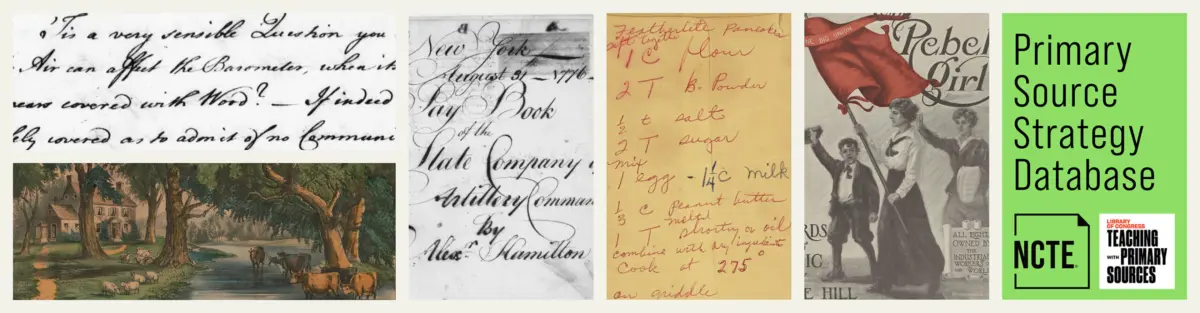
In an era defined by rapid digital transformation and an ever-evolving information landscape, educators face a formidable challenge: how to ground contemporary student learning in authentic, verifiable history. To address this gap, a powerful collaborative partnership has emerged between the National Council of Teachers of English (NCTE) and the Library of Congress. Operating as a core component of the Library of Congress’s prestigious Teaching with Primary Sources (TPS) Partner Program—specifically within the TPS Consortium—this initiative is fundamentally reshaping how literacy teachers and students integrate primary source documents into their daily pedagogical habits.
At the heart of this collaborative venture is a robust, highly searchable digital database. Designed by more than two dozen distinguished teachers and leaders in English language arts (ELA) education, the platform houses instructional strategies for over 150 specific, digitized artifacts from the Library of Congress’s vast archival holdings. Rather than serving as a passive repository of historical curiosities, the database provides active, standards-aligned frameworks that articulate the specific literacy merit of each item. Teachers can seamlessly navigate the repository using intuitive tags such as picturebook and argument, matching authentic historical artifacts with targeted curriculum units, broader thematic studies, and state educational standards.
Among the crown jewels of this digitized collection is a set of records that offers a deeply human yet economically analytical perspective on American history: The Frederick Douglass Papers: Financial Papers, 1847–1928; Bank books. Far from dry balance sheets, these archival manuscripts provide a tangible, evidentiary bridge between Frederick Douglass’s legendary abolitionist activism and his hands-on approach to economic resilience. By examining how one of history’s most prominent African American leaders navigated institutionalized racial hurdles to attain and preserve financial independence, modern students are invited into a rich, interdisciplinary exploration of history, economics, and civic duty. This initiative underscores a vital educational truth: that historical literacy, economic empowerment, and critical thinking are inextricably linked.
Detailed Chronology: Unlocking the Frederick Douglass Financial Papers
To fully appreciate the pedagogical value of the Frederick Douglass Financial Papers (1847–1928) within the NCTE and Library of Congress database, one must examine the timeline and historical trajectory these documents encompass. Spanning over eight decades, the collection captures the arc of Douglass’s adult life, his public evolution, and the socio-economic realities of a nation hurtling through abolition, civil war, Reconstruction, and the Jim Crow era.
- 1847: The Foundation of Independence. Marking the early years following the publication of his groundbreaking autobiography and his return from legal manumission in Great Britain, Douglass began establishing formal financial independence. The earliest entries in the financial papers reveal a man acutely aware that personal economic autonomy was a prerequisite for uncompromised political and social advocacy.
- The Antebellum Decades (1850s): During a period when institutional prejudice against African Americans was severe and systemic, Douglass managed publishing enterprises, such as his newspaper The North Star (later Frederick Douglass’ Paper). The ledger entries and bank records from this era document the precarious yet deliberate balancing acts required to fund anti-slavery lectures, maintain safe houses, and support the Underground Railroad without falling prey to financial insolvency.
- The Civil War and Reconstruction Era (1861–1877): As the nation fractured and rebuilt, Douglass’s financial footprint expanded. The bank books reflect his shifting assets, investments, and transactions during his tenure as a recruiter for the Massachusetts 54th Regiment, his consultations with President Abraham Lincoln, and his later appointment as president of the Freedmen’s Savings Bank—an institution whose tragic collapse in 1874 offered Douglass harsh lessons on the systemic economic vulnerabilities facing newly freed African Americans.
- The Post-Reconstruction and Late Years (1880–1928): The final sections of the financial papers document Douglass’s later years as a statesman, U.S. Marshal for the District of Columbia, and Minister-Resident to Haiti. These documents trace the consolidation of his estate, charitable outlays, and personal expenditures, providing a comprehensive window into the domestic life and economic standing of a global icon until his death in 1895 and the subsequent preservation of his estate.
Through this chronological lens, students using the NCTE-Library of Congress database are not merely memorizing dates; they are tracking the mechanics of survival, power, and autonomy across the most turbulent eras of American history.
Supporting Context & Metrics: The Intersection of Literacy, History, and Economics
The inclusion of financial documents in an English Language Arts curriculum represents a deliberate, forward-thinking pedagogical shift. Historically, ELA classrooms have treated literature and historical texts as isolated narrative exercises. However, the collaborative framework established by the NCTE and the Library of Congress champions interdisciplinary learning—an approach where reading comprehension, argumentative writing, and historical inquiry converge with economic literacy.
Quantitative and Qualitative Impact
- 150+ Digitized Artifacts: The searchable database curates a targeted selection of primary sources chosen specifically for their high literacy merit, ensuring educators do not have to sift blindly through millions of uncurated Library of Congress records.
- Two Dozen ELA Leaders: The instructional strategies embedded within the platform were crafted collaboratively by expert educators, ensuring that the materials are classroom-ready, pedagogically sound, and directly applicable to contemporary school environments.
- Cross-Disciplinary Reach: By pairing archival manuscripts—such as bank books—with textual analysis, the framework successfully bridges the gap between Humanities and Social Sciences, satisfying multiple rigorous state standards simultaneously.
Instructional Value in the Classroom
The instructional utility of the Frederick Douglass Financial Papers lies in its ability to challenge flat, one-dimensional historical narratives. When students examine Douglass’s bank books, deposits, withdrawals, and outlays, they encounter a multifaceted historical figure. They see Douglass not only as a brilliant orator and writer, but as a pragmatic strategist who understood that moral arguments for human rights were vastly strengthened by financial stability.
Furthermore, these primary sources serve as a catalyst for investigating broader systemic questions:
- What historical and structural obstacles have African Americans encountered in obtaining fair economic opportunities?
- How does personal financial literacy function as a tool for political empowerment and social activism?
- In what ways do personal financial habits interact with—and sometimes fuel—broader social and political movements?
By confronting these questions, students transition from passive consumers of history to active, critical thinkers capable of analyzing complex texts and constructing nuanced, evidence-based arguments.
Official Statements and Educational Standards Alignment
The partnership between the NCTE and the Library of Congress is underpinned by a rigorous commitment to educational excellence and state-level accountability. Educators utilizing the database can easily connect primary source investigations to established curriculum guidelines, such as the Louisiana State Standards highlighted in the database’s structural framework:
- W.11-12.1(a): "Introduce precise, knowledgeable claim(s), establish the significance of the claim(s), distinguish the claim(s) from alternate or opposing claims, and create an organization that logically sequences claim(s), counterclaims, reasons, and evidence." The financial papers of Frederick Douglass provide rich, empirical evidence that students can use to construct precise historical claims regarding the relationship between economic independence and civil rights advocacy.
- WH.1: "Analyze ideas and events in world history from 1300 to 2010 and how they progressed, changed, or remained the same over time." Douglass’s financial records offer a longitudinal view of economic progression and systemic racial barriers spanning the 19th and early 20th centuries.
- WH.4: "Use a variety of primary and secondary sources…" The database fulfills this requirement directly, equipping teachers with authentic manuscripts, photographs, and prints that elevate student inquiry beyond standard textbook summaries.
Perspectives from the Educational Community
While specific administrative statements from the NCTE leadership emphasize the transformative power of primary sources, the overarching institutional philosophy remains clear: literacy instruction must empower students to interrogate the world around them.
"By embedding primary sources into the daily habits of literacy teachers and students, we transform the classroom into an archive of discovery," notes framework documentation from the TPS Consortium partnership. "When students touch the financial ledgers of Frederick Douglass, history stops being a distant story and becomes an actionable blueprint for civic engagement and economic understanding."
Future Outlook: The Evolution of Primary Source Literacy
As the NCTE and the Library of Congress continue to expand their collaborative initiatives through the Teaching with Primary Sources Consortium, the implications for the future of education are profound. The ongoing refinement of searchable databases signals a shift toward modular, highly adaptable curricula where teachers can instantly access verified, high-merit historical artifacts tailored to specific cognitive and rhetorical skills.
Looking ahead, several key developments are expected to shape this educational frontier:
- Expanded Digital Curation: Future updates to the database aim to incorporate an even broader array of marginalized voices, ensuring that financial, legal, and personal manuscripts from diverse historical figures are accessible to ELA and history classrooms nationwide.
- Enhanced Interdisciplinary Frameworks: As STEM and Humanities initiatives increasingly overlap, tools that combine economic data analysis with narrative writing will become vital components of secondary education.
- Professional Development Integration: The NCTE plans to scale up teacher-training workshops, helping educators move beyond traditional textbook instruction and embrace inquiry-based learning models powered by primary sources.
In conclusion, the integration of collections like the Frederick Douglass Financial Papers into modern literacy classrooms represents a major milestone in educational practice. By fusing historical preservation with rigorous ELA standards, the NCTE and the Library of Congress are ensuring that the next generation of students possesses not only the literacy skills to read the world, but the critical thinking and economic awareness to reshape it.

